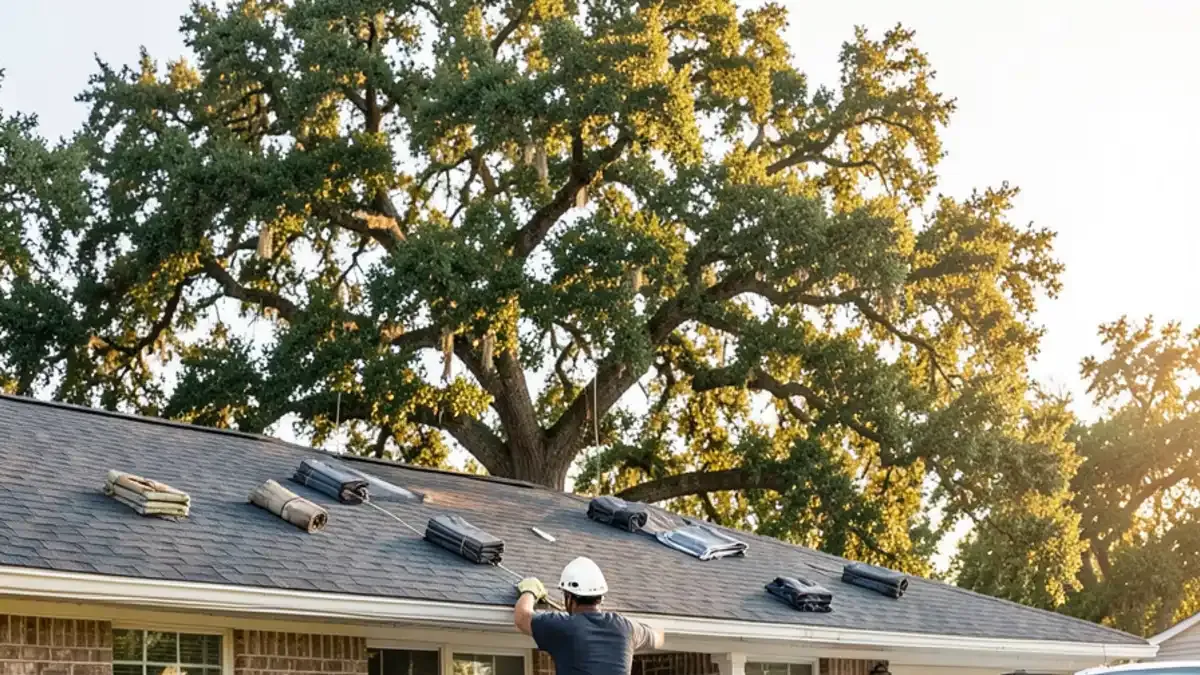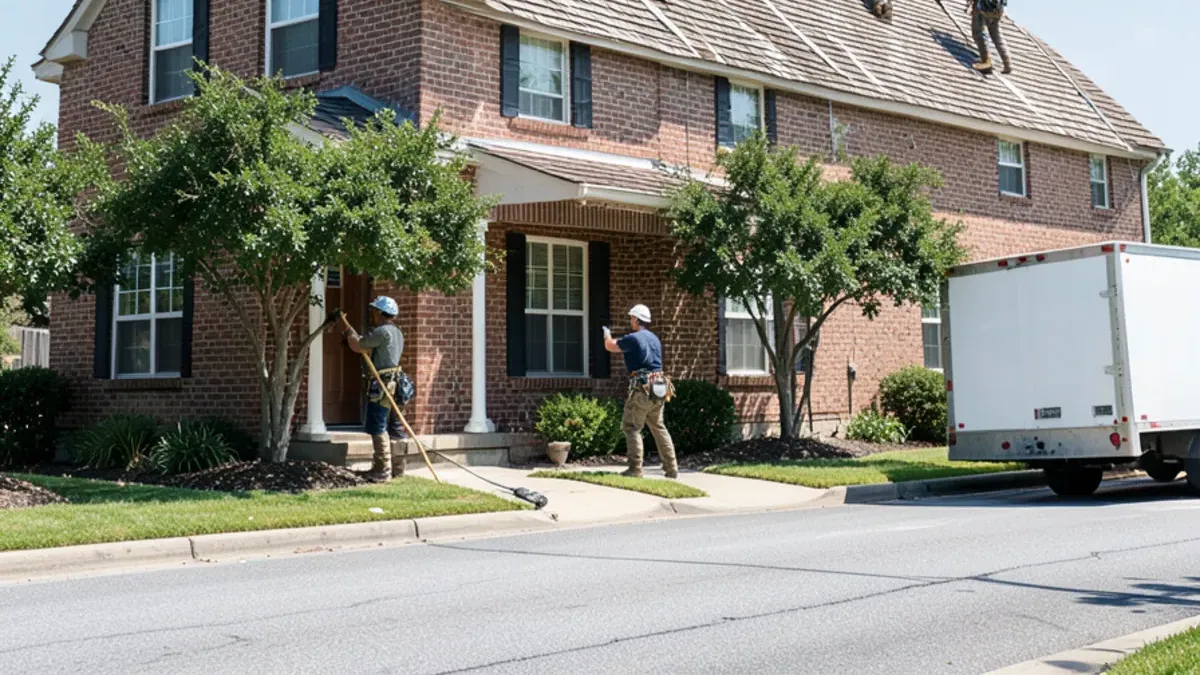
In the architectural vs 3 tab shingles comparison, architectural wins for most North Texas homes: it is thicker, carries much higher wind ratings, stands up a little better to hail and looks more dimensional from the street. Three-tab costs less per square, but its thin single layer and lower wind rating make it a short-lived choice in DFW weather.
Walk down almost any Irving street built in the 1980s and you may still spot a few 3-tab roofs: flat, even rows with a slot every foot or so. Most of the roofs replaced around them in recent years are architectural. Here is why, and when 3-tab still makes sense.
Architectural vs. 3-tab shingles: how they are built
Three-tab shingles are a single flat layer of asphalt-coated mat, cut into three equal tabs. They create the uniform, brick-like pattern of older roofs and are the lightest, thinnest common shingle.
Architectural shingles, also sold as laminate or dimensional shingles, bond two layers together. The bottom layer shows through cutouts in the top layer, creating shadow lines that look more like wood shakes. That extra layer is what gives them more thickness, more weight and better wind performance.
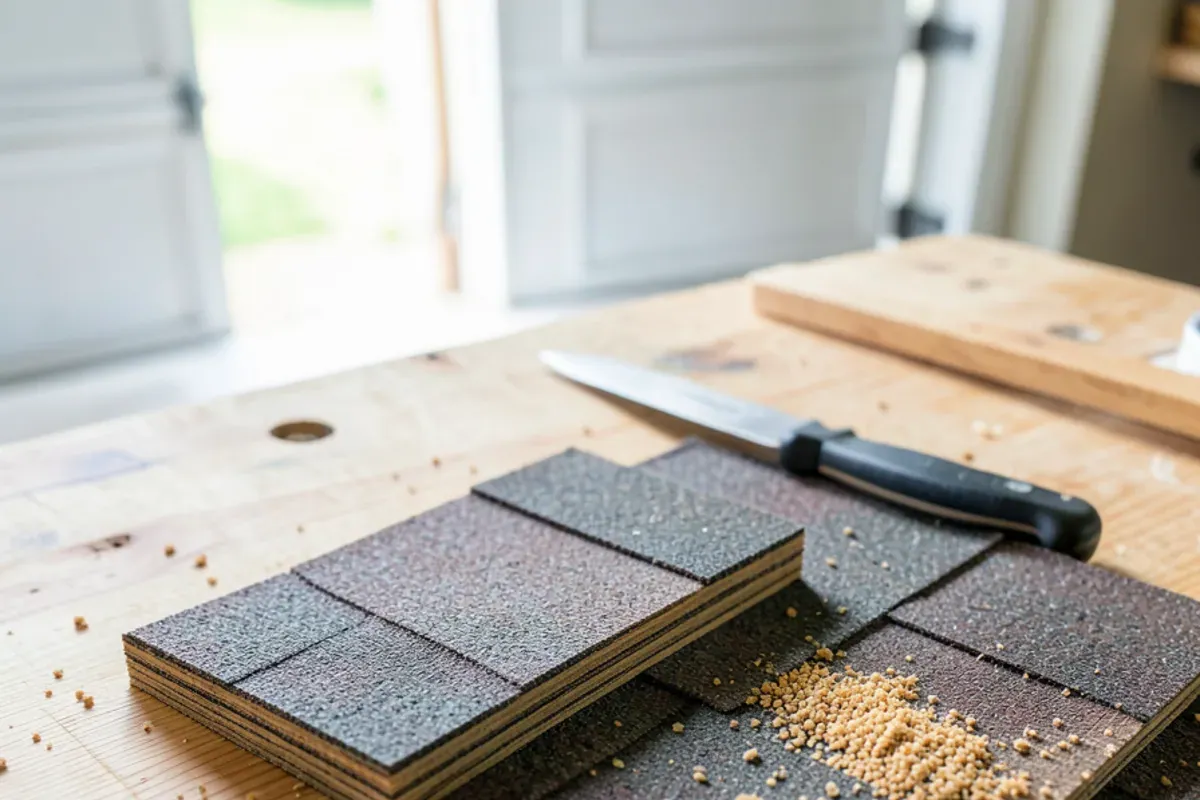
3-tab shingles wind rating vs. laminate shingles
Wind is where the gap is widest. Here is how the two typically compare:
| Feature | 3-tab | Architectural (laminate) |
|---|---|---|
| Construction | Single layer | Two laminated layers |
| Typical wind rating with standard nailing | Around 60 mph | Commonly 110 to 130 mph |
| Thickness and weight | Thin, light | Thicker, heavier |
| Look | Flat, uniform rows | Dimensional, shadowed |
| Hail behavior | Bruises and cracks more easily | Somewhat more forgiving |
| Impact-resistant versions | Rare | Widely available |
| Price per square | Lower | Higher |
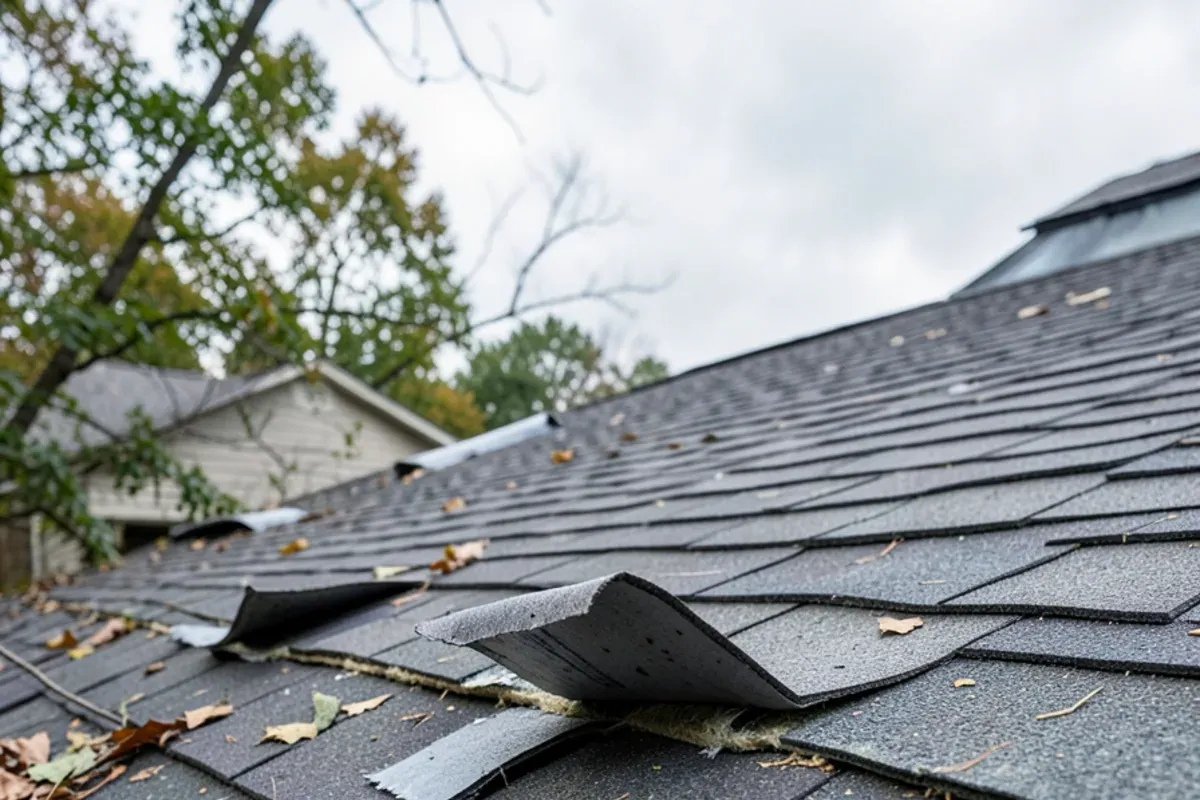
Wind ratings come from standardized tests such as ASTM D3161 and D7158, and each product states its own. Severe thunderstorms in North Texas can bring gusts above 60 mph, which is why we see so many creased and missing 3-tab tabs after a front moves through.
Want a roofer to look at it?
Free inspection with photos. Se habla español.
- 5.0 on Google (33 reviews)
- Free inspections & estimates
- Se habla español
- Workmanship guaranteed in writing with every contract
Best shingles for hail: does either type hold up?
Neither standard 3-tab nor standard architectural shingles are designed for big hail. Architectural shingles are thicker, so small hail is less likely to fracture them, but golf-ball-size stones will bruise both. If hail is your main worry, the real upgrade is a Class 4 impact-resistant shingle, rated for impact under UL 2218, the standard that drops steel balls up to two inches across onto the shingle. Almost all of those products are architectural, so choosing architectural also keeps that door open.
How long do 3-tab and architectural shingles last in North Texas heat?
Longer than a summer, shorter than the wrapper suggests. The warranty printed on a bundle is a limited, usually prorated product warranty against manufacturing defects. It is not a forecast of how long the roof will last on a house in Irving, where July highs run about 95°F and the city has recorded 112°F.
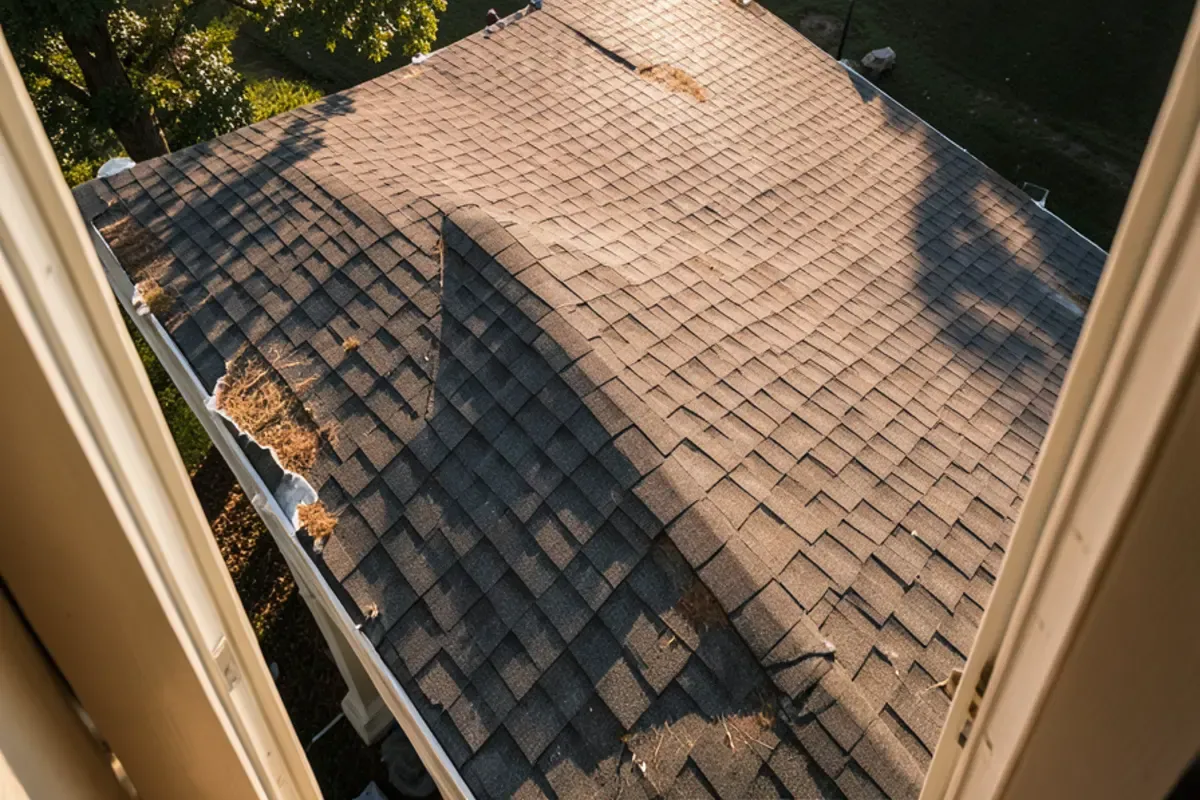
Heat ages both shingle types the same way: the asphalt dries out, the granules loosen, and the tab corners curl. Architectural shingles have more asphalt and a second layer to lose before they leak, so they usually hold up longer under the same conditions. The thin single layer of a 3-tab shingle has less margin, and once its sealant strip lets go in the heat, wind does the rest.
Three things matter more than the shingle type for heat life:
- Attic ventilation. A balanced intake and exhaust system keeps the deck cooler from below.
- Orientation. Slopes facing south and west take the most sun and usually show wear years ahead of the shady side.
- Color. Lighter shingles run cooler. Under Irving's local code amendments, steep-slope roofs need an SRI of at least 29, so we check each color's rating before ordering.
What to check on a shingle data sheet before you sign
Whichever type you choose, the product data sheet tells you more than the brochure. Ask for it and look for these lines:
| Data sheet line | What to look for |
|---|---|
| ASTM D3161 wind class | Class A is tested at 60 mph, Class D at 90 mph, Class F at 110 mph |
| ASTM D7158 wind class | Class D, G or H, rated for 90, 120 or 150 mph respectively |
| UL 2218 impact class | Class 4 is the top rating; standard shingles usually carry none |
| Solar reflectance (SRI) | Must meet SRI 29 for a steep-slope roof in Irving |
| Algae resistance | Helps on shaded, humid slopes under live oaks |
| High-wind nailing pattern | The nail count required to earn the top wind rating |
Cost and curb appeal
Three-tab costs less per square, and on a tight budget that matters. For a sense of the architectural side, Smart Roofing Calculator's 2026 figures put architectural shingles at $426 to $614 per installed square. That is a third-party range, not our price. The best way to compare is to ask for both shingle types priced on the same estimate, with the same tear-off, underlayment and flashing, so the only variable is the shingle.
Looks count too. Many HOAs, including some in Irving's planned neighborhoods, require architectural shingles, and buyers tend to notice the difference from the curb.
Installation details that matter as much as the shingle type
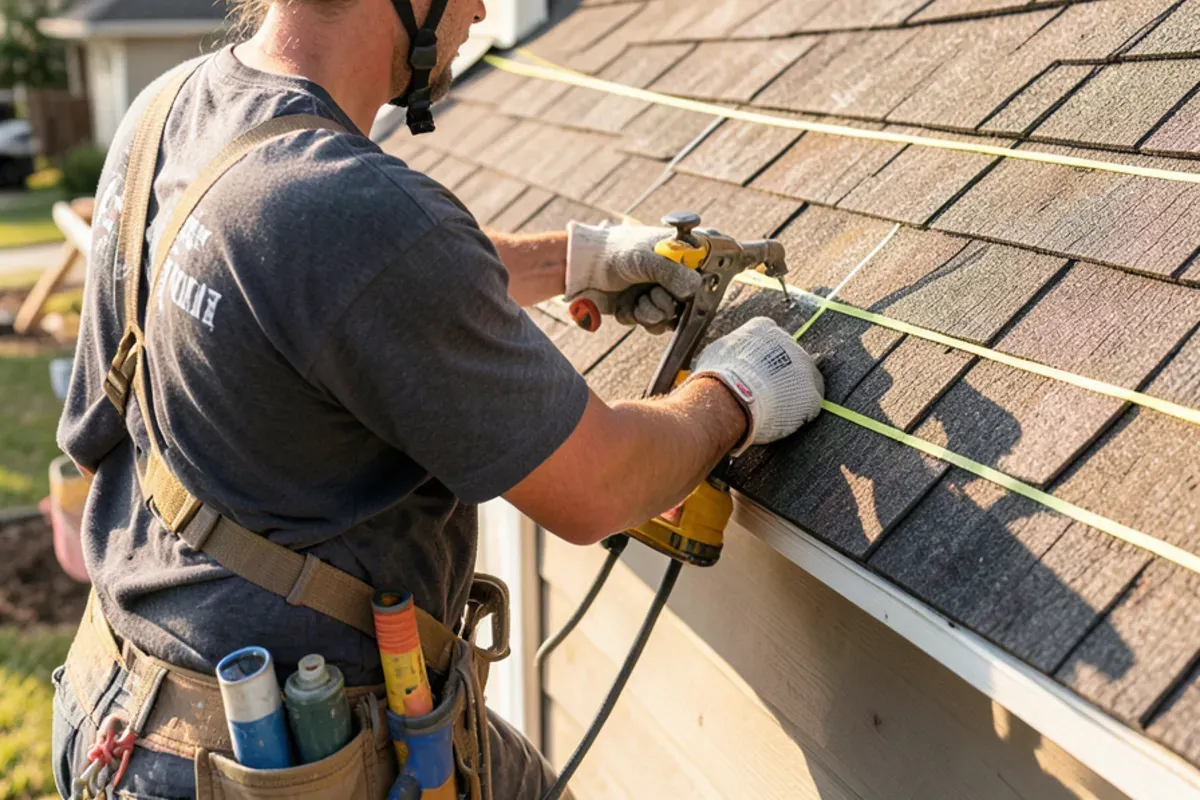
A wind rating on the wrapper only holds if the shingle is installed the way the manufacturer tested it. On either type, these details decide how the roof behaves in a storm:
- Nailing zone. Nails belong in the marked strip, not above it. High nails miss the layer below and let tabs pull loose.
- Nail count. Many products call for extra nails per shingle in high-wind installations.
- Starter strip. A proper starter course at the eaves and rakes gives the first row a sealant line to grip.
- Sealant activation. The adhesive strips bond with sun and warmth. Shingles laid in cold weather may not seal fully until warmer days arrive.
- Drip edge and underlayment. These protect the deck edge and back up the shingles when wind lifts them.
What we see on 3-tab roofs after DFW storms
When we inspect neighborhoods after a strong wind event, 3-tab roofs account for a large share of the lifted, creased and missing shingles we find. The thin tabs act like sails once the sealant strip lets go. Matching is the other headache: 3-tab products have become harder to find, so even a small repair can stand out.
We still quote 3-tab when it honestly fits, such as a rental the owner plans to sell or a detached shed that needs to match the house. The trade-off is plain: lower cost now for a roof that is more likely to need wind repairs and an earlier replacement.
Across the metroplex, from Carrollton, which reaches into three counties, to the older streets of Irving, the result is the same. Homeowners who replace a 3-tab roof almost always move to architectural.
Tejas arquitectónicas or 3-tab: how to choose
- Choose 3-tab only if budget is the overriding factor, you plan to sell soon, or you need to match an existing 3-tab roof on a small section.
- Choose architectural for nearly every full replacement in North Texas.
- Choose impact-resistant architectural if hail is your main concern or your insurer offers a discount for it.
Our asphalt shingle roofing page explains how we install both. As your roofing contractor in Irving, TX, we bring physical samples of each during a free estimate; call (725) 745-8803 to compare them on your own roof.
Questions readers ask
Can a 3-tab roof be repaired with architectural shingles?
Are architectural shingles too heavy for an older house?
If my 3-tab roof is damaged, will insurance pay for architectural shingles?
How can I tell from the ground whether my roof is 3-tab or architectural?
Sources

Written by the RJ Premium Roofing team, a bilingual roofing contractor based in Irving, TX. We inspect, repair and replace roofs across Dallas–Fort Worth and document storm damage for homeowners’ insurance claims.