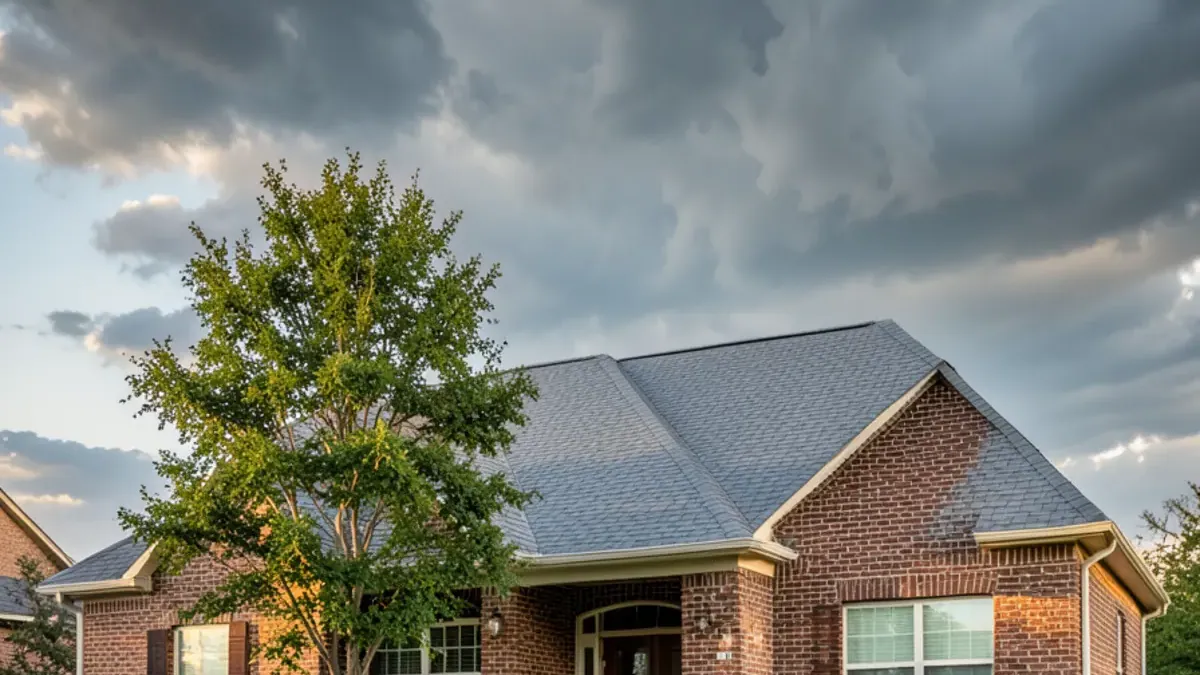
The difference in Class 4 vs standard shingles comes down to impact testing and construction: Class 4 products pass the toughest UL 2218 test with a 2-inch steel ball, usually thanks to rubberized asphalt or a reinforced backing, while standard architectural shingles carry no impact rating. In hail-heavy DFW, that gap can matter, but it is not hail-proofing.
Hail country forces a choice that homeowners in milder climates rarely think about. When a roof comes due for replacement around Irving, the decision is not just color and brand; it is whether to pay more for shingles built to take a hit. Here is a plain comparison of how the two types differ and when the upgrade earns its cost.
What Separates the Two Types
Standard architectural shingles are a fiberglass mat coated in asphalt and covered in granules. They are durable, look good and handle most weather well. What they lack is any impact rating.
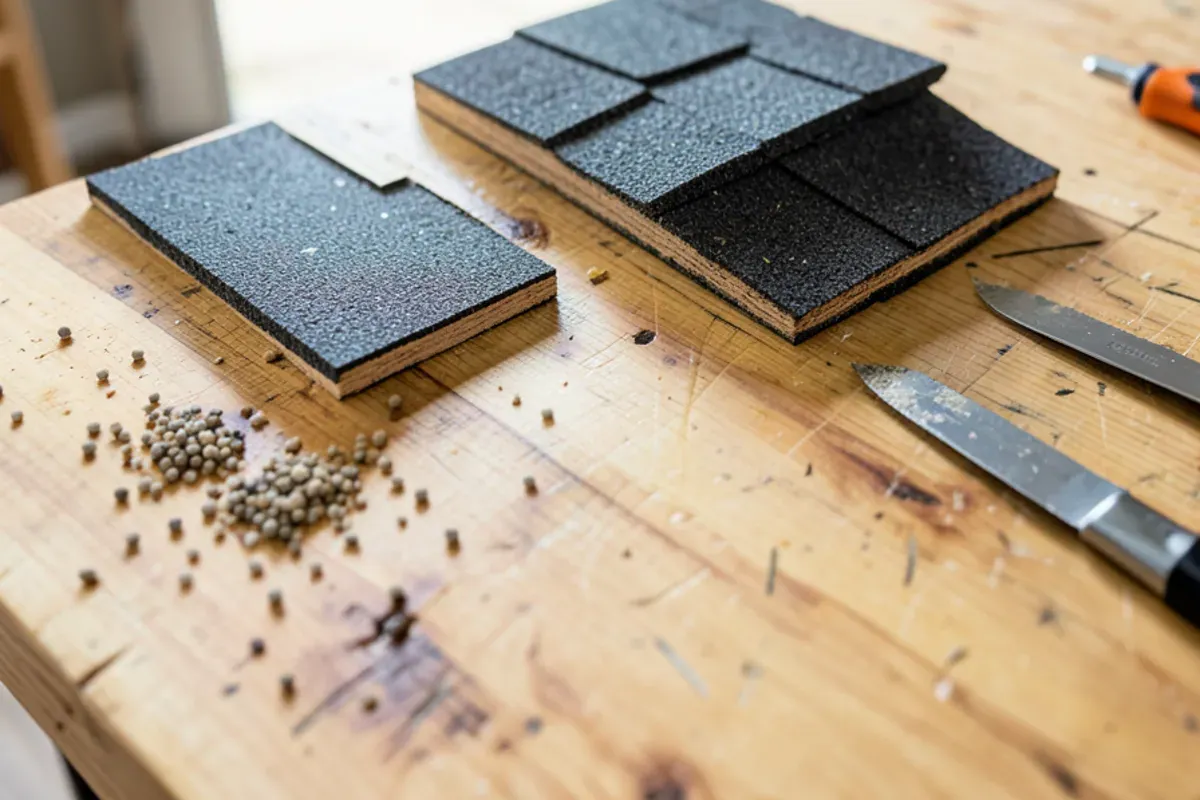
Class 4 shingles start from a similar idea but change the recipe. Most use asphalt modified with a rubber-like polymer (commonly called SBS) so the shingle flexes when struck, or add a reinforcing layer to the back. The result is a shingle that can absorb a blow that would fracture a standard one. To carry the Class 4 label, the product must pass the top level of the UL 2218 test.
How UL 2218 Testing Works
The UL 2218 test drops steel balls from set heights onto the same spot of a roof sample, twice. If neither the top nor the underside shows a crack, the product passes that class.
| UL 2218 class | Steel ball diameter | Roughly comparable hail |
|---|---|---|
| Class 1 | 1.25 in | Half dollar |
| Class 2 | 1.5 in | Ping pong ball |
| Class 3 | 1.75 in | Golf ball |
| Class 4 | 2.0 in | Hen egg |
Steel is harder than ice, so the test is demanding, but it is not a promise about real storms. Hail varies in density and shape and arrives with wind. IBHS hail research has also pointed out that products sharing a Class 4 label do not all perform alike, so the specific product line matters.
UL 2218 or FM 4473 on the data sheet
Some product sheets cite FM 4473 instead of, or alongside, UL 2218. That standard fires ice balls from a pneumatic launcher rather than dropping steel balls, and it also rates products by class. Either rating can appear on an impact-resistant line, so when your insurer asks for proof, send the exact standard and class printed on the manufacturer's documentation, not just "Class 4."
Want a roofer to look at it?
Free inspection with photos. Se habla español.
- 5.0 on Google (33 reviews)
- Free inspections & estimates
- Se habla español
- Workmanship guaranteed in writing with every contract
Class 4 vs. Standard Shingles: Side by Side
This is how the two compare on the points DFW homeowners ask about most:
| Factor | Standard architectural | Class 4 impact-resistant |
|---|---|---|
| Impact rating | None | UL 2218 Class 4 |
| Construction | Fiberglass mat, standard asphalt | Polymer-modified asphalt or reinforced back |
| Response to 1–1.5 in hail | Bruising and fractures likely on aged roofs | Often resists without fracture |
| Response to very large hail | Severe damage | Can still be damaged |
| Appearance | Dimensional, wide color range | Dimensional, similar range |
| Up-front cost | Lower | Higher, varies by line |
| Insurance discount | Not eligible | Eligible with many insurers |
| Installation | Standard methods | Standard methods, same crew skills |
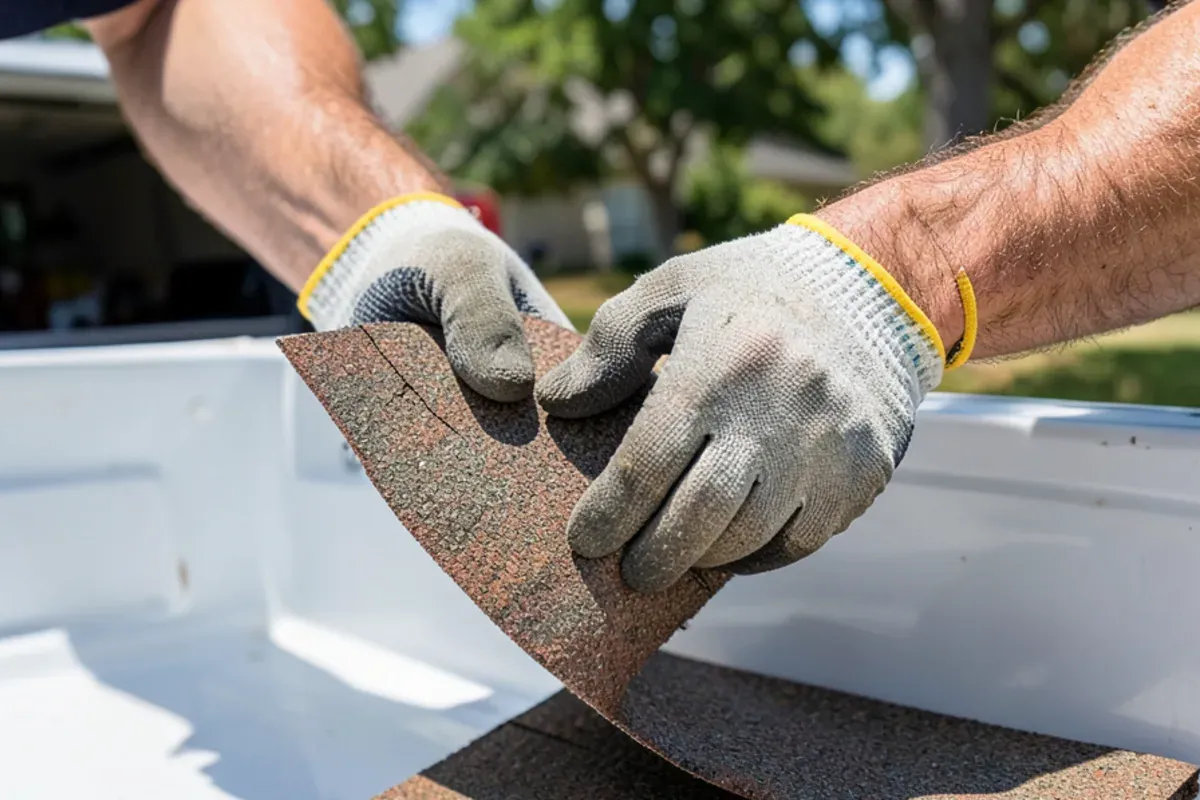
Are Impact Resistant Shingles Worth It?
Whether impact resistant shingles are worth it depends on a few questions you can answer for your own house:
- Does your insurer offer a discount? If so, how much per year, in writing.
- How long will you own the home? Payback takes years, so a short horizon weakens the case.
- How often has your street been hit? Repeated claims in a neighborhood argue for the upgrade.
- What is your wind and hail deductible? With a percentage deductible, avoiding even one claim keeps a large amount in your pocket.
- What is the price gap on your roof? It varies by product and roof size; ask for both options in one estimate.
If most answers point toward staying long-term in a storm-active area with a discount on offer, the upgrade usually makes sense. If you plan to sell soon and no discount exists, a quality standard architectural shingle may be the better value.
Does Impact Resistance Hold Up as the Roof Ages?
Partly, and this is the question few product brochures answer. Impact tests are run on new shingles. On a real roof, years of North Texas sun and summer heat dry and stiffen asphalt, and earlier storms can leave small fractures that do not show from the ground. A polymer-modified shingle usually keeps more flexibility than a standard one as it ages, but a twelve-year-old Class 4 roof should not be expected to behave exactly like the day it was installed.
The rating also measures one thing: whether the shingle cracks. Impact-resistant shingles can still lose granules where hail strikes, and heavy granule loss shortens the life of any asphalt roof. That matters after a storm, because damage on an impact-rated roof can be subtler than on a standard one.
How we inspect an impact-rated roof after hail
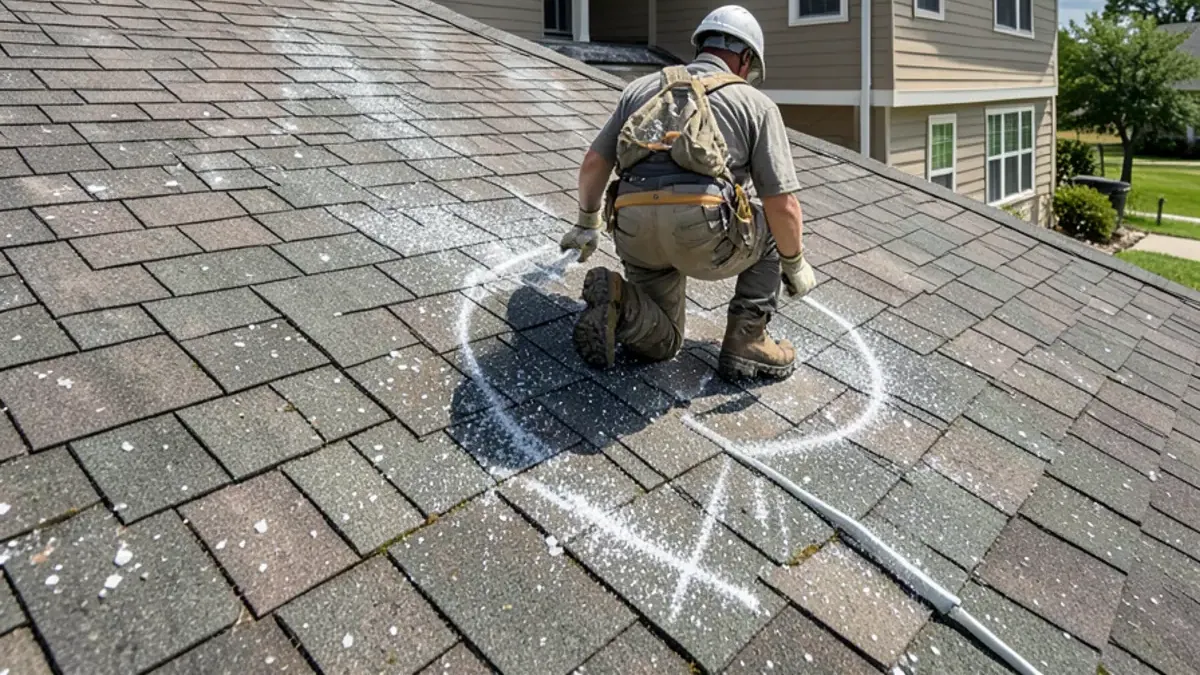
- Check soft metals first (vents, gutters, downspouts) to estimate hail size and direction.
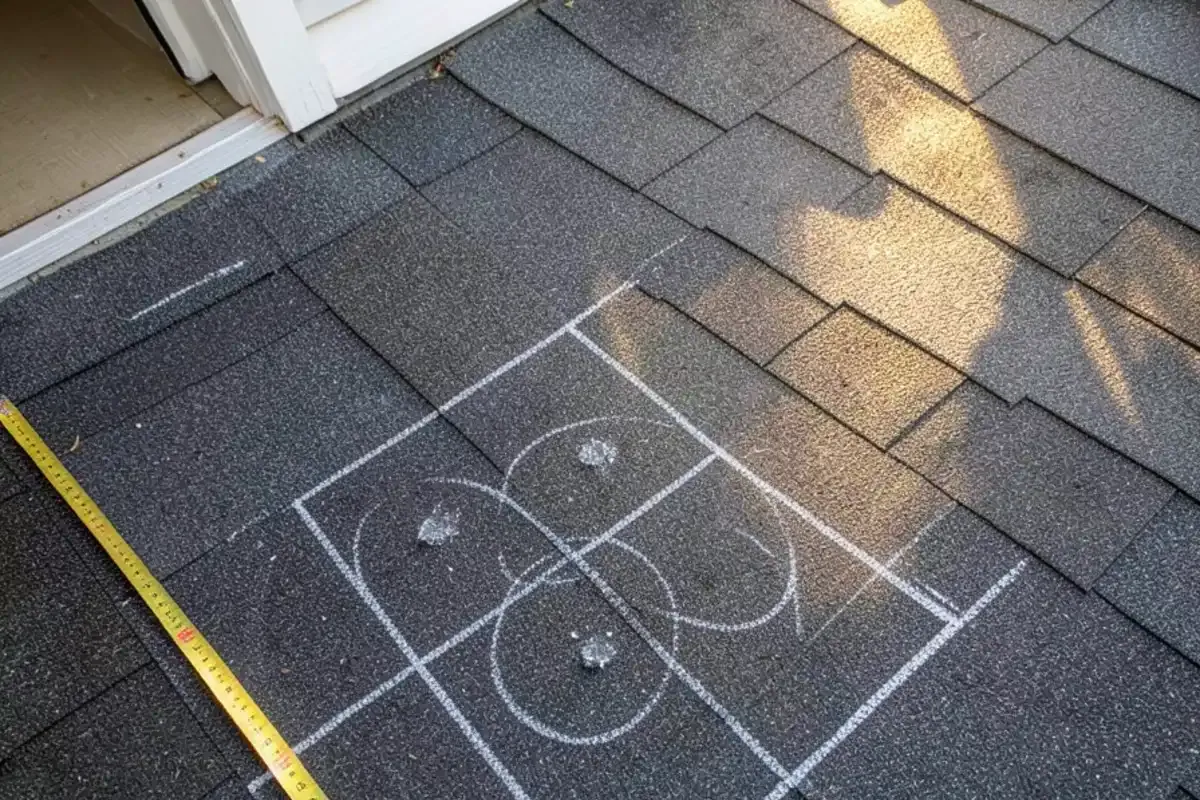
- Mark test squares on each slope and circle every hit inside them.
- Press and flex suspect hits to feel for mat fractures beneath the granule surface.
- Separate granule loss from fracture in the photos, since policies and adjusters treat them differently.
- Pull the product paperwork so the report names the exact line and its rating.
No Such Thing as Hail Proof Shingles
Searches for "hail proof shingles" are common, and the honest answer is that none exist. A rating describes how a product performed in a controlled test, not a guarantee against every storm. The rest of the roof also matters: ridge caps, starter strips, flashing, vents and pipe boots all take hits, and a Class 4 field of shingles does little good if a cheap vent cap cracks and leaks. When we install an impact-resistant roof, we match the accessories to the shingle line so the whole system is built for the same weather.
What We See After Storms
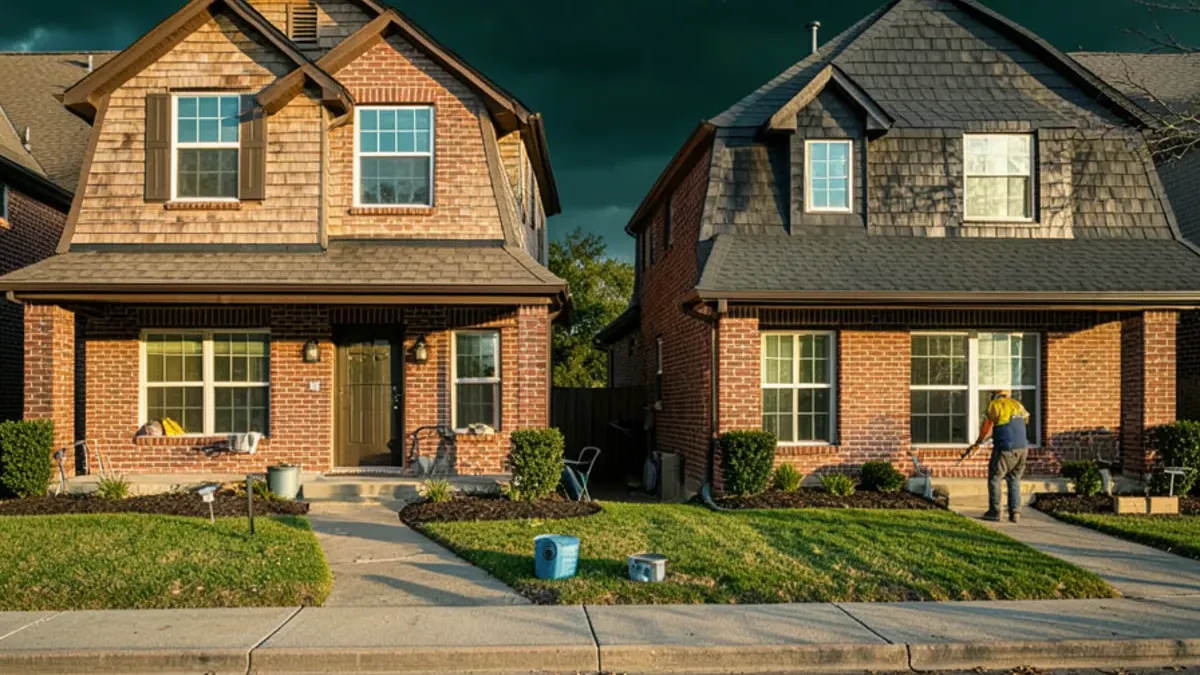
The pattern we see after hail is not that impact-resistant roofs come through untouched; it is that they tend to come through with fewer fractured shingles and less need for a full tear-off after moderate storms. Very large hail can still damage them, and we document that damage the same way we would on any roof.
The best moment to upgrade is often right after a claim, and the money works in a specific way. A policy generally pays to replace like kind and quality, so if your damaged roof was standard architectural shingles, the approved scope is usually written for standard shingles. Moving up to Class 4 at that point means paying the price difference yourself, on top of your deductible. We show both lines on the estimate so the gap is a clear number, and you can weigh it against the discount your agent quotes.
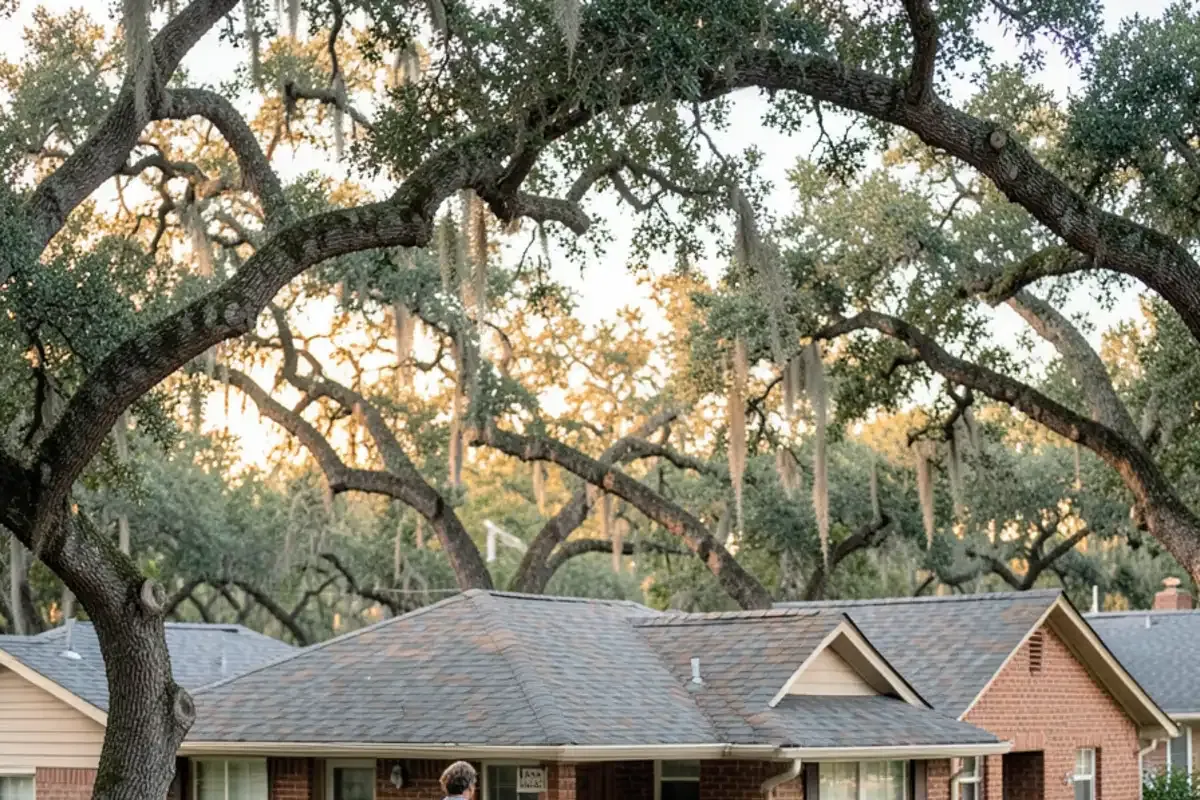
In Coppell, just north of Irving, many neighborhoods built in the 1980s and 1990s are now on replacement roofs, and owners there ask this question often. Our answer is always to price both, get the insurer's figure, and choose with real numbers.
Making the Choice
Neither shingle is the right answer for every home. Class 4 adds resistance and often a discount at a higher price; standard architectural shingles cost less and still perform well in most weather. See our impact-resistant shingles page for how we install them, and our hail damage roof repair page if a storm already made the decision urgent. For a free estimate pricing both options from a roofing company based in Irving, call (725) 745-8803.
Questions readers ask
Are Class 4 shingles worth it in DFW?
Do Class 4 shingles look different from regular shingles?
Can I put Class 4 shingles on just part of my roof?
Do Class 4 shingles last longer than standard shingles in Texas?
Sources

Written by the RJ Premium Roofing team, a bilingual roofing contractor based in Irving, TX. We inspect, repair and replace roofs across Dallas–Fort Worth and document storm damage for homeowners’ insurance claims.