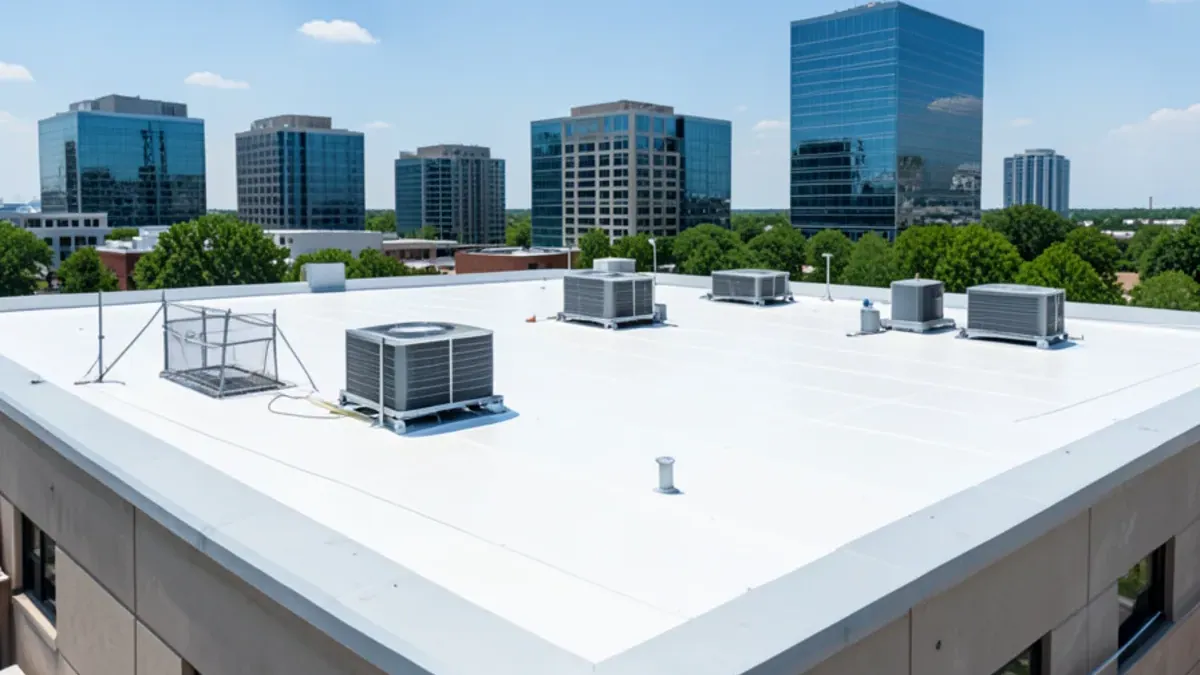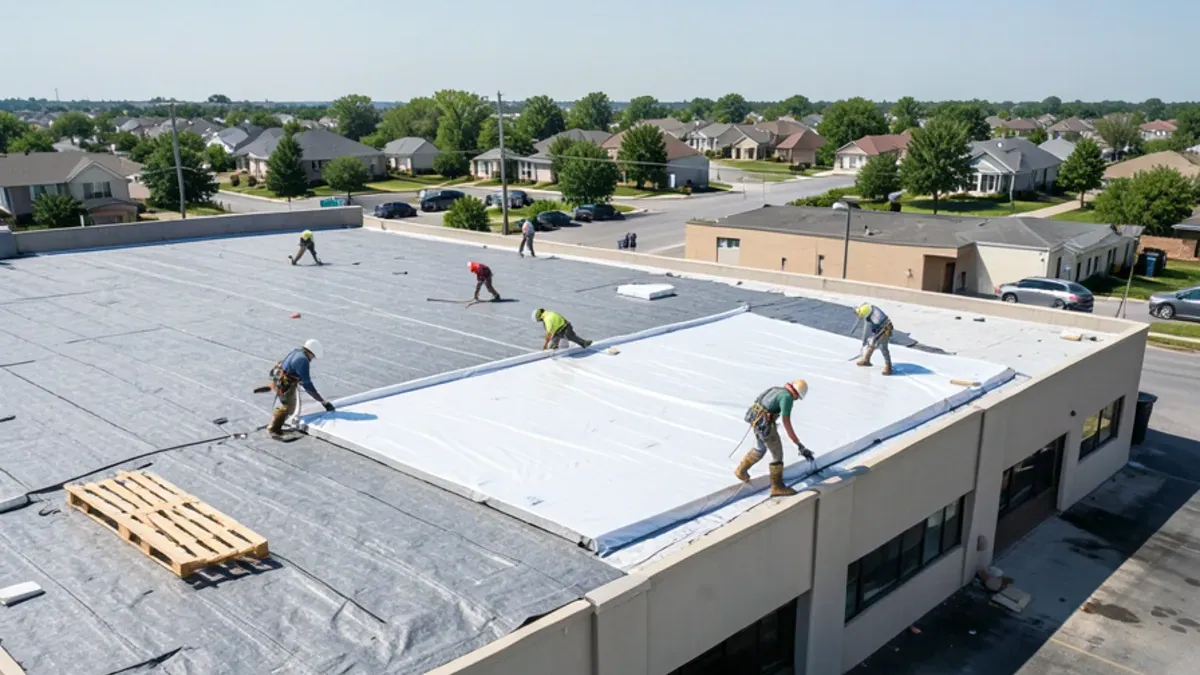
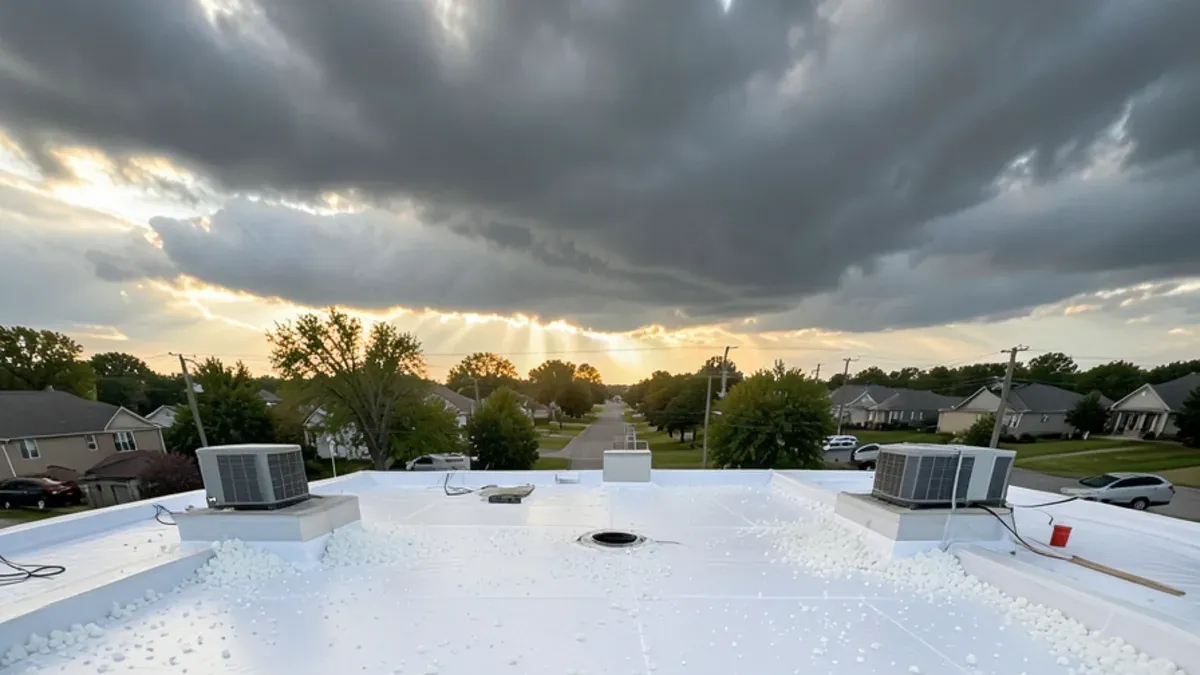
A commercial hail claim in Texas follows the same path as a homeowner's claim, but each step is bigger: deductibles are often a percentage of each building's insured value, insurers may send an engineer to cut core samples, and one storm can hit several buildings on one policy. Document early and read the policy first.
Texas leads the country in hail losses: National Insurance Crime Bureau data show 637,977 hail claims statewide over 2017–2019, with Dallas in the national top five by city. Commercial properties carry a share of that, and the claims tend to be more complicated than residential ones. This guide explains where they differ and what a property owner or manager can do to keep the process clear. For the roofing side of the work, see our commercial roofing overview.
How a Commercial Roof Insurance Claim Differs From a Home Claim
| Topic | Typical homeowner claim | Typical commercial claim |
|---|---|---|
| Deductible | Often a flat amount or a percentage of dwelling coverage | Often its own wind/hail deductible, figured as a percent of each building's insured value |
| Roof size | A few dozen squares of shingles | Thousands of square feet of membrane, metal or built-up roof, sometimes several levels |
| Buildings | One house, maybe a detached garage | Several buildings on one policy, each with its own age and condition |
| Investigation | Adjuster walks the roof, checks shingles and soft metals | Adjuster, often an engineer, cores the roof, runs moisture tests, reviews equipment |
| Coverage basis | Replacement cost or actual cash value | Same options, plus possible roof-age schedules or cosmetic-damage exclusions for metal |
| Who is affected | One household | Tenants, leases, operations and lenders |
Read the declarations page and any endorsements before the inspection. Whether the deductible applies per building or per occurrence, and whether the policy pays replacement cost or actual cash value, changes the math more than any line on a roofing bid.
Does the Hail Deductible Apply Per Building or Per Storm?
That single line in the policy can decide whether a claim is worth filing. A percentage deductible is usually figured from insured value, not from the size of the loss, so it grows with the building. Take a hypothetical policy with a 2% wind/hail deductible: a building insured for $2 million carries a $40,000 deductible for that peril. If the policy applies the deductible to each building, an owner with three buildings could face three separate deductibles from one storm. If it applies once per occurrence, the same storm triggers one.
Check these four items with your agent before the adjuster arrives:
- Whether the deductible is a flat amount or a percentage, and of what value
- Whether it applies per building, per location or per occurrence
- Whether roof coverage shifts to actual cash value once a roof reaches a certain age
- Whether a cosmetic-damage exclusion applies to metal roofs, panels or trim
Cosmetic-damage exclusions on metal roofs
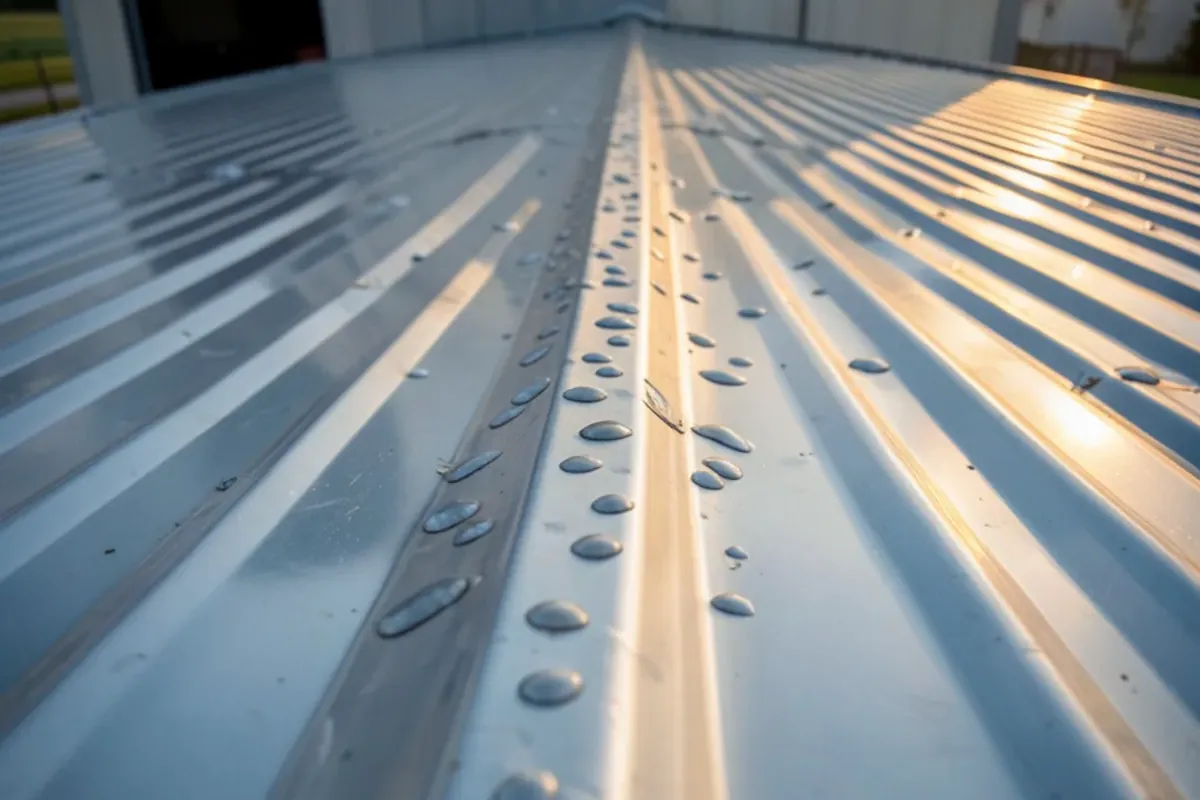
Many commercial policies exclude hail damage that changes how a metal roof looks without affecting how it sheds water. Courts in Texas have generally enforced that kind of exclusion when the owner had no evidence that the dents went beyond appearance, so ask your agent or attorney how your policy's wording has been read. If your buildings have metal roofs, our photos focus on what the policy wording turns on: split seams, cracked panel coatings, opened laps and fastener damage, not just the dent count.
What Hail Damage on a Commercial Roof Looks Like
Hail marks a commercial roof differently depending on the system:
- Modified bitumen and built-up roofs: granules knocked loose at each strike, and on harder hits a fractured mat you can feel by pressing on the spot.
- Single-ply membranes (TPO, PVC, EPDM): sometimes no visible mark on top, but crushed cover board or insulation beneath, and punctures on older, stiffer sheets.
- Metal roofs and panels: dents that may or may not count as covered damage depending on the policy's cosmetic language.
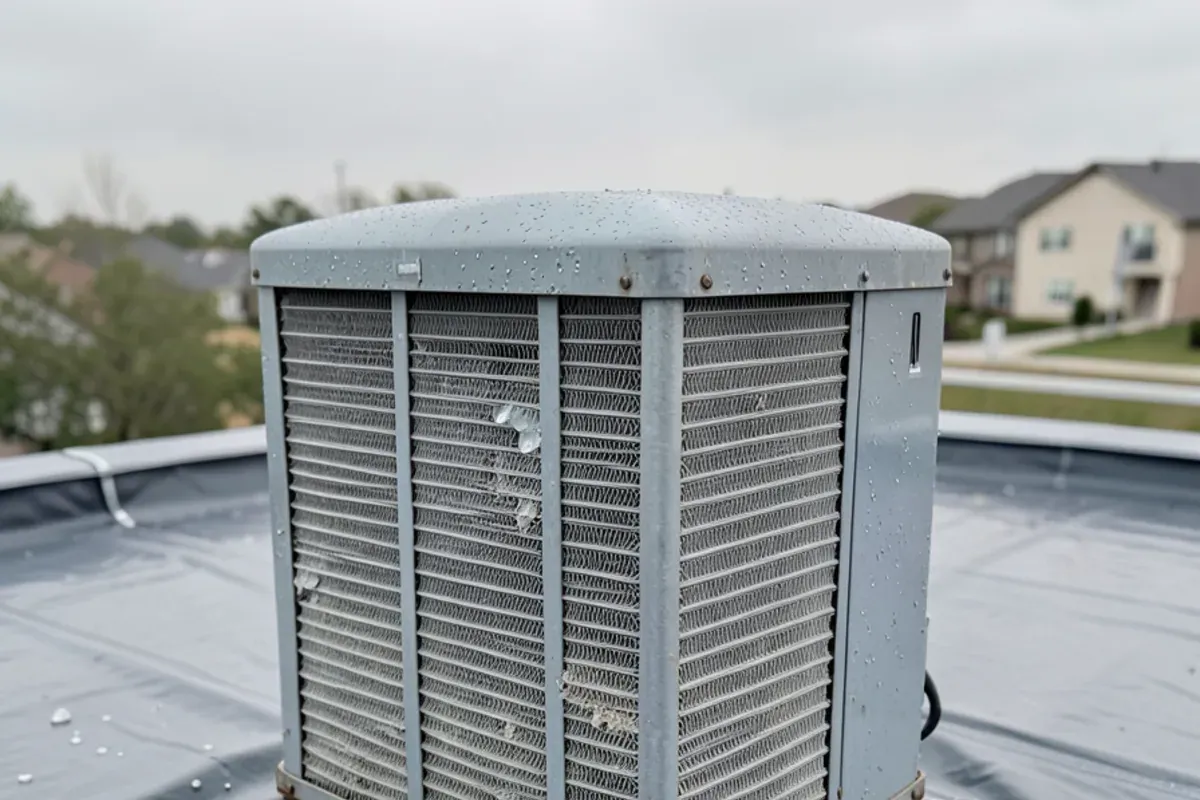
- Rooftop equipment and accessories: dented HVAC cabinets and fins, cracked skylights and smoke-vent lids, damaged drain domes and vent caps.
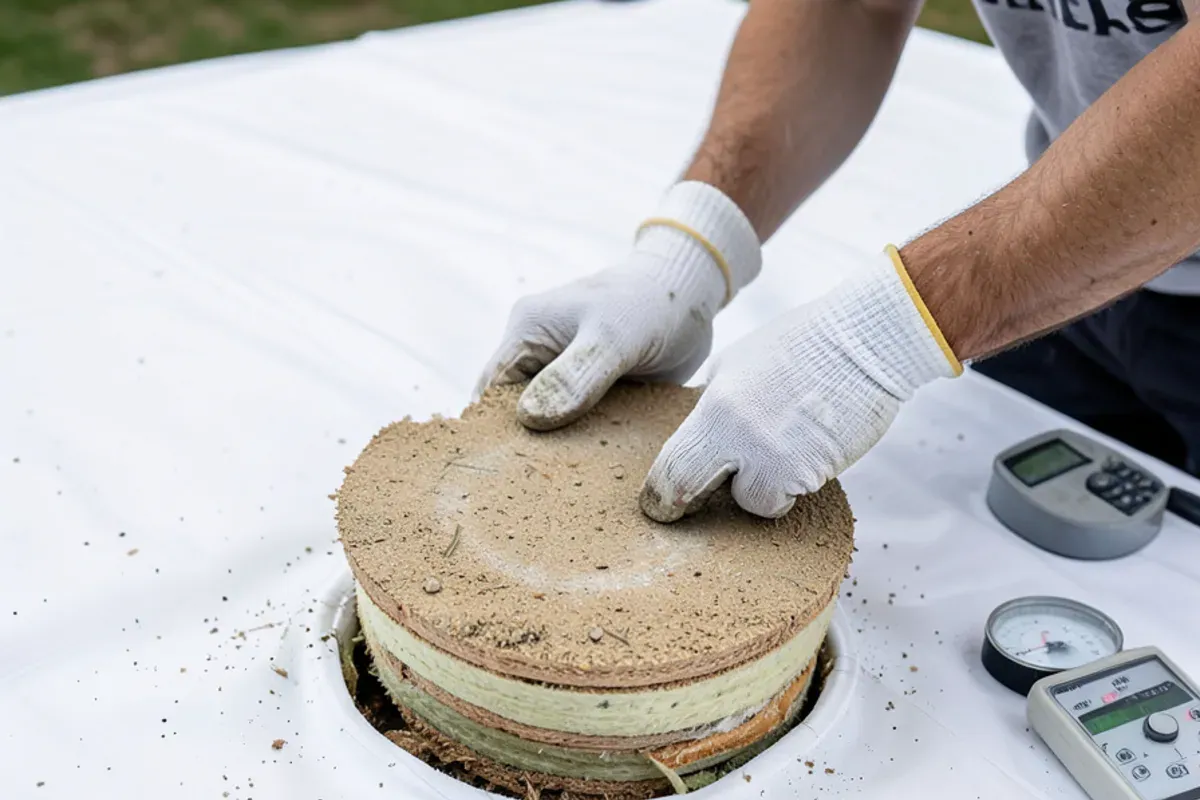
Core Sample Roof Tests and Moisture Surveys
On commercial claims, what is under the membrane matters as much as what is on it. Engineers and adjusters commonly cut small cores to count roof layers, measure insulation and look for crushed or wet material. Infrared or other moisture surveys can map wet areas across a large roof.
Before the inspection, ask:
- Where cores will be taken, and who patches them
- Whether a moisture survey is planned, and whether you will get a copy
- How wet areas that existed before the storm will be separated from new damage
If we are on site, we photograph each core, the layers it shows, and the patch afterward, so your records match the insurer's.
Want a roofer to look at it?
Free inspection with photos. Se habla español.
- 5.0 on Google (33 reviews)
- Free inspections & estimates
- Se habla español
- Workmanship guaranteed in writing with every contract
A Property Manager Hail Claim Timeline
- Note the date. Write down when the storm hit; NOAA's Storm Events Database and local storm reports can help confirm hail in your area on that date.
- Make the building safe. Arrange temporary repairs to stop active leaks and keep receipts and photos.
- Read the policy. Check the reporting deadline, the deductible and the coverage basis.
- Report the claim to your carrier or agent as the policy requires.
- Get the roof documented. Our free inspection includes photos and a written damage report for each building.
- Attend the adjuster inspection. We can be on the roof with the adjuster to point out the damage we documented.
- Review the scope. Compare the insurer's scope with the documented damage and ask your carrier about any gaps.
- Build to the approved scope with a contract that matches it.
Commercial Hail Claim in Texas: Rules Contractors Must Follow
Two parts of the Texas Insurance Code shape what a roofer can do on any claim. Chapter 707 prohibits a contractor from paying, waiving, rebating or absorbing your deductible. Chapter 4102 reserves that advocacy role for licensed public adjusters, so a roofing contractor may not act for you with the insurer or present itself as an adjuster. If a contractor offers to "handle the claim" or "cover the deductible," that is a reason to walk away.
What We Document After a DFW Hailstorm
Getting the damage identified correctly is the core of our storm work. On commercial roofs that means a grid walk of every roof section, test squares marked and photographed, soft metals and rooftop units checked as hail indicators, cores where the membrane hides what is underneath, and a report organized by building so managers with several properties in Dallas or Irving can match it to their policy schedule.
We also note pre-existing conditions honestly. Old wet insulation, open seams from age, and earlier patches are part of the picture, and a report that ignores them does not help anyone. The way we have put it when answering a Google review: "Our job is to make sure that the storm damage to the roof is correctly identified for your insurance claim."
That cuts both ways. Sometimes the honest finding is that a storm dented the rooftop units and the gutters but left a newer membrane sound, and the right call is a smaller equipment claim or none at all once the deductible is counted. Other times a roof that looks fine from the hatch shows crushed cover board in every test area. We tell owners which of those we found before they decide what to file.
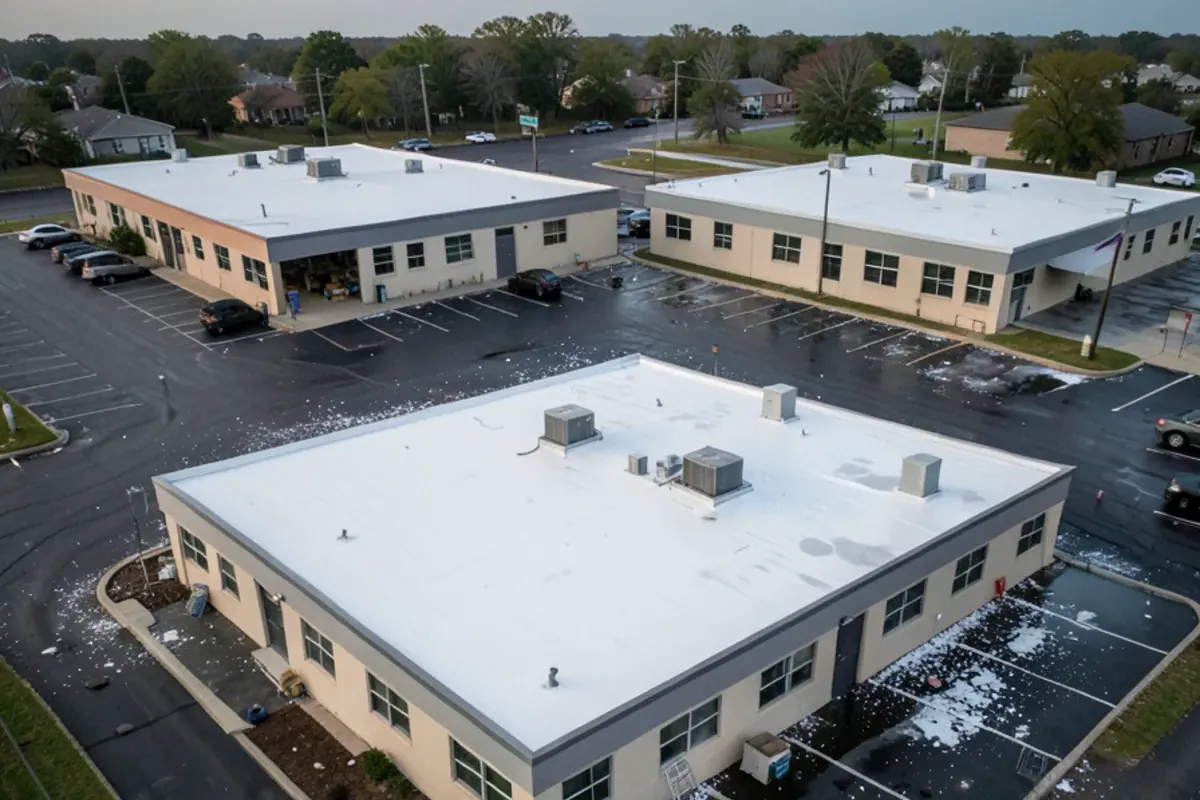
When the Approved Scope Means a New Roof
If the approved scope calls for replacement, the project still has to meet current city codes, including energy-code insulation requirements and, in Irving, the Chapter 8B cool-roof amendments. Our commercial roof replacement page covers how we plan that work around tenants. Atendemos reclamos comerciales por granizo en español e inglés.
After the Storm, Start With Documentation
The sooner a commercial roof is documented after hail, the easier it is to tie damage to the right date and building. Hail documentation is one piece of what our roofing contractor in Irving, TX team does, and the inspection and damage report are free for commercial properties throughout Dallas–Fort Worth. Call (725) 745-8803 to have your buildings walked.
Questions readers ask
Can a roofer handle our commercial insurance claim for us?
Will the insurer cut holes in our roof?
Can a contractor cover our commercial deductible?
Should we file if the only hail marks are on the rooftop units?
Sources

Written by the RJ Premium Roofing team, a bilingual roofing contractor based in Irving, TX. We inspect, repair and replace roofs across Dallas–Fort Worth and document storm damage for homeowners’ insurance claims.