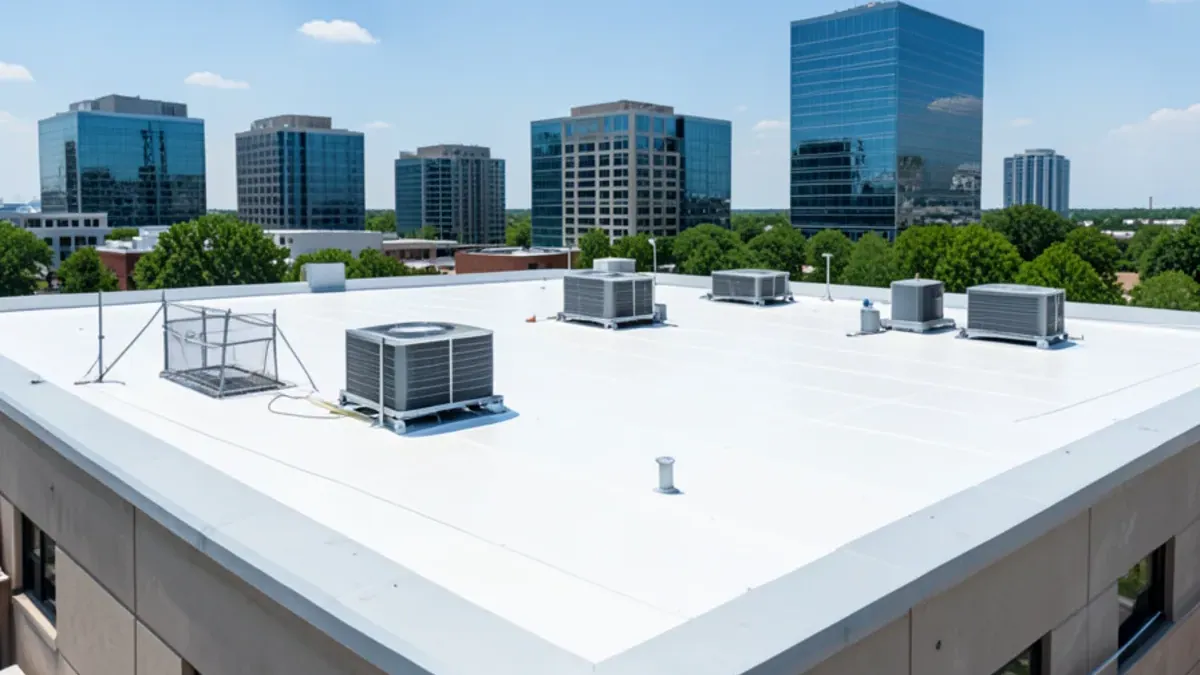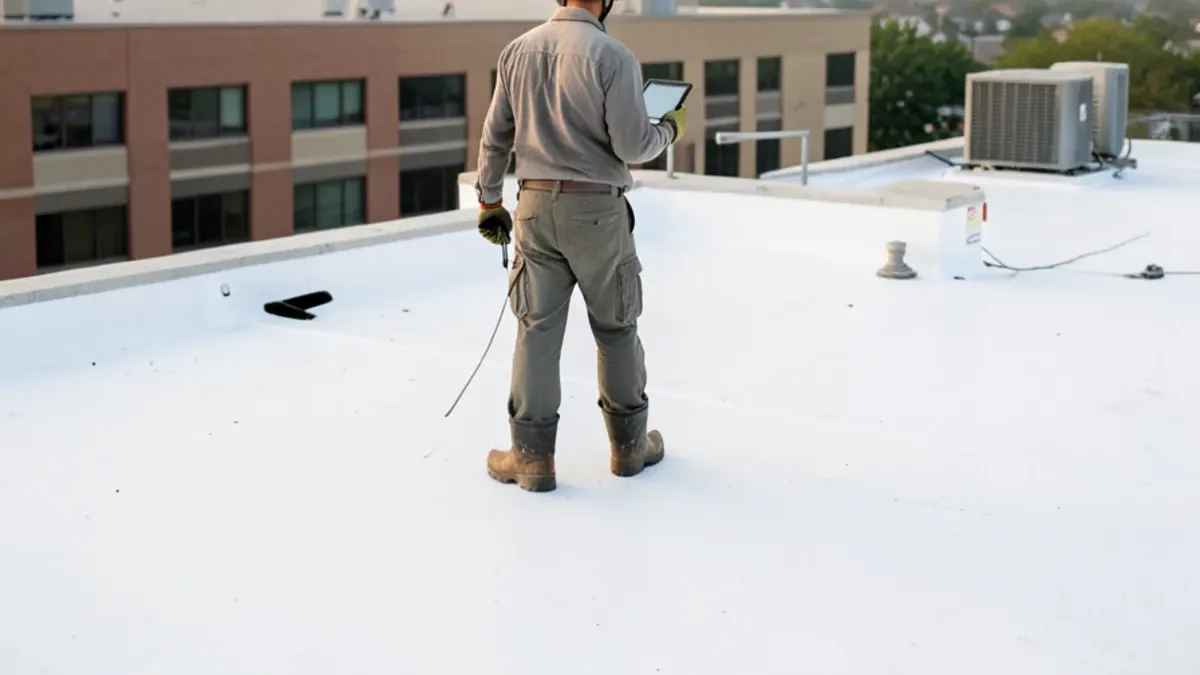
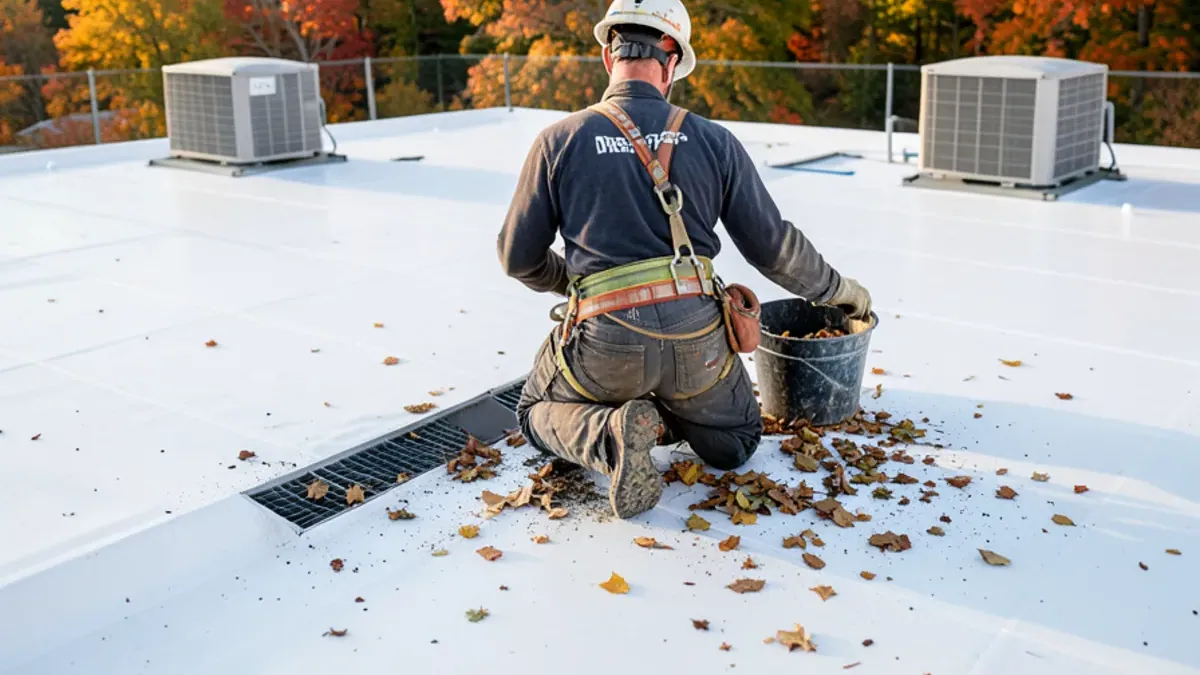
A commercial roof maintenance plan is a written schedule naming who checks the roof, when, what they inspect and where the records go. In Dallas–Fort Worth that means a spring visit before hail season, a fall visit after summer heat, and a documented walk after every major storm, so small drain and flashing problems get fixed early.
Most commercial roofs in Dallas–Fort Worth are not lost to one big storm. They wear out a seam, a curb and a clogged drain at a time, on roofs that nobody climbs until there is a stain on a ceiling tile. A maintenance plan changes that by putting the roof on the calendar. If you manage several buildings, it also gives you one place to see which roofs need money this year and which can wait. Our commercial roofing work starts from that kind of record.
Why a Written Plan Beats Reacting to Leaks
Reactive repairs cost more for three reasons. Water that gets in through a small opening spreads through insulation before it shows inside, so the repair area grows. Emergency visits happen in bad weather, when a permanent fix often has to wait. And without records, it is hard to prove to a manufacturer or insurer when a problem started.
A plan fixes all three. It sets regular visits, it creates a record, and it puts small repairs in the budget before they become large ones.
The Commercial Roof Inspection Schedule for DFW
| When | Why then | Main tasks |
|---|---|---|
| Early spring (March) | Before the peak of hail and severe storm season | Full inspection, drain cleaning, seam and flashing repairs, photo baseline |
| After each major storm | Hail, high wind or a long soaking rain | Storm walk, photos, temporary repairs, damage report if needed |
| Midsummer (optional) | Peak heat on dark and aging roofs | Quick check of sealants, coatings and rooftop unit condensate lines |
| Fall (October–November) | After summer heat and as leaves drop | Full inspection, drains and gutters cleared, winter prep for pipes and hatches |
| After any rooftop work | HVAC, solar or telecom vendors were up there | Check new penetrations, debris, damaged membrane near equipment |
The storm row matters most. Damage left alone grows with every rain, and a spring baseline makes new hail or wind damage easy to separate from old wear.
Preventive Roof Maintenance Tasks, Area by Area
A routine visit should cover the whole roof in the same order every time:
- Drains, scuppers and gutters. Remove debris, check strainers, confirm water is flowing.
- Field of the roof. Look for blisters, splits, punctures, ponding and exposed reinforcement.
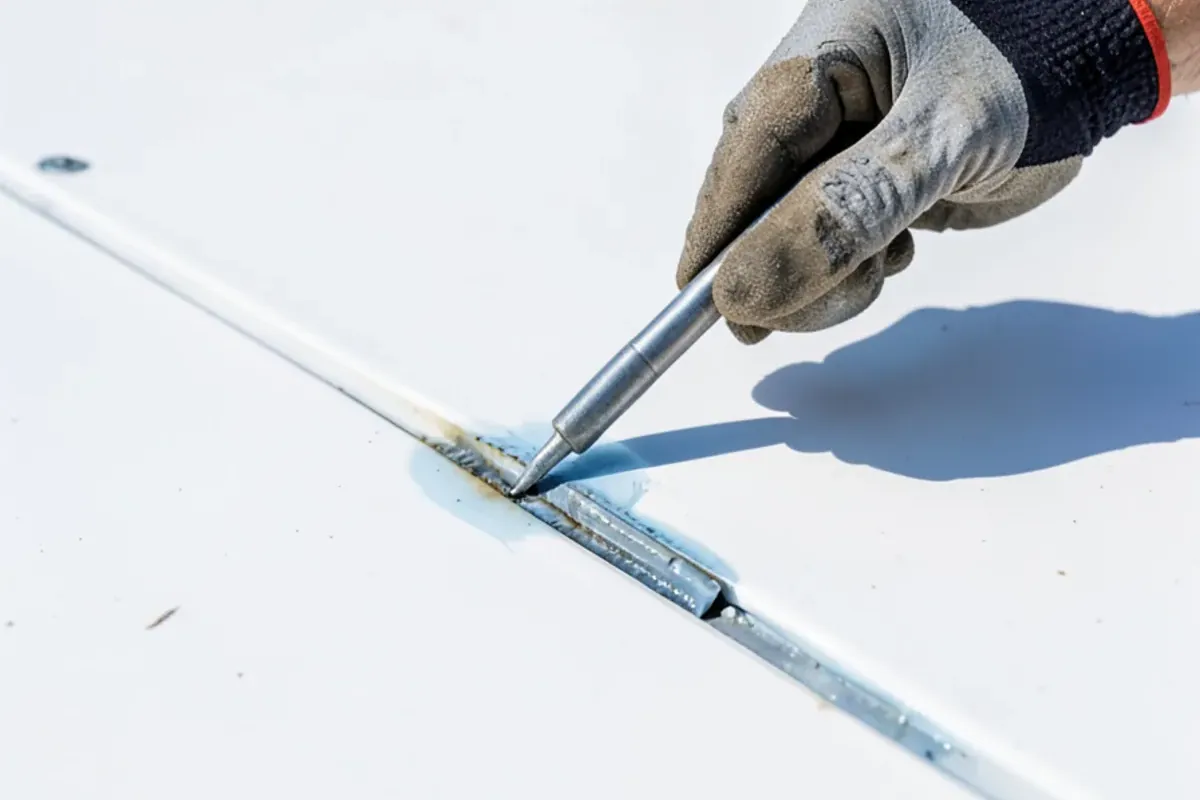
- Seams. Probe lap seams on single-ply roofs; check for open laps on modified bitumen.
- Perimeter. Edge metal, coping joints and parapet base flashings.
- Penetrations. Pipes, pitch pans, conduit supports and vents.
- Rooftop equipment. Curb flashings, access panels, condensate lines and service debris.
- Interior. Ceiling stains or damp insulation below known trouble spots.
Small items found on the visit, like a loose termination bar or a cracked pitch-pan filler, should be repaired the same visit when weather allows.
TPO and PVC single-ply roofs
Probe every heat-welded lap, watch for membrane shrinkage pulling at corners and parapet bases, and look for punctures near rooftop units where dropped tools and screws land. Clean the surface only with methods the manufacturer allows, since harsh cleaners can harm some membranes.
Modified bitumen and built-up roofs
Check cap sheets for granule loss, open laps and alligatored flood coats. Dry blisters that are not leaking are usually numbered on the roof plan and watched from visit to visit rather than cut open the first time they are seen.
Exposed-fastener metal roofs
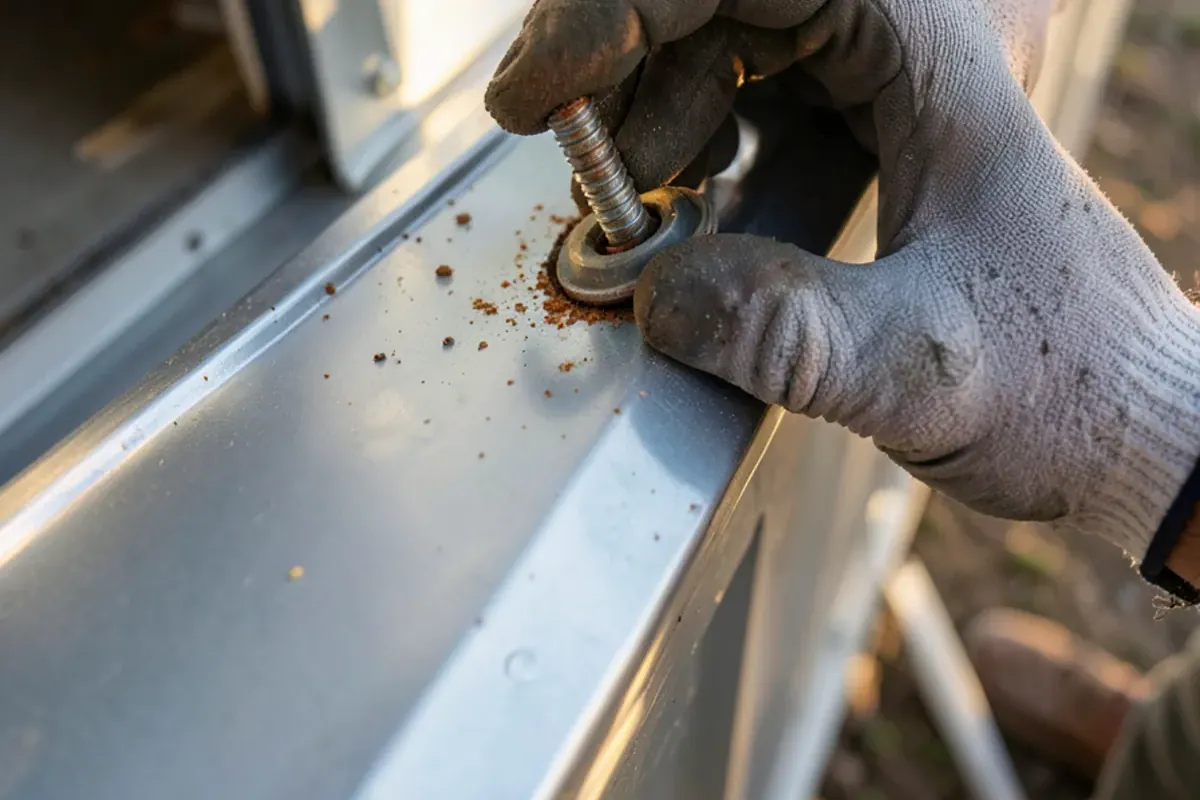
Rubber washers under screw heads dry out and crack in North Texas sun, and thermal movement backs screws out a little each summer. Check fasteners, end-lap sealant, cut edges for rust and trim at the ridge and eaves.
Coated roofs
Look for thin or chalking areas, poor adhesion and wear at spots that pond after rain. Many coating warranties expect periodic cleaning and recoating, so put the coating's maintenance terms into the plan's calendar.
Want a roofer to look at it?
Free inspection with photos. Se habla español.
- 5.0 on Google (33 reviews)
- Free inspections & estimates
- Se habla español
- Workmanship guaranteed in writing with every contract
Roof Warranty Maintenance: Keeping Coverage Intact
Many membrane warranties expect the owner to maintain the roof and to keep records. Typical exclusions include damage from ponding the owner did not report, alterations made by other trades without notice to the manufacturer, and repairs made with incompatible materials. Read your own warranty for the exact terms, then build the plan around them:
- Keep the warranty, the original installer's details and every inspection report in one folder.
- Notify the warranty holder before adding new equipment or penetrations, if the warranty requires it.
- Use repair materials compatible with the membrane, and record what was used.
- Report leaks in writing within the time the warranty sets.
Our workmanship is guaranteed, with written terms in your contract; the manufacturer's warranty covers the materials. A maintenance log supports both.
What Goes in the Leak Response Page of the Plan?
The leak call usually comes during a storm, when nobody wants to make decisions from scratch. Give the plan a one-page response sheet and keep a copy near the roof hatch:
- The person who approves roof access and calls the roofer, plus a backup for nights and holidays
- The roofer's phone number and the building address exactly as it appears on the roof plan
- Where buckets, plastic sheeting and wet-vacs are kept, and which tenants to notify first
- Which rooftop units or electrical rooms sit under known trouble spots, and who can shut them down
- A rule to photograph the ceiling, the floor and the time before anything is moved
- A rule that nobody walks a wet roof while the storm is still passing
Expect two steps after a leak: a temporary repair to stop the water, then a permanent repair once the roof is dry and someone has checked whether the insulation below got wet. Writing that into the plan keeps a quick patch from being mistaken for the finished fix.
Who Owns the Roof on Your Team?
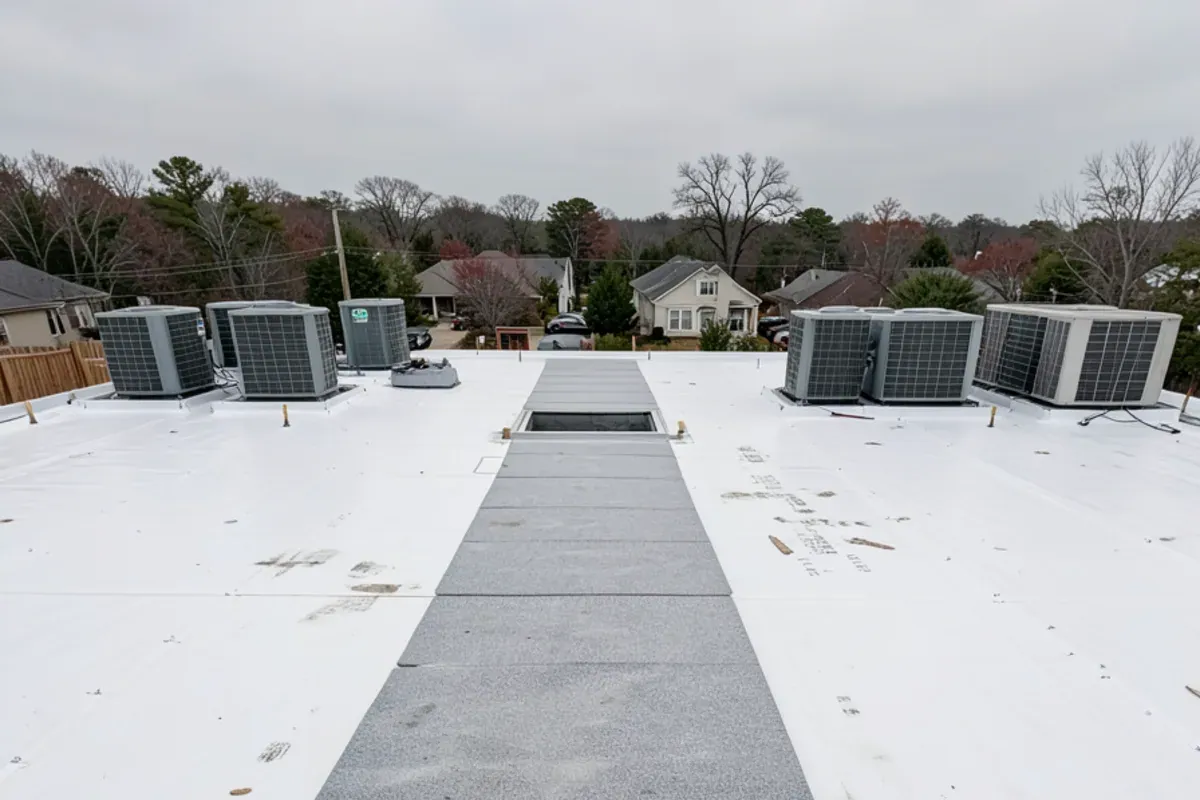
On many buildings the roof falls through the cracks between the property manager, the HVAC vendor and the tenants. A good plan names one person to approve roof access, keep the key to the hatch, receive inspection reports and call in leaks. It also sets rules for vendors: use walkway pads, take debris and screws back down, and report any damage they cause. In busy retail and office areas like Addison's Belt Line corridor, where several vendors may be on the same roof in a month, that rule alone prevents a lot of punctures. We service buildings in Addison as well as Irving.
Using Inspection Records to Budget for Replacement
A maintenance plan doubles as a budgeting tool. When every visit rates the same numbered roof sections the same way, an owner can see which areas are holding steady and which need money soon. We use three plain ratings: sound, watch and act. A section that sits at "act" on two visits in a row is usually a candidate for a larger repair or a recover rather than another round of spot fixes.
The records matter again at replacement time. Moisture readings and core cuts taken over the years show how much insulation is wet, and the International Building Code does not allow a new covering over a water-soaked roof or over two existing layers. That one fact decides whether a cheaper recover is even an option. In Irving, a re-roof also needs a city permit, and low-slope roofs must meet the local cool-roof minimum of SRI 78, so a replacement budget should assume a reflective membrane.
What We Notice on DFW Roofs Without a Plan
The roofs that worry us most share a few traits: drains half-full of leaves and old filters, HVAC screws and panel scraps lying on the membrane, sealant smeared over seams by several different hands, and no record of when anything was done. In North Texas heat, sealants and coatings break down faster on the sunny side of curbs and parapets, and a roof that went two summers without a look often has open laps at every rooftop unit.
The other common gap is storm follow-up. A hailstorm passes, nobody walks the roof, and the damage is found months later during a leak call, when tying it to a date is harder. A storm check written into the plan avoids that.
An honest trade-off: on a brand-new roof, the first year or two of spring and fall visits may turn up very little. We still recommend them, because those early baseline photos are what make a later warranty request or storm report easy to support. A small building can skip the optional midsummer check until the roof starts to age.

Flat Roof Upkeep for Smaller Buildings
Not every owner needs a full program. For a single-tenant building or a small strip center, a simple version works: two visits a year, a storm check, and a one-page log. Our commercial roof inspection visits can serve as the backbone of that plan, with photos and a short priority list after each one. Ofrecemos el mantenimiento del techo comercial con reportes en español o en inglés.
Put Your Roof on the Calendar
Routine upkeep usually costs less than the leaks it heads off, and it leaves you with records when a storm or warranty question comes up. A free inspection sets your baseline, and because we are a nearby roofing contractor in Irving, TX, we can come back on whatever schedule you choose. Call (725) 745-8803 to book the first visit.
Questions readers ask
How often should a commercial roof be inspected in North Texas?
Can our own maintenance staff handle the roof plan?
What should a maintenance visit report include?
Does a maintenance log help with a commercial hail claim?
Sources

Written by the RJ Premium Roofing team, a bilingual roofing contractor based in Irving, TX. We inspect, repair and replace roofs across Dallas–Fort Worth and document storm damage for homeowners’ insurance claims.