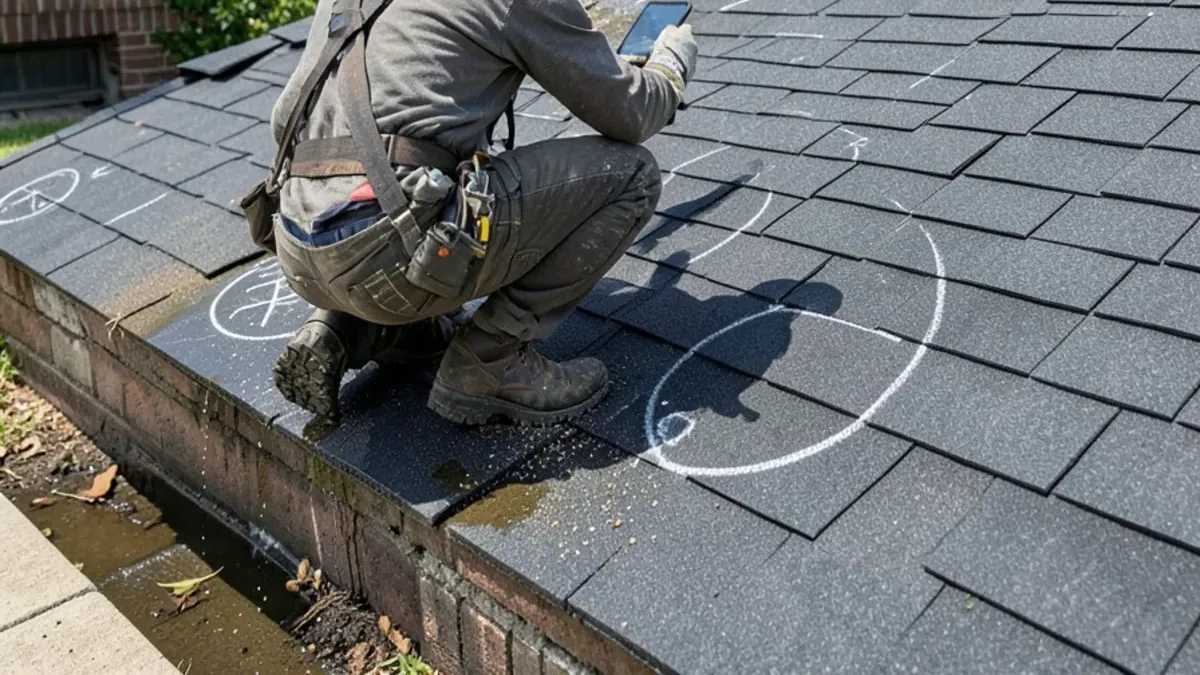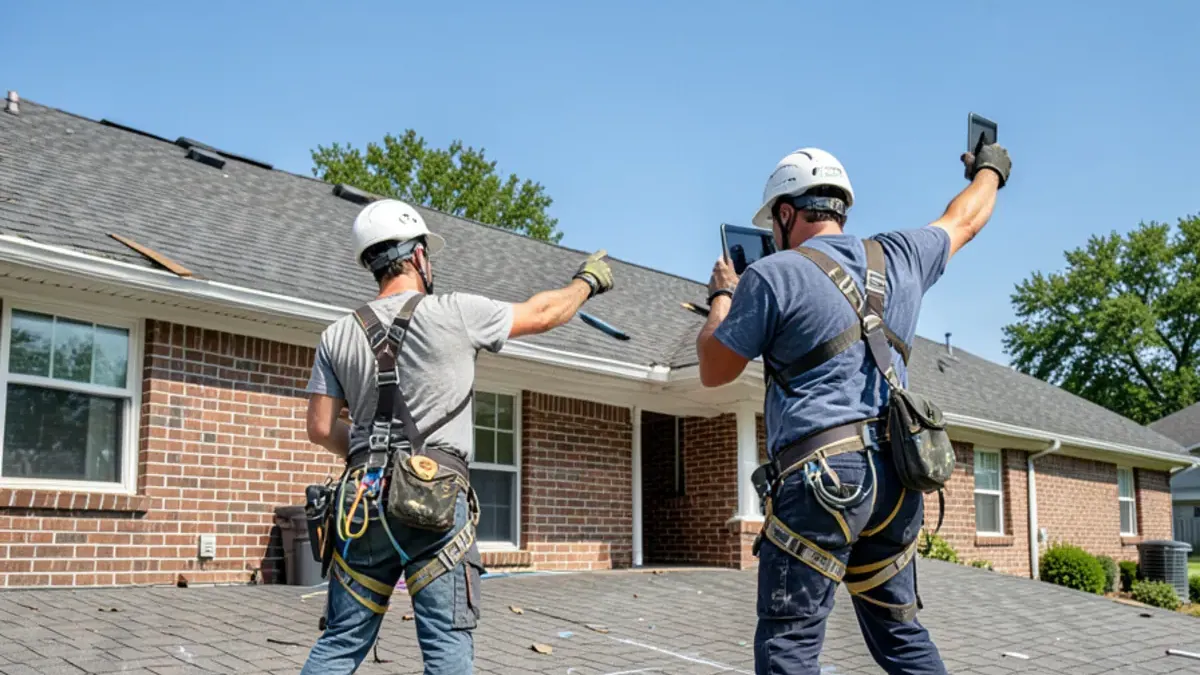
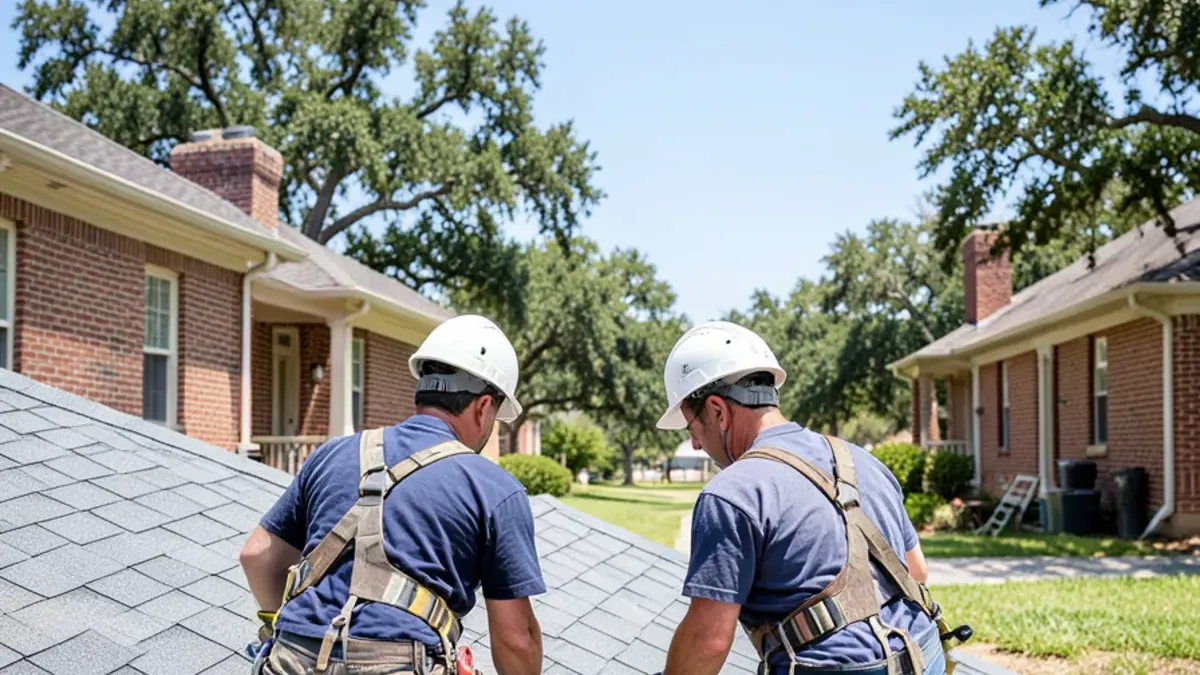
If you are wondering what an adjuster looks for on a roof after hail, it comes down to proof of a storm and proof of damage: dents in soft metals that show hail size and direction, then marked test squares on each slope where bruised or fractured shingles are counted. The count, the roof's condition and repairability drive the estimate.
The adjuster's visit is the moment a hail claim turns from photos and phone calls into a number. It is usually short, and it moves fast. Knowing what the adjuster is checking, and in what order, helps you prepare and makes it far less likely that real damage goes uncounted.
Who Comes Out for the Roof Adjuster Inspection
The person who handles your roof adjuster inspection may be a staff adjuster employed by your insurer or an independent adjuster hired by the insurer for storm volume. On disputed or unusual claims, the company sometimes sends an engineer. In every case, that person works for the insurance company.
The adjuster's job is to confirm that a covered event happened, measure what it damaged and write an estimate for the repairs your policy covers. Texas Insurance Code Chapter 542 gives the insurer set time frames to acknowledge, decide and pay a claim, so the visit is one step in a process with its own clock.
What Adjusters Check, Step by Step
Most adjusters follow a similar sequence. This table shows what they look at and why each item matters to the estimate.
| What they check | What they are looking for | Why it matters |
|---|---|---|
| Ground collateral | Dents in gutters, downspouts, AC fins, screens | Confirms hail hit the property |
| Soft metals on the roof | Dents in ridge vents, flashing, vent caps | Shows hail size and direction |
| Test squares | Hail hits counted in a marked area per slope | Decides which slopes qualify |
| Shingle condition | Bruising, fractures, granule loss vs. wear | Separates storm damage from age |
| Repairability | Whether shingles can be lifted and replaced without breaking | Repair vs. replace decision |
| Roof measurements | Squares, pitch, layers, waste | Sets the quantities in the estimate |
| Accessories | Ridge caps, pipe boots, drip edge, vents | Line items that are easy to miss |
| Interior | Ceiling stains and attic moisture | Supports related water damage |
Want a roofer to look at it?
Free inspection with photos. Se habla español.
- 5.0 on Google (33 reviews)
- Free inspections & estimates
- Se habla español
- Workmanship guaranteed in writing with every contract
How a Test Square for Hail Damage Works
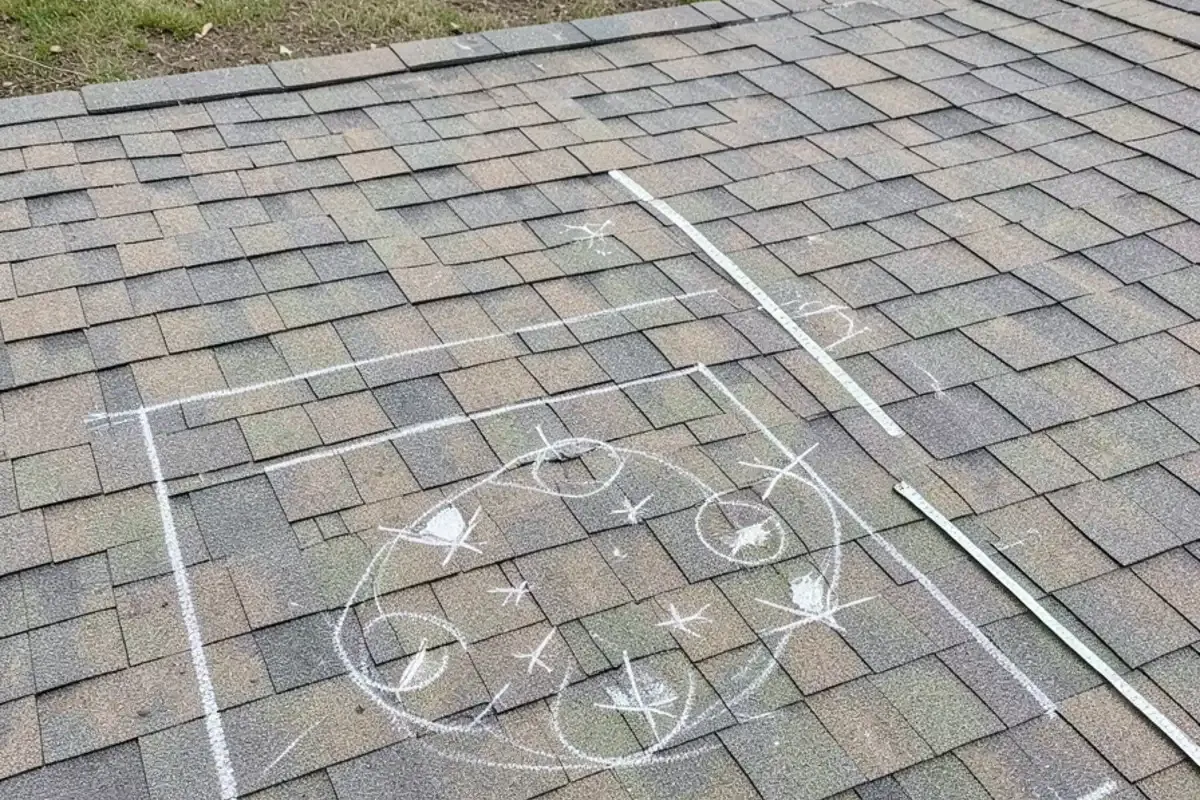
A test square for hail damage is a 10-by-10-foot area, one roofing "square," outlined in chalk on a slope. The adjuster counts the hail hits inside it and compares the count to the threshold their company uses. Squares are usually marked on each slope that faces a different direction, because hail driven by wind hits one side of the roof harder than the others. On a slope too small or cut up for a full square, the marked area can take another shape as long as it still covers 100 square feet.
Placement matters. A square drawn on a sheltered slope, or near the eave where hits are fewer, can undercount damage that is obvious higher up on the storm-facing side. If you or your roofer are present, you can ask where the squares will go and why.
Soft Metal Hail Damage as Evidence
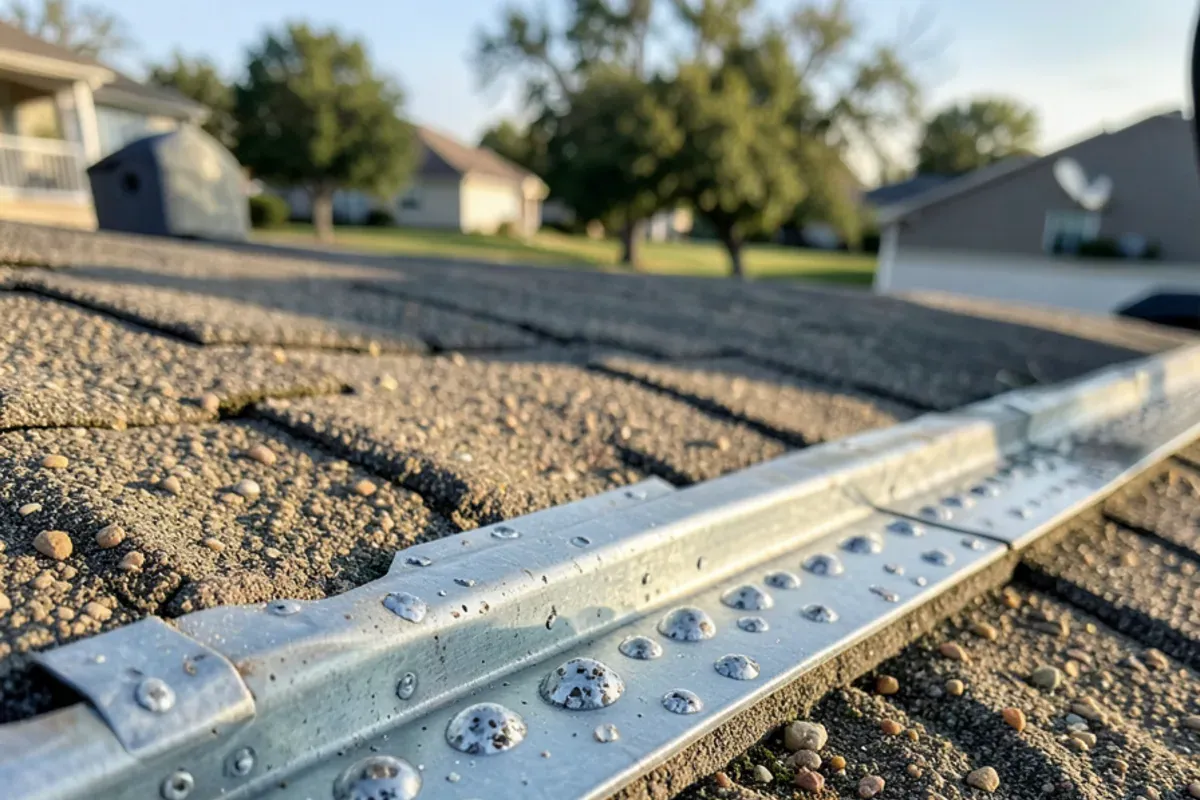
Before counting shingle hits, many adjusters look at soft metal hail damage. Aluminum ridge vents, step flashing, vent caps and gutters dent easily and keep those marks clearly, so they act as a record of the storm. Dent size suggests how large the hail was; which faces are dented shows the direction it came from. When the soft metals tell a clear story, it supports the shingle findings. When they show little, the adjuster may question whether marks on the shingles are hail at all.
Getting Ready for the Adjuster Meeting on Your Roof
A little preparation goes a long way:
- Have your photos ready. Ground-level shots of dents and interior stains, with original timestamps.
- Know the storm date. It should match the date of loss on your claim.
- Keep damaged items. Broken vent caps or skylight pieces you saved.
- Clear access. Gates unlocked, pets inside, a path to the attic if needed.
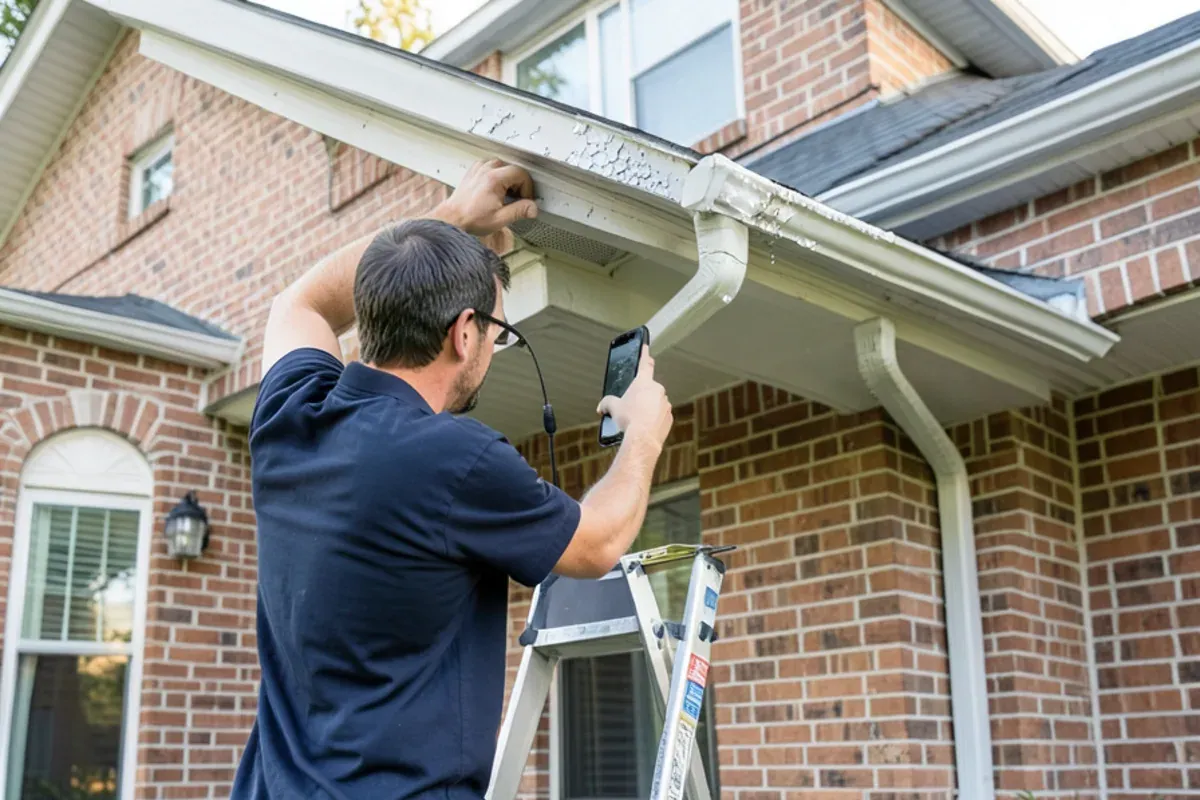
- Invite your roofer. Ask the adjuster if your contractor can attend; most are used to it.
Why We Attend the Adjuster Meeting
We go up with the adjuster whenever the homeowner asks us to. Our role is narrow and clear under Texas law: Chapter 4102 of the Insurance Code reserves acting for the homeowner on a claim to a licensed public adjuster, and a roofing contractor may not take that role. We do not argue the claim. We point to the damage we already photographed, make sure the test squares and soft metals on every slope get looked at, and confirm measurements so the quantities in the estimate match the actual roof. Learn more on our insurance adjuster meeting page.
From experience, the most common gap is not disagreement; it is something simply not seen. A cracked pipe boot behind a chimney, hits on a back slope, a dented vent cap on a steep pitch. Homes in Bedford and across the Mid-Cities often have additions and multiple roof planes where that happens.
There is a trade-off in how much to push, too. An adjuster who marks fewer squares on a protected north slope may simply be right, and asking for those squares to be redone wastes everyone's time. Where we do ask for a second look is when the soft metals and the shingles disagree: heavy vent-cap dents on a slope that the estimate says has no damage. That kind of mismatch is specific, photographable and fair to raise.
Si prefiere español, después de la visita le explicamos lo que el ajustador de seguro revisó en su techo, pendiente por pendiente.
How to Read the Adjuster's Estimate Line by Line
Most carriers write roof estimates in the same style of estimating software, so the paperwork looks similar from company to company. It reads like a spreadsheet, and a few terms unlock it:
- Units. Shingles, underlayment and tear-off are listed in squares (SQ). Drip edge, starter, ridge cap and valley metal are listed in linear feet (LF). Pipe boots and vents are counted each (EA).
- Waste. A percentage added to shingle quantities for cutting at hips, valleys and rakes. A cut-up roof needs more waste than a simple gable.
- Pitch and height charges. Extra labor lines for steep slopes or two-story roofs. If your roof is steep and these are missing, ask why.
- RCV, depreciation and ACV columns. Replacement cost for each line, the amount withheld for age, and the actual cash value paid now.
- Deductible and net claim. The bottom of the summary shows your deductible subtracted and what the first payment will be.
Compare quantities first. If the estimate shows 24 squares and your roofer measured 31, that gap matters more than any single line. Then check accessories: every pipe boot, vent and flashing run on the roof should appear somewhere.
After the Adjuster Leaves
You should receive a written estimate listing approved items and quantities. Compare it with your own inspection report. If items are missing, a supplement request with photos is the normal next step. For the wider picture of roof insurance claims and our part in them, read our overview, or contact your roofing company in Irving, TX. We can be on the roof for your inspection; call (725) 745-8803 to arrange it.
Questions readers ask
How long does an adjuster roof inspection take?
Can I ask for a different adjuster?
What if the adjuster says the damage is from wear, not hail?
Does the adjuster always climb onto the roof?
Sources

Written by the RJ Premium Roofing team, a bilingual roofing contractor based in Irving, TX. We inspect, repair and replace roofs across Dallas–Fort Worth and document storm damage for homeowners’ insurance claims.