Learning how to identify hail damage on shingles means looking for three things: dark circular spots where granules were knocked off, soft bruises that give under thumb pressure, and cracks in the shingle mat. Those marks fall in a random scatter, and the slopes facing the storm usually show the most.
Most hail damage on asphalt shingles is subtle. A roof can look normal from the driveway and still have dozens of hits that will shorten its life or open leaks later. Here is what inspectors look for, what gets mistaken for hail, and how to photograph it so your claim or repair decision rests on clear evidence. If you need the full picture of how we repair storm-hit roofs, see our hail damage roof repair page.
Hail Damage Signs on a Roof, From Ground to Ridge
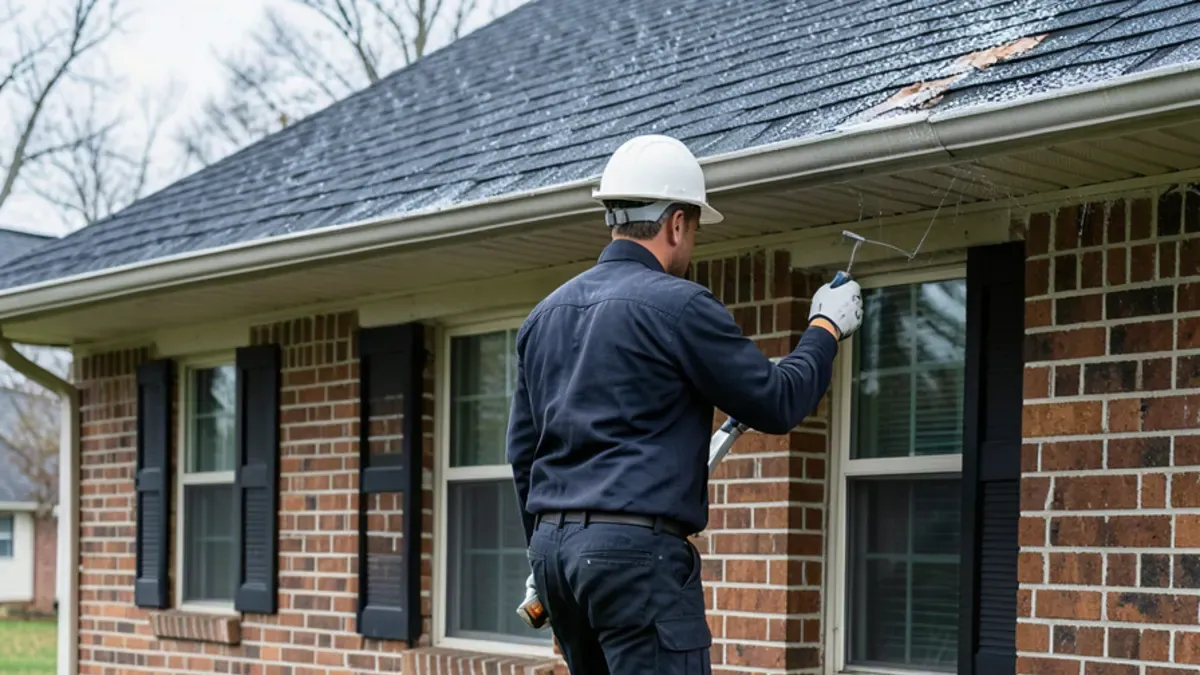
Start where you can safely stand. The ground tells you a lot about what happened overhead:
- Gutters and downspouts with round dents or paint chipped in circles.
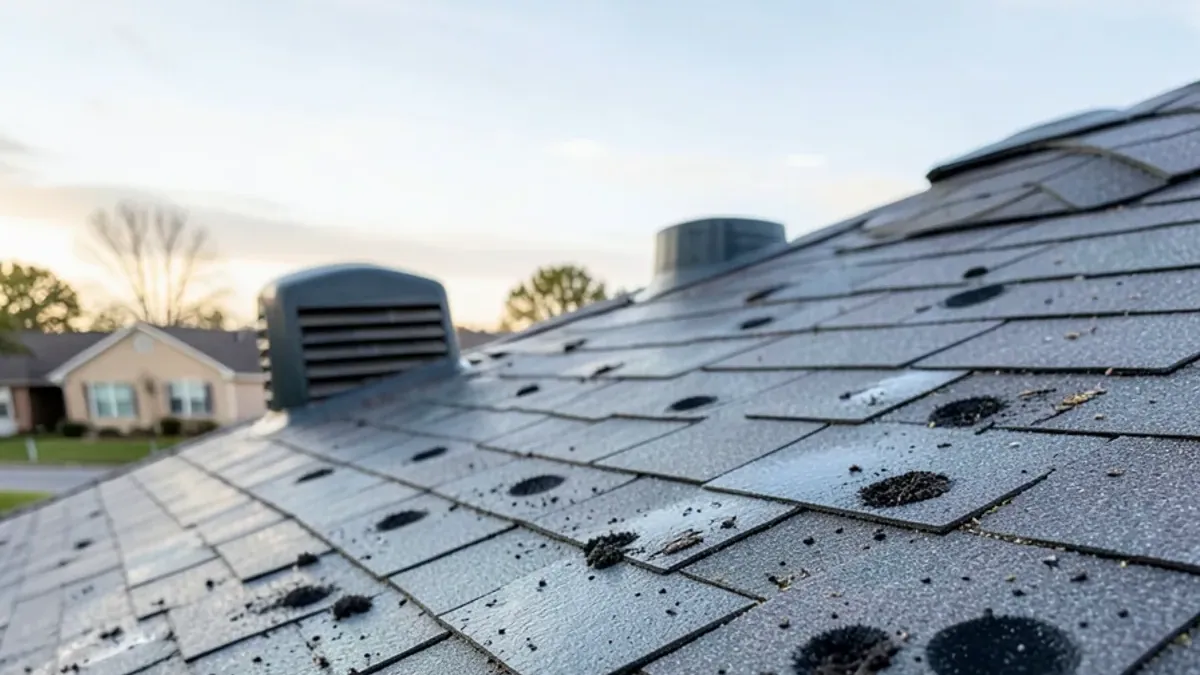
- Roof vents and turtle vents with dimpled metal caps (visible with a phone zoom).
- AC condenser fins flattened on the side that faced the storm.
- Granules in the gutters or at downspout outlets, especially a fresh pile after the storm.
- Window screens and wood trim with tears or spatter marks.
None of these prove shingle damage on their own. They show hail of meaningful size hit the property, which is reason enough to look at the shingles up close.
What a Hail Bruise on a Shingle Looks and Feels Like
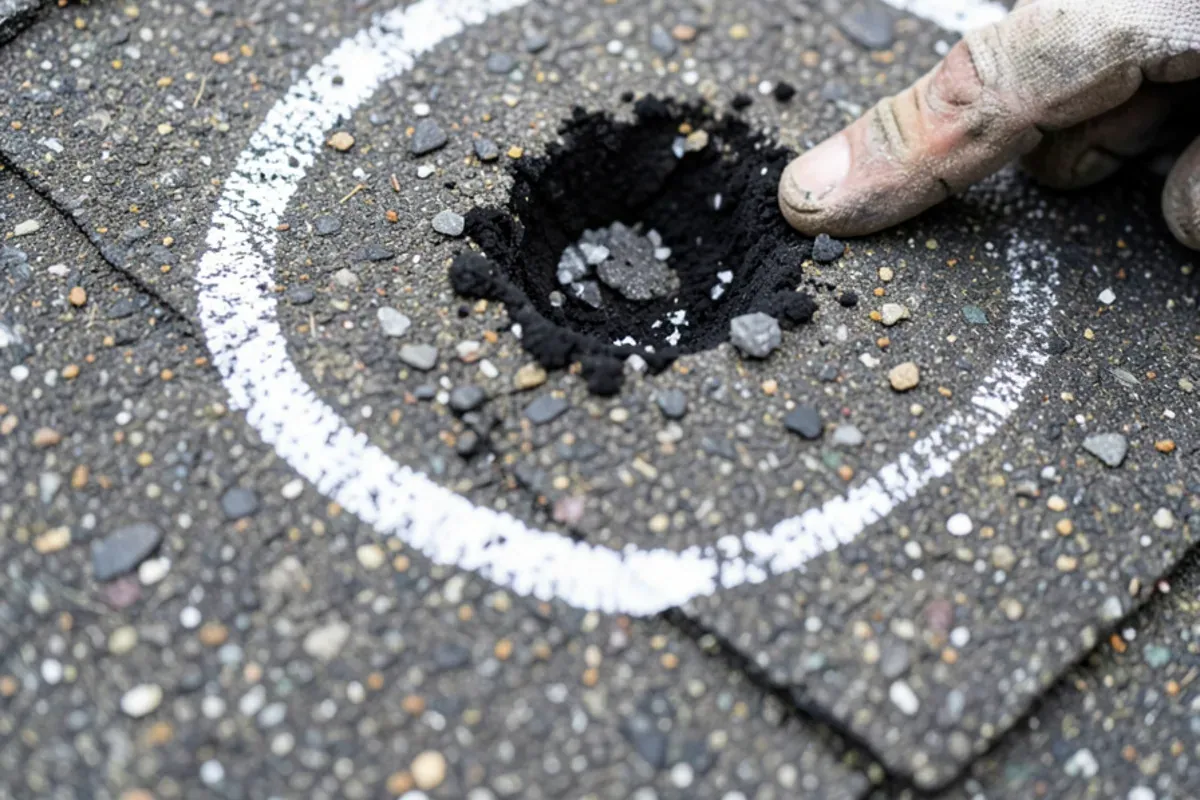
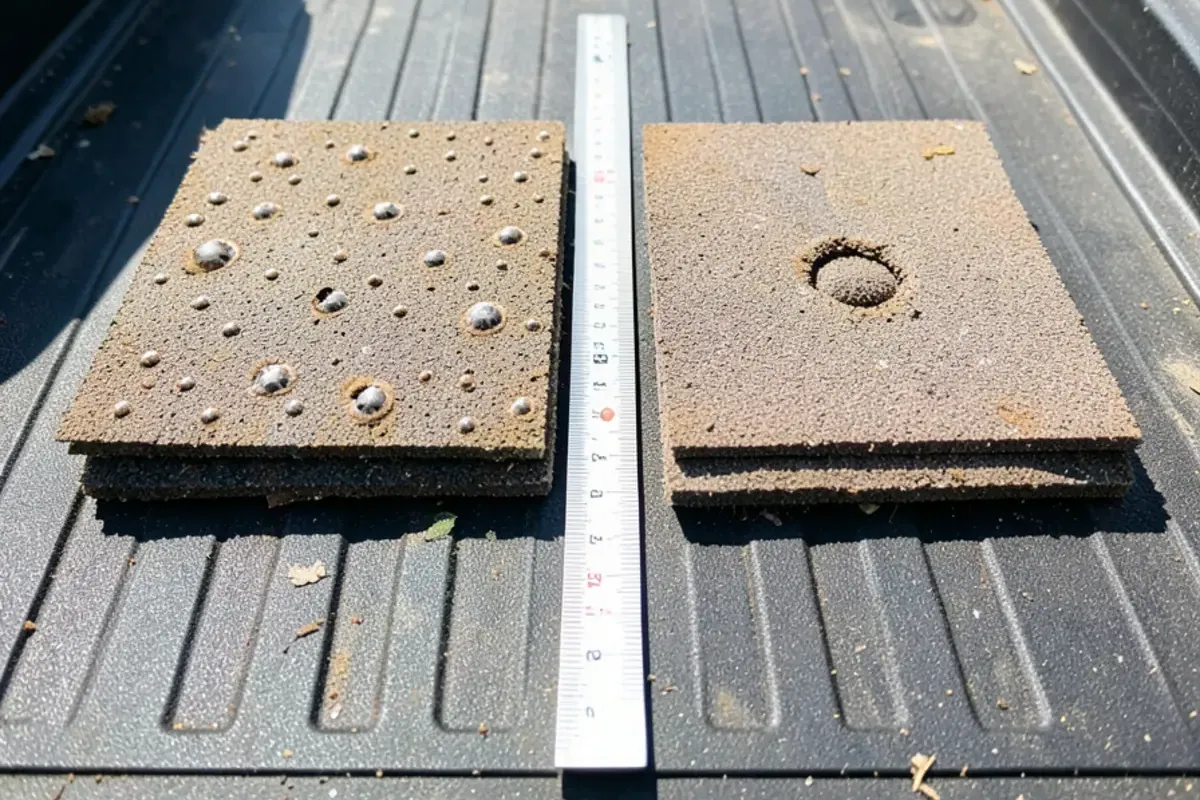
On the roof, an inspector works slope by slope. A hail bruise on a shingle typically shows as a roughly circular dark spot where granules have been crushed or knocked away. Press it with a thumb and it may feel soft, like a bruise on an apple, because the fiberglass mat beneath has been fractured. On older or more brittle shingles, the hit may split the shingle outright, leaving a crack that radiates from the impact point.
Three features separate hail from everyday wear:
- Random pattern. Hail lands everywhere, not in rows or along a walking path.
- Directional bias. Slopes facing the storm's direction carry more hits than the sheltered side.
- Matching collateral. The size of the bruises roughly matches the dents in soft metal on the same roof.
Want a roofer to look at it?
Free inspection with photos. Se habla español.
- 5.0 on Google (33 reviews)
- Free inspections & estimates
- Se habla español
- Workmanship guaranteed in writing with every contract
Hail vs. Blistering and Other Look-Alikes
Several conditions get mistaken for hail, and an adjuster will separate them quickly. Knowing the difference keeps expectations realistic.
| Condition | What it looks like | How to tell it apart from hail |
|---|---|---|
| Hail impact | Round bruise, granules pressed in, possible mat crack | Random spread, soft spot, matches soft-metal dents |
| Blistering | Small pits with clean, sharp edges | Clustered in sun-exposed areas, no soft spot underneath |
| Foot traffic scuffs | Scraped granules in a line or path | Follows ladders, valleys or routes to equipment |
| Thermal cracking | Straight splits along shingle edges | Linear, not circular, often on older roofs |
| Limb abrasion | Worn patch under overhanging branches | Limited to the area a branch can reach |
| Manufacturing flaw | Granule loss or cracks across one batch | Repeats in a pattern, not tied to storm direction |
How Does an Inspector Decide a Slope Is Damaged?
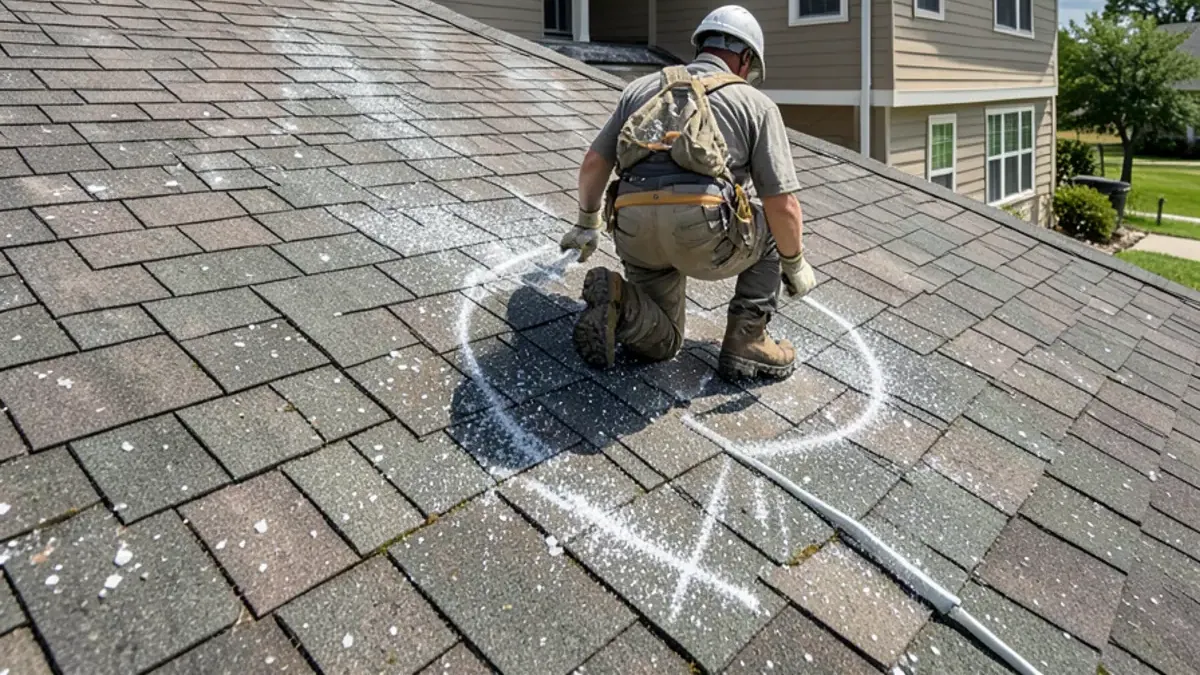
Finding one bruise does not settle anything. What matters to a repair or claim decision is how many hits sit on each slope and whether they broke the mat. Most inspectors and adjusters use a test square: a ten-by-ten-foot area (one roofing square) chalked on each slope, usually on the storm-facing side first, then on every other side. The hits inside are circled, counted and photographed with a scale reference.
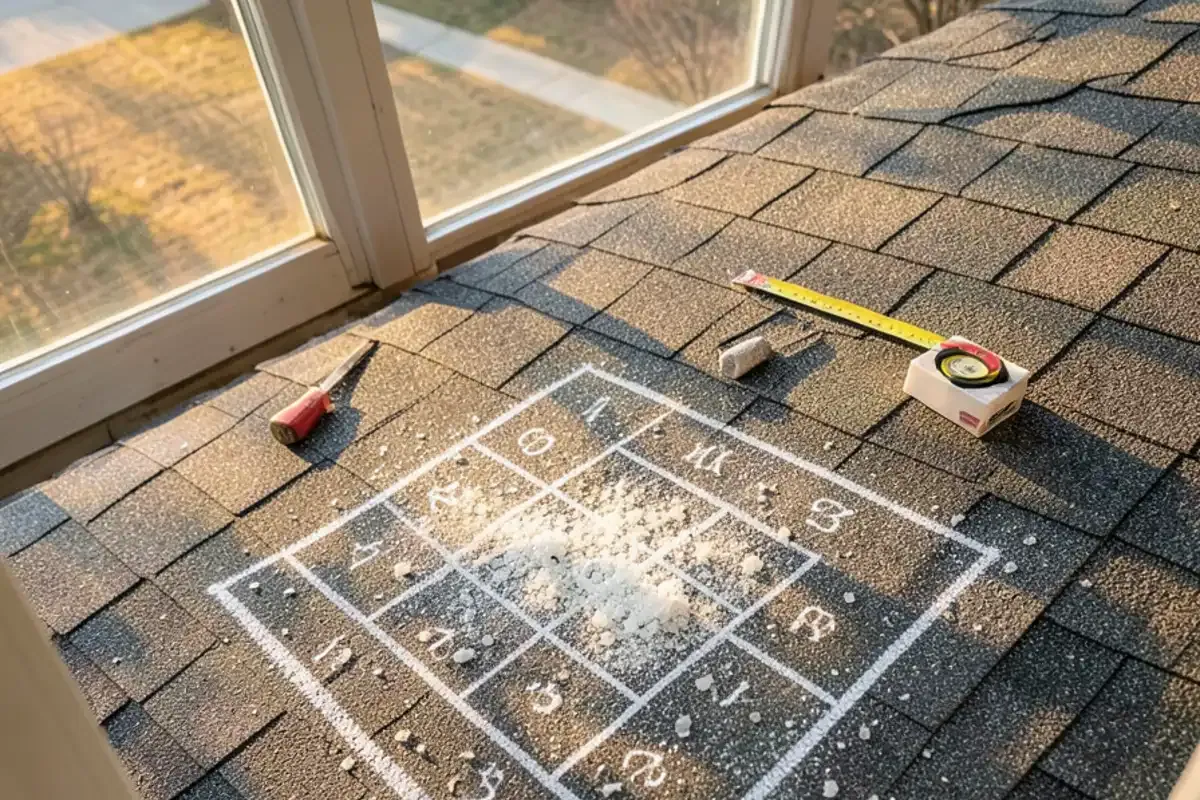
Carriers set their own threshold for how many hits in a test square justify replacing that slope, and most policies do not publish it. So a count is evidence, not a verdict. Two practical points help:
- Count only functional hits. A mark that removed granules and fractured the mat counts; a smudge on the granule surface does not.
- Look beyond the field. Ridge caps take hits at the most exposed point of the roof and often crack before the field shingles. Check them, the vent caps and the pipe flashings in the same visit.
A safe walk-around after the storm
Before anyone climbs, you can collect useful evidence in about ten minutes:
- Note the date and time the hail fell.
- Walk each side of the house and photograph gutters, downspouts and window screens.
- Look at the AC condenser fins and the top of any metal mailbox or patio furniture.
- Check the splash blocks under downspouts for a fresh wash of granules.
- Go into the attic with a flashlight if it is safe, and look for daylight or damp spots.
Las señales de daño por granizo en el techo son las mismas en cualquier idioma, y podemos explicarle cada una en español.
Hail Damage Photos That Hold Up
The point of hail damage photos is to let someone who was not on your roof understand what was there. We follow a simple pattern on every inspection: a wide shot of each slope, a mid-range shot showing the hits in context, and a close-up of individual bruises with chalk circles and a scale reference. Soft-metal dents get the same treatment. We also photograph the undamaged side of the house so the directional pattern is obvious.
For homeowners, the useful photos are the ones you can take safely: dents on gutters, downspouts and the AC unit, granules collecting at downspout outlets, and any interior stains. Keep the originals with their timestamps.
What We Find on DFW Shingle Roofs
Across Irving and the cities around it, the shingles we inspect after a storm are mostly architectural asphalt, and many have spent ten or more summers under July highs that average about 95°F. That heat matters. Asphalt loses its oils over time, and an aged shingle that would have flexed under a hailstone ten years ago now cracks instead. Two roofs on the same street can come out of the same storm very differently because one is three years old and the other is fifteen. Shingle color plays a part in what owners notice, too. Fresh hits on charcoal or black shingles show as bright spots in the first weeks, while the same hits on tan, weathered-wood or light gray shingles blend in, so owners of lighter roofs often assume they escaped the storm when the slope tells a different story up close.
We also see owners told "there's nothing there" after a quick look from a ladder at the eave. Hail bruises are often concentrated mid-slope and near the ridge on the storm-facing side, which a ladder-top view misses. Homes in Carrollton, with many two-story houses and steeper pitches, are a good example: the damage that matters is out of sight from the gutter line.

When to Bring In an Inspector
If you have ground-level clues, granules in the gutters, or a storm report for your area, it is worth having the shingles checked by someone with fall protection and the experience to separate hail from age. Our hail damage roof inspection is free, covers every slope, and comes with photos you can keep. We are a roofing contractor in Irving, TX and serve the surrounding cities in English and Spanish. Call (725) 745-8803 and we will set a time to look at your roof.
Questions readers ask
Can I see hail damage on shingles from the ground?
How is hail damage different from shingle blistering?
Does hail damage get worse over time?
Do hail-damaged shingles start leaking right away?
Sources

Written by the RJ Premium Roofing team, a bilingual roofing contractor based in Irving, TX. We inspect, repair and replace roofs across Dallas–Fort Worth and document storm damage for homeowners’ insurance claims.