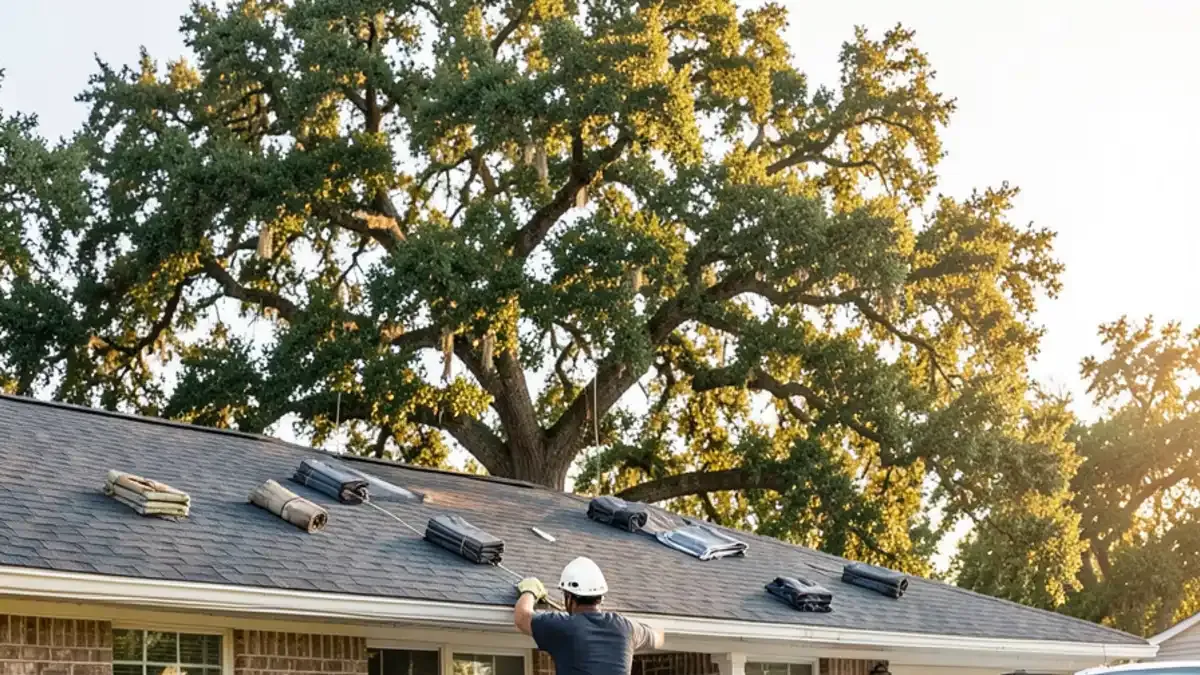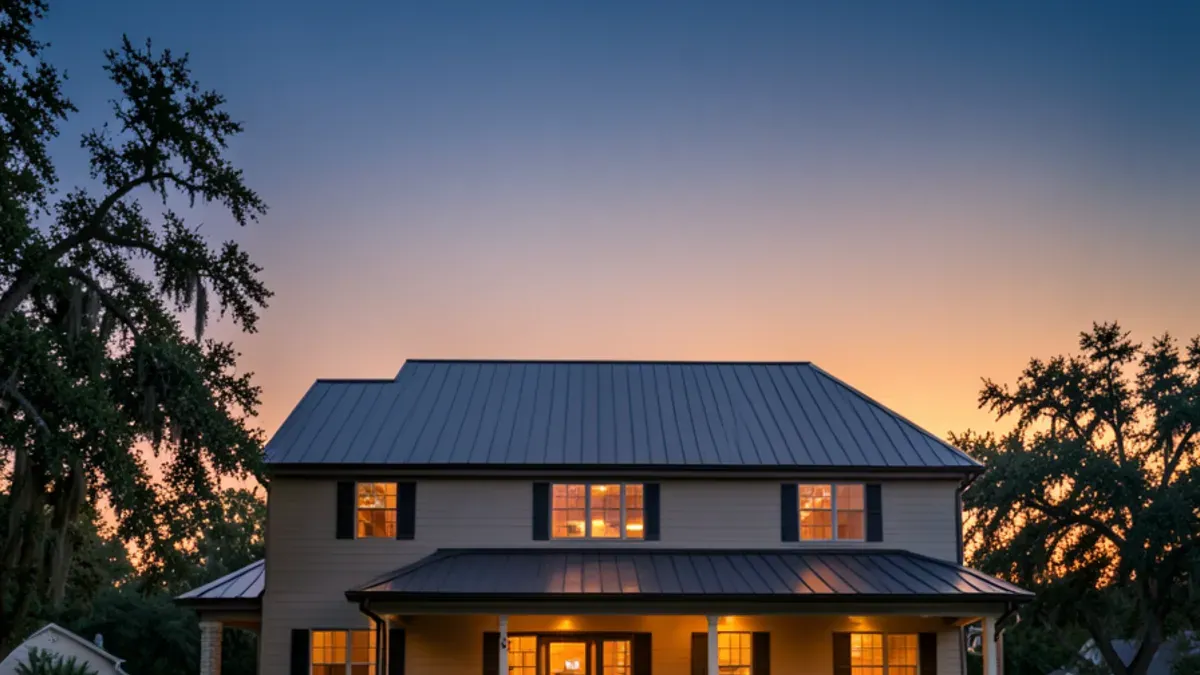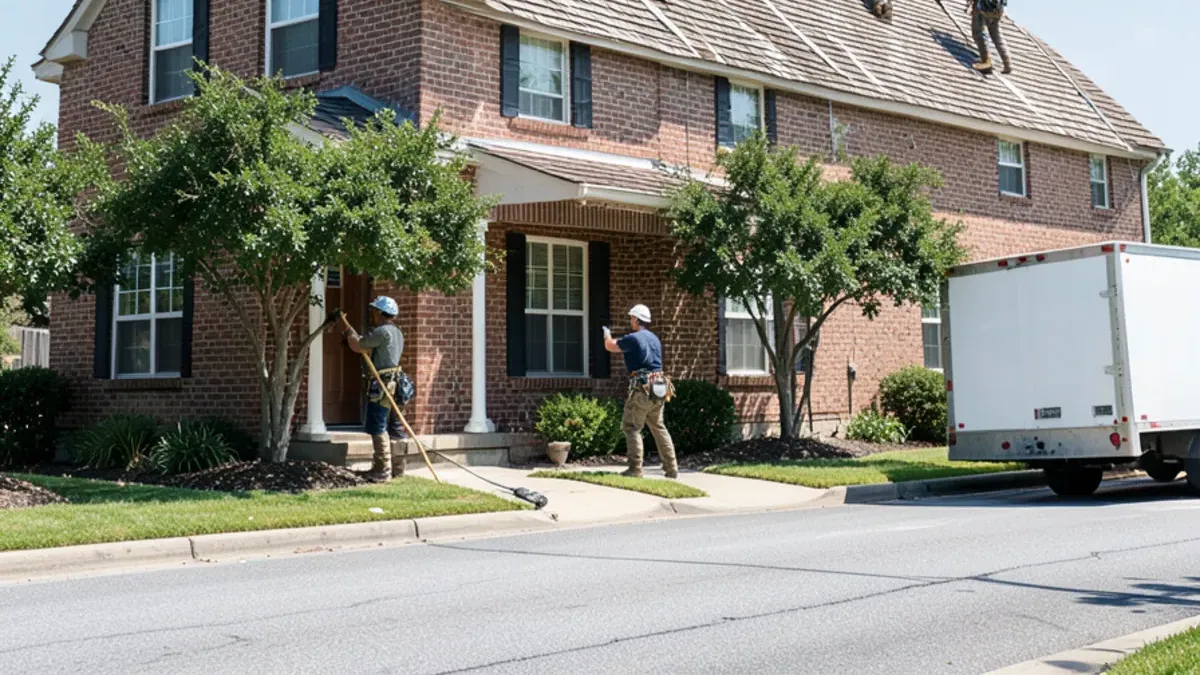
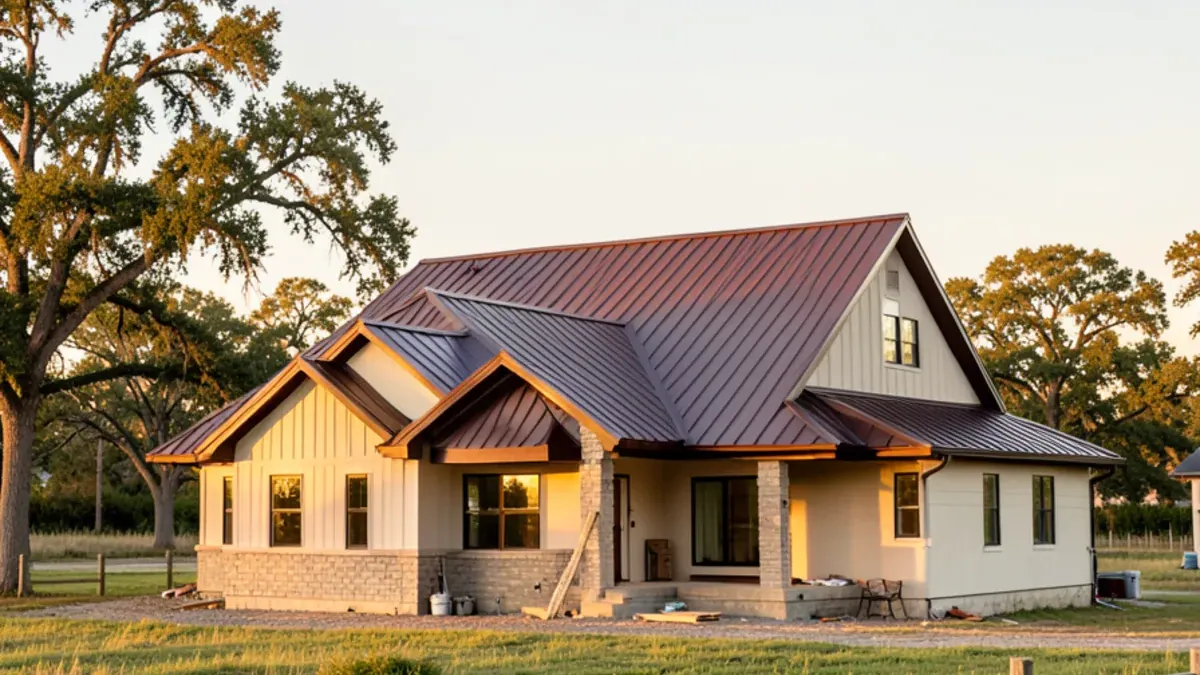
The metal vs shingle roof decision in Texas usually comes down to time and money. Asphalt shingles cost far less up front and are easy to repair after hail; standing seam metal costs more but can outlast two or three shingle roofs, reflects summer heat well and does not lose granules, though big hail can dent it.
Metal roofs have moved from barns to subdivisions across North Texas, and homeowners now ask about them at almost every estimate. Neither material is the right answer for every house. Here is an honest side-by-side so you can decide what fits yours.
Metal vs. shingle roof in Texas at a glance
| Factor | Architectural shingles | Standing seam metal |
|---|---|---|
| Up-front cost | Lower | Significantly higher |
| Expected service life | Commonly 20 to 30 years | Commonly 40 years or more |
| Hail | Bruising and granule loss; repairable | Dents; usually no leak |
| Wind | Good with correct nailing | Very good with correct clips and fastening |
| Summer heat | Absorbs heat, especially dark colors | Reflects well, especially light finishes |
| Noise | Quiet | Quiet over a solid deck |
| Repairs | Simple and inexpensive | Specialized; panels must match |
| HOA acceptance | Almost always | Varies; check guidelines |
Metal roof hail: dents, leaks and cosmetic exclusions
This is the biggest question in DFW. Metal does not crack or shed granules, and a standing seam roof can take hail that would ruin shingles without leaking. Large hail does dent it, though, and dents show, especially on lighter colors in low sun.
Whether dents matter depends on your policy. Some Texas homeowners policies exclude cosmetic damage to metal roofs, meaning the insurer pays only if hail causes leaks or functional damage. Read your declarations page or ask your agent before choosing metal, because it changes what a future claim looks like. Impact-rated metal products exist and can help with both performance and premium discounts.
Heat and noise: what living under each roof feels like
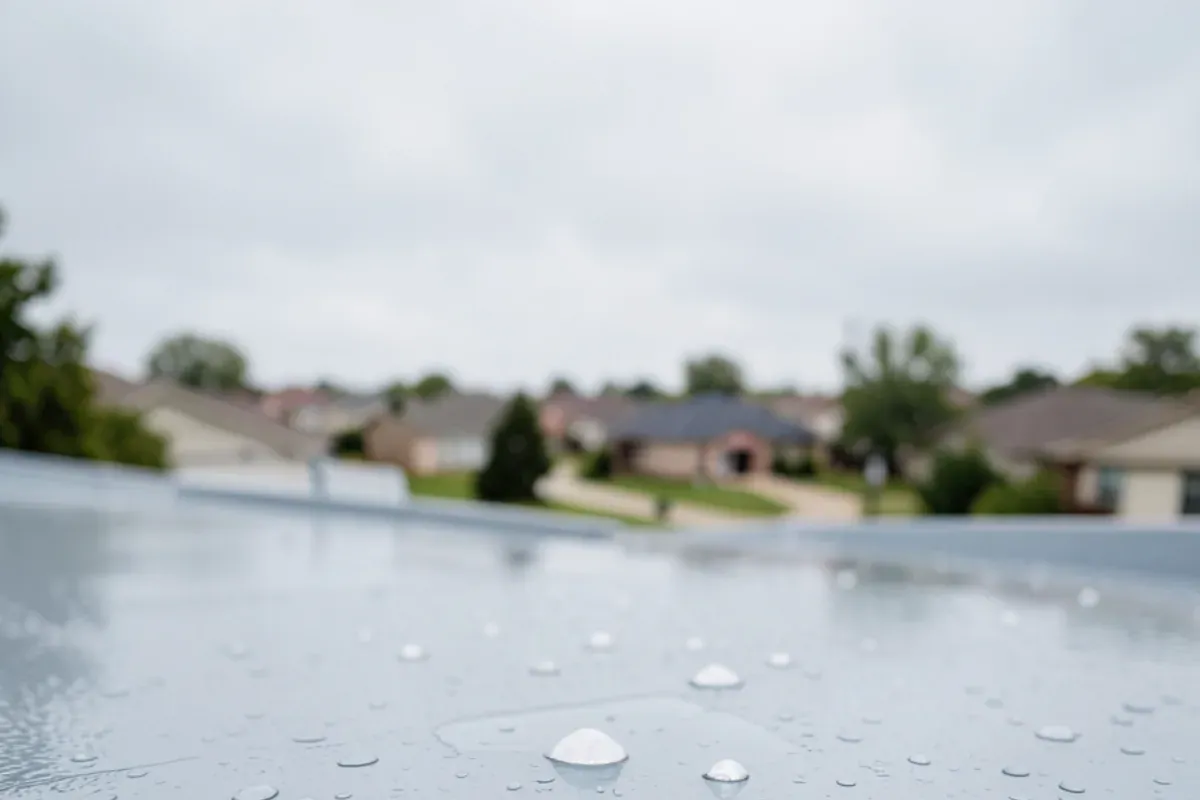
With July highs around 95°F in Irving, heat is the daily concern. Metal reflects a larger share of sunlight than dark shingles, and many panels carry reflective finishes, so the attic stays cooler on summer afternoons. Light-colored shingles help too, but they do not match a reflective metal finish.
Metal also cools quickly after sunset, while shingles hold heat into the evening. Noise worries are mostly about barns. Over solid decking with underlayment and attic insulation, a metal roof sounds much like a shingle roof in rain.
Want a roofer to look at it?
Free inspection with photos. Se habla español.
- 5.0 on Google (33 reviews)
- Free inspections & estimates
- Se habla español
- Workmanship guaranteed in writing with every contract
Metal roof cost vs. shingles over the life of the roof
Shingles win on day one. As a reference point, a third-party source, Smart Roofing Calculator, listed 2026 installed pricing for architectural shingles between $426 and $614 a square; that is not our quote. Standing seam metal costs significantly more per square installed. Our asphalt shingle roofing page covers the shingle side, including impact-rated lines.
The comparison changes if you keep the house a long time. A metal roof that lasts as long as two shingle roofs avoids a second tear-off, but only if you stay to collect that benefit and hail does not force an early claim either way. If you expect to sell within a few years, shingles usually make more financial sense.
Standing seam vs. shingles, and why panel type matters
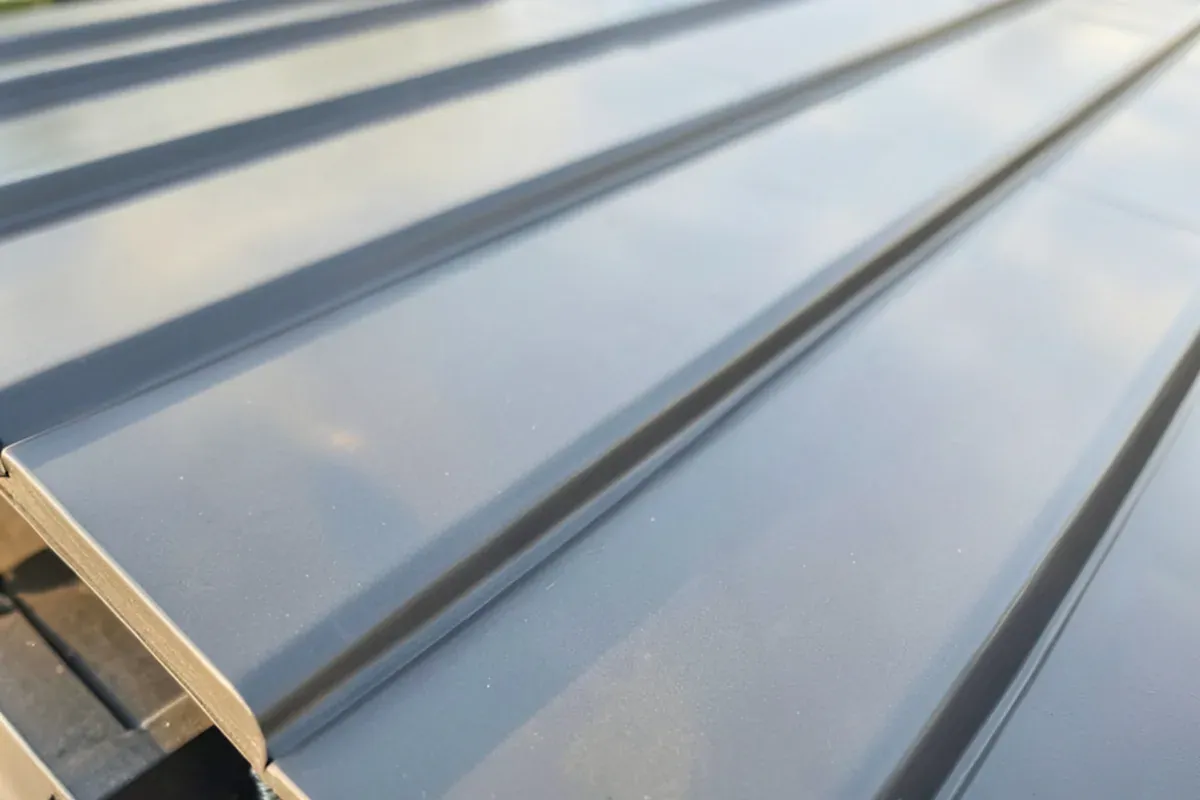
Not all metal is equal. Standing seam panels lock together at raised seams with concealed clips that let the metal expand and contract in Texas heat. Exposed-fastener panels, the ribbed sheets common on barns and shops, are screwed through the face; they cost less but depend on rubber washers that age in the sun and need re-tightening or replacement over the years.
For a home, we generally steer people to standing seam if they want metal. Our metal roofing page explains the installation.
Which metal finish and thickness suit North Texas?
Once you pick standing seam, the next choices decide how the roof looks in fifteen years and how it takes hail. Ask for these on the quote:
| Choice | What to ask | Why it matters here |
|---|---|---|
| Panel thickness | The steel gauge or aluminum thickness | Thicker panels resist hail dents better; lower gauge numbers mean thicker steel |
| Base metal | Coated steel or aluminum | Coated steel is the inland standard; aluminum is mostly a coastal choice |
| Paint system | Fluoropolymer (PVDF) or a polyester-based finish | Fluoropolymer finishes generally hold color and resist chalking longer in strong sun |
| Impact rating | UL 2218 class for that exact panel and thickness | Needed for most insurer impact discounts |
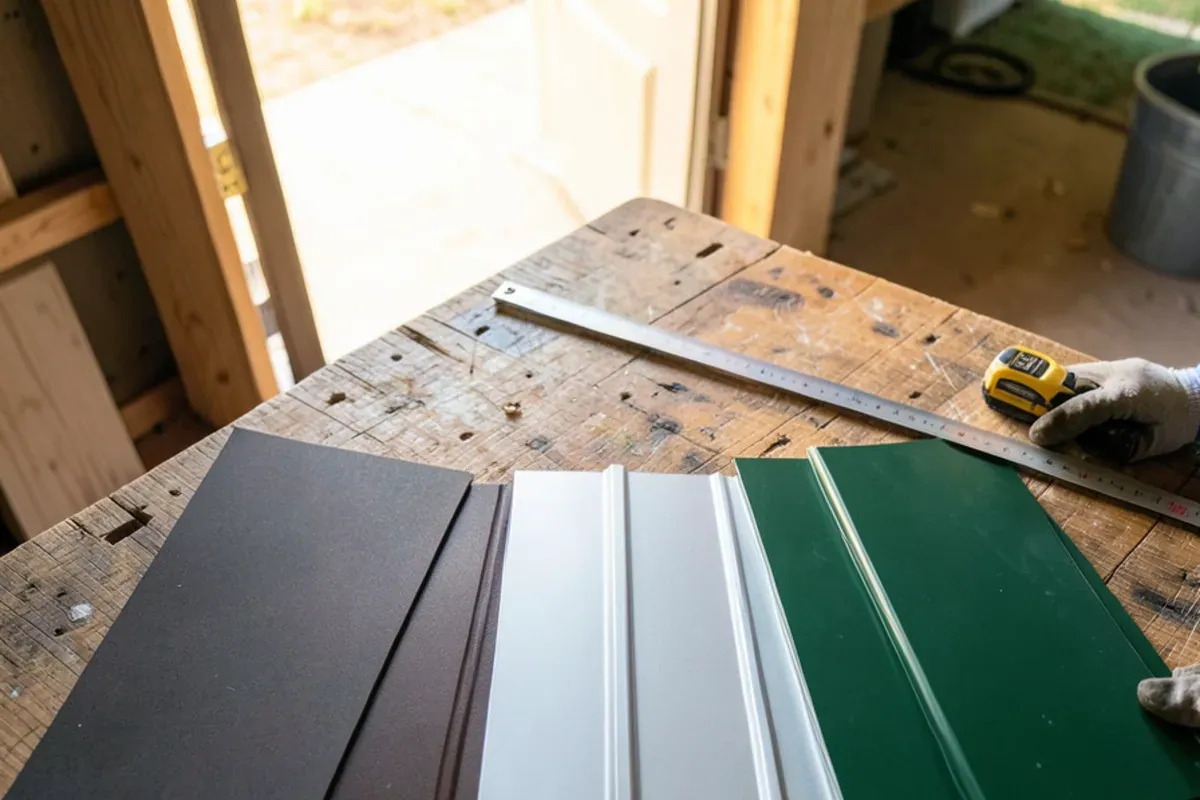
| Color | Light or dark, and its reflectance data | Lighter finishes keep the attic cooler; Irving sets SRI 29 for steep-slope roofs |
Rust is less of a worry in Dallas–Fort Worth than on the coast, but it still happens where installers leave untreated cut edges, steel shavings from cutting, or copper lines and pressure-treated wood in contact with the panels. Those are installation habits, and they are worth asking any roofer about.
Does a metal roof attract lightning?
No. The National Weather Service lists that idea among common lightning myths: height, shape and isolation decide where lightning strikes, and metal on a building does not draw it. If lightning does hit a house, a metal roof is noncombustible and spreads the energy across the panels. That is not a substitute for a lightning protection system, which is a separate trade, but it means lightning is not a reason to choose shingles over metal.
What a switch from shingles to metal involves
Changing materials is more than swapping one covering for another. On a typical conversion we:
- Tear off the old shingles and underlayment down to the deck and replace any bad sheathing.
- Install a high-temperature underlayment suited to metal, since panels run hot in summer.
- Fit new eave, rake, valley and wall trim made for the panel profile.
- Flash every pipe and vent with boots designed for metal panels.
- Set the panels on clips, then add ridge closures and ventilation.
A metal job usually takes longer than a shingle replacement on the same house because panels are measured, cut and trimmed to each slope. Plan for that, and confirm any HOA approval and the city permit before the materials are ordered.
Our take for North Texas homes
One trade-off owners often hear about only after a storm: repairs. A few hail-cracked shingles can be swapped in an afternoon. A dented or creased standing seam panel usually has to be replaced along its full length, from ridge to eave, and the new panel must come from the same profile and color line to match. We suggest keeping the panel profile, color name and finish details with your roof paperwork for that reason.
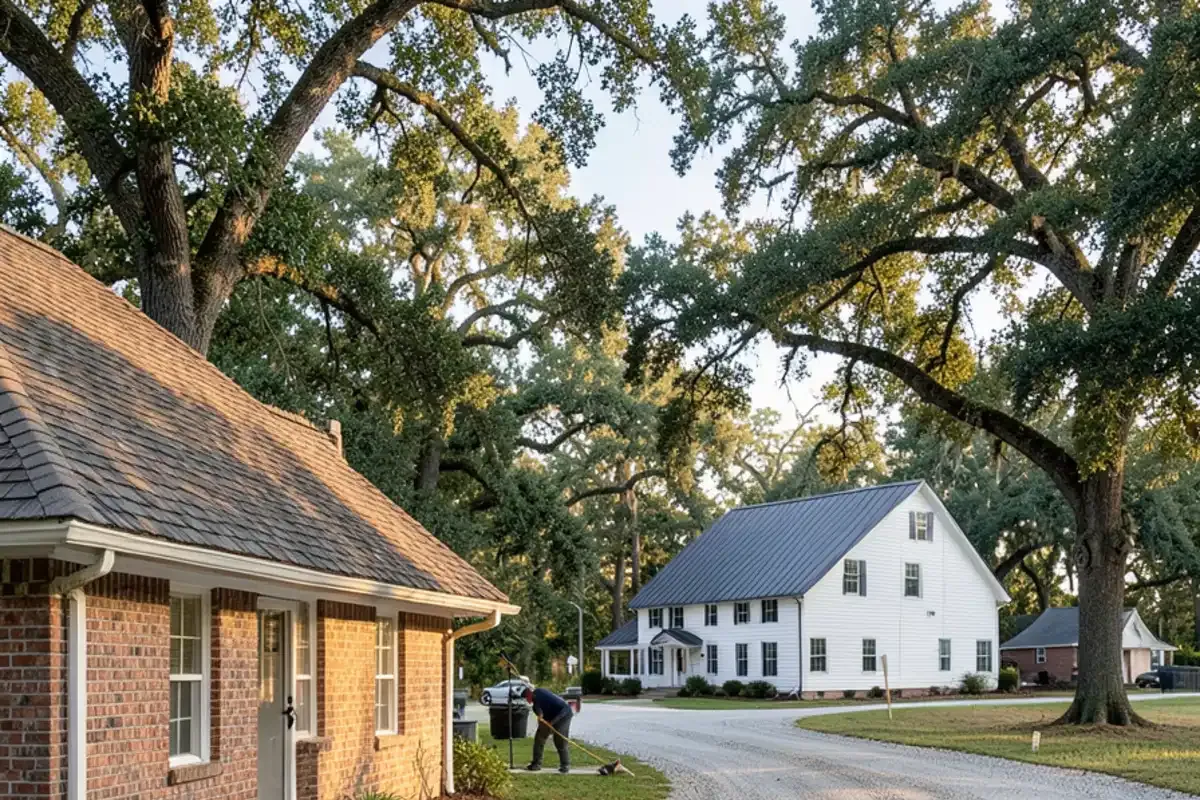
On typical suburban houses, impact-resistant architectural shingles remain the practical choice for most budgets. Metal earns its price on homes the owners plan to keep for decades, on houses whose style suits it, and on acreage properties where it matches barns and outbuildings, like many we see around Argyle in Denton County.
Before choosing, list your priorities:
- how long you plan to own the house
- whether your HOA allows metal, and in which colors
- what your policy says about cosmetic hail damage
- whether a lower premium for impact-rated roofing applies
- your budget today versus over 20 years
For anyone asking ¿techo de metal o tejas?, we can explain both options in Spanish. Pricing metal and shingles side by side costs you nothing with us, a roofing contractor in Irving, TX serving the wider metroplex; call (725) 745-8803 to set up the visit.
Questions readers ask
Is a metal roof louder during a Texas hailstorm?
Will a metal roof lower my homeowners insurance premium?
Do metal roofs rust in the Dallas–Fort Worth area?
Is standing seam or exposed-fastener metal better for a house?
Sources

Written by the RJ Premium Roofing team, a bilingual roofing contractor based in Irving, TX. We inspect, repair and replace roofs across Dallas–Fort Worth and document storm damage for homeowners’ insurance claims.