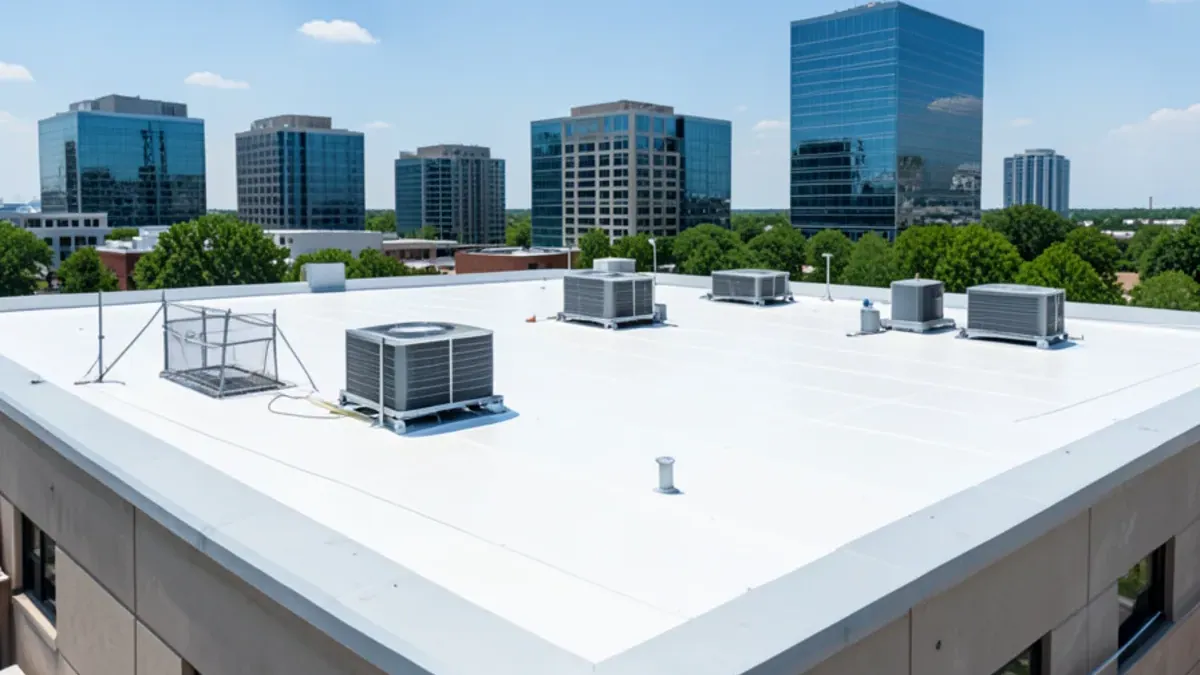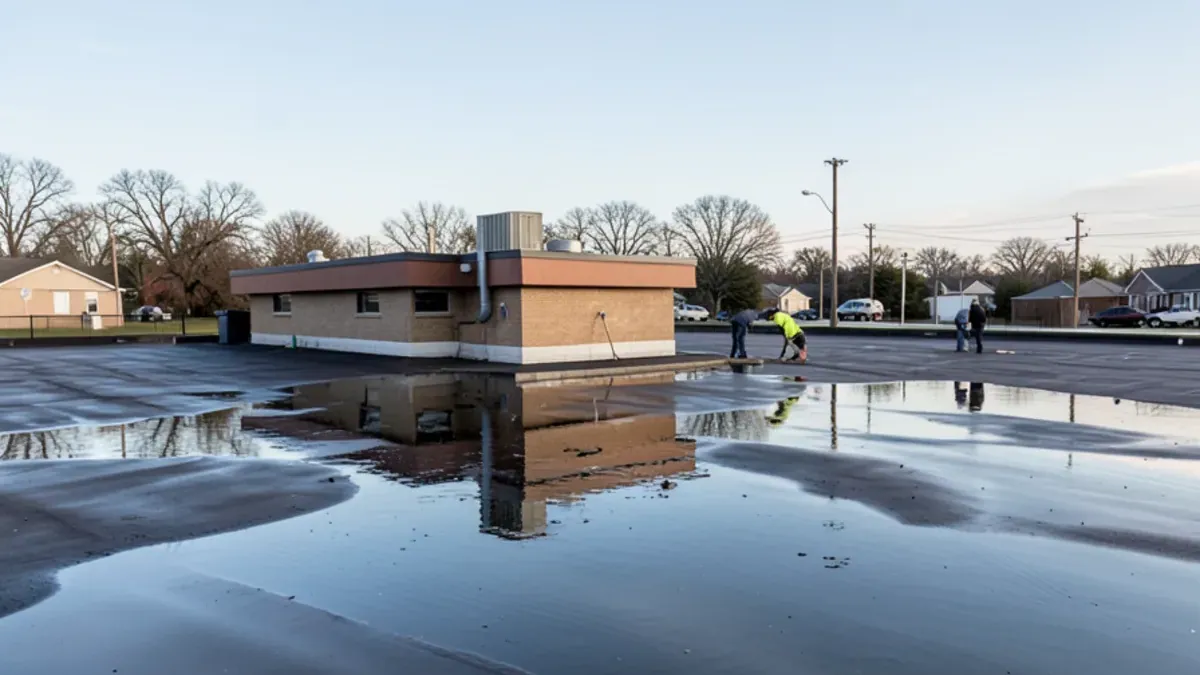
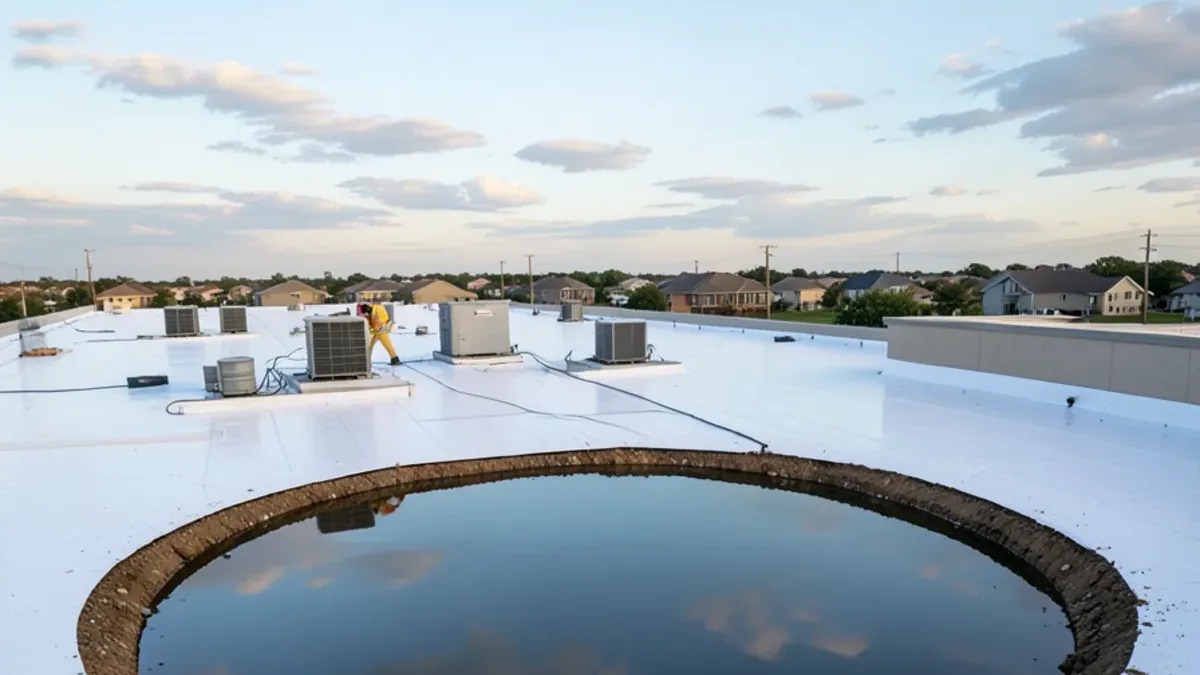
Ponding water on a flat roof is standing water still there 48 hours after the rain stops. On DFW commercial buildings it usually traces to a blocked drain, a sagging deck or too little slope. Puddles that dry by the next afternoon are normal; ponds that last for days add weight, wear the membrane and can void warranty terms.
A flat roof is never truly flat. Building codes call for new low-slope membrane roofs to have at least a quarter inch of fall per foot, and the code's own definition of positive drainage is a roof that sheds its water within 48 hours after rain. When a pond outlasts that window, something in the slope, the drains or the structure has gone wrong. Our commercial roofing team sees this on everything from small office buildings to big-box retail, and the fix depends entirely on the cause.
When Does Ponding Water on a Flat Roof Become a Problem?
Puddles right after a storm are expected. The question is how long they last and whether they come back in the same place. Watch for these signs:
- Water still standing two days after the last rain
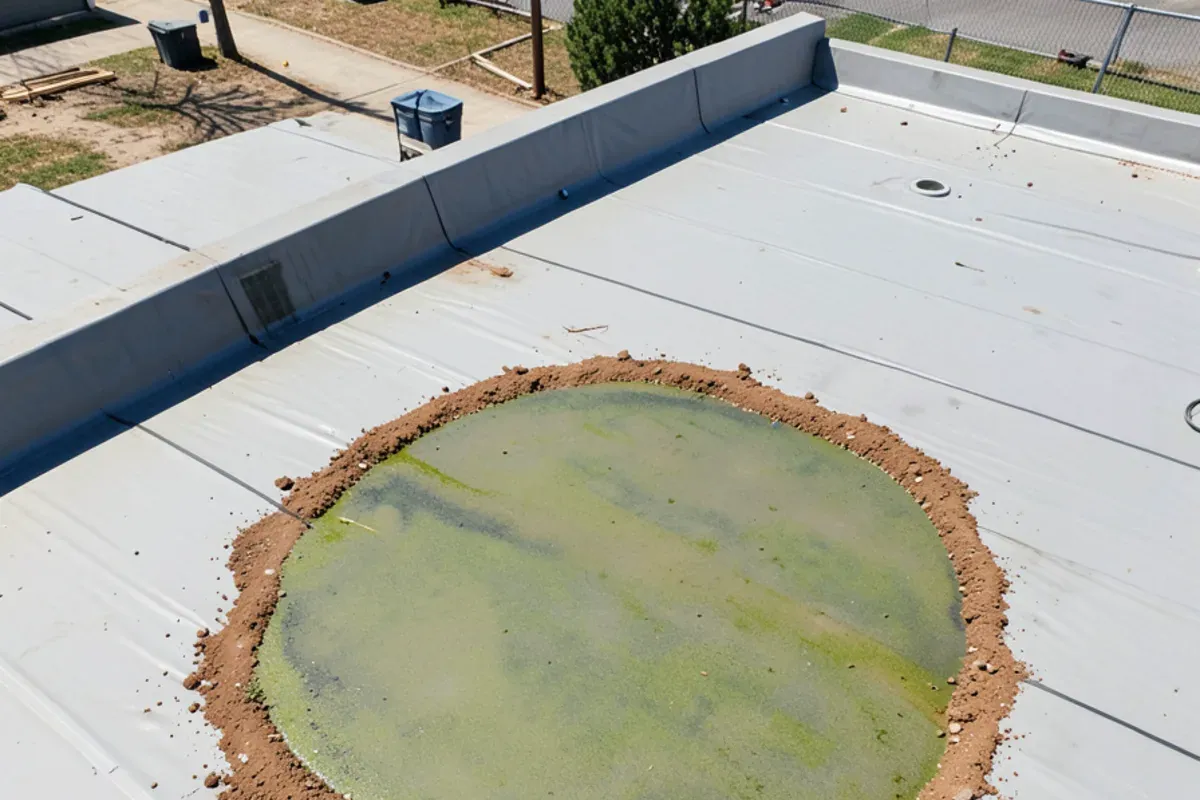
- A dirt or algae ring that marks the same outline after every storm
- Membrane wrinkles or blisters inside the ponded area
- Interior ceiling stains below the low spot
- Ponds that get wider or deeper from one season to the next
May is usually Irving's wettest month, so late spring is the best time to walk the roof a day or two after a soaking and photograph what is still wet.
Why Standing Water on a Commercial Roof Shortens Its Life
Water is heavy. Each inch of depth adds about 5.2 pounds per square foot, and that weight pushes the deck down a little more, which deepens the pond, which adds more weight. On older joists that cycle can become a structural question.
The membrane suffers too. Seams sitting under water for days are under constant stress. Dirt collects and holds moisture against the surface; algae and even small plants can take root. The sun heats the shallow water, and repeated wet-dry cycles age the top surface faster than the rest of the roof. Many manufacturer warranties also exclude damage from ponding, so a pond can turn a covered failure into an uncovered one.
Common Causes on DFW Commercial Roofs
Most ponds we trace back come from a short list:
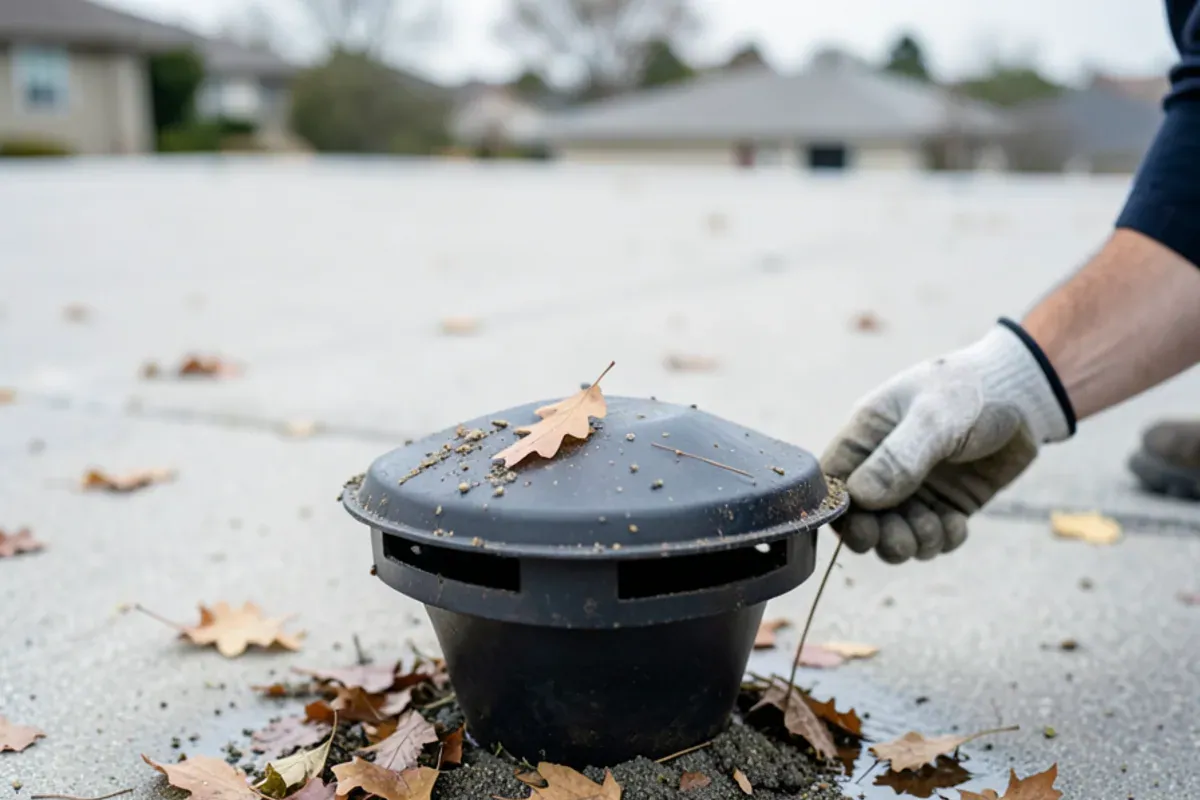
- Clogged drains and scuppers. Leaves from parking-lot trees, grit, and debris left by HVAC service calls.
- Drains set at a high point. The deck around them has settled, so water collects a few feet away.
- Deck deflection. Long spans or corroded joists that sag between supports.
- Crushed insulation. Hail, foot traffic around rooftop units, or heavy equipment set down without pads.
- Equipment that dams water. HVAC curbs or added platforms placed across the natural flow line.
- Earlier repairs. Patches and recover layers that built up humps without adding slope.
On restaurant-heavy strips like the ones along Belt Line Road in Addison, grease from kitchen exhaust fans adds another problem: it softens some membranes and clogs nearby drains, so the low spot and the damaged spot end up being the same place.
Want a roofer to look at it?
Free inspection with photos. Se habla español.
- 5.0 on Google (33 reviews)
- Free inspections & estimates
- Se habla español
- Workmanship guaranteed in writing with every contract
Flat Roof Drainage Fixes, From Simple to Structural
| Cause | Typical fix | When it is enough |
|---|---|---|
| Debris in drains or scuppers | Clean strainers, flush lines, add guards | Ponds clear within a day afterward |
| Drain sitting high | Rebuild a drain sump with tapered insulation | Deck around it is sound |
| Water trapped between drains | Tapered insulation cricket to split the flow | Low area is localized |
| Crushed or wet insulation | Cut out, replace insulation, patch membrane | Damage limited to a section |
| Not enough drains | Add a drain or scupper, plus overflow drainage | Structure can take the new opening |
| Sagging deck or joists | Engineer review, structural repair, then re-slope | Required before adding weight |
The code also expects secondary, or overflow, drainage where parapets would trap water if the main drains clog. Many older DFW buildings were roofed before anyone added those overflow scuppers, so we check for them on every ponding call.
The Tapered Insulation Cricket and Other Slope Corrections
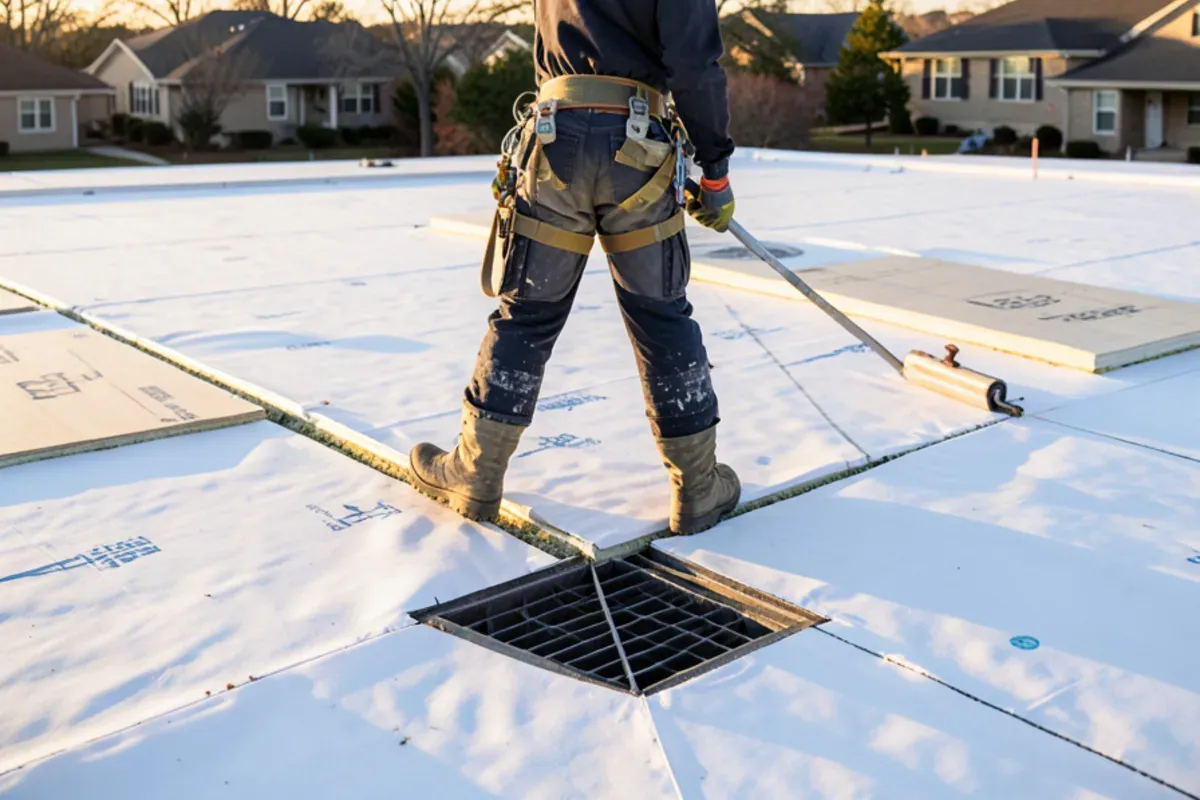
A cricket is a small, sloped section of insulation that sits between two drains or behind a curb and turns water toward an outlet. Tapered insulation comes in pre-cut panels that step down a fraction of an inch at a time, and a layout drawn from the roof's actual elevations tells the crew where each panel goes. On a repair, the crew cuts out the membrane over the pond, installs the tapered panels and a cover board, then welds or adheres new membrane over it. On a full replacement, the tapered system is designed for the whole roof at once, which is usually the most permanent answer.
What a ponding survey measures
Before we draw a fix, we measure the problem. On a dry day after a rain, we outline each pond with marking paint at the 48-hour mark and record its depth at the deepest point. Then we shoot elevations across the roof with a laser level, at the drains, along the low lines and at the high points, so the tapered layout follows the real surface instead of the original drawings. A moisture scan or a few core cuts around each pond show whether the insulation underneath is still dry. Last, we run water into each drain to confirm the line flows freely to the ground.
If you are dealing with active leaks under a pond, our flat roof repair service starts with stopping the water and then fixing the slope.
What We Look for After a North Texas Downpour
When we walk a ponding roof, the pond itself tells part of the story. A crisp edge and a dirt ring mean it has been there for years. Soft insulation underfoot around the edge points to water getting under the membrane. A pond that lines up with joist spacing suggests deflection. Rust at the deck flutes, seen from inside, moves the job toward a structural review before any roofing starts.
We also look at what feeds the pond: condensate lines dumping onto the roof, downspouts from an upper roof discharging onto a lower one, or a parapet scupper that is too small. Fixing those is often cheaper than re-sloping, and we photograph each one so the owner can see it.
An Owner's Checklist Between Inspections
- Walk or photograph the roof 48 hours after a heavy rain
- Clear drain strainers and scuppers, especially after leaf drop in fall
- Note any pond that is larger than last time
- Ask HVAC vendors to remove debris and use walk pads
- Check ceilings below known low spots for stains
- Keep photos and dates in one folder for warranty or insurance records
Si ve agua estancada en el techo plano de su edificio, podemos revisarlo y explicarle las opciones en español.
Get the Water Moving Again
Ponding rarely fixes itself, and it tends to get worse each year as the deck and insulation give a little more. A free inspection from our crew will tell you whether the cause is a drain, the insulation or the structure, with photos of each spot. As a roofing contractor in Irving, TX serving buildings across Dallas–Fort Worth, we can usually tell you on the first visit which fix fits. Call (725) 745-8803 to set it up.
Questions readers ask
How much standing water on a flat roof is too much?
Can a coating fix ponding water on a flat roof?
Do I need a structural engineer for a ponding problem?
Does commercial property insurance pay for damage caused by ponding water?
Sources

Written by the RJ Premium Roofing team, a bilingual roofing contractor based in Irving, TX. We inspect, repair and replace roofs across Dallas–Fort Worth and document storm damage for homeowners’ insurance claims.