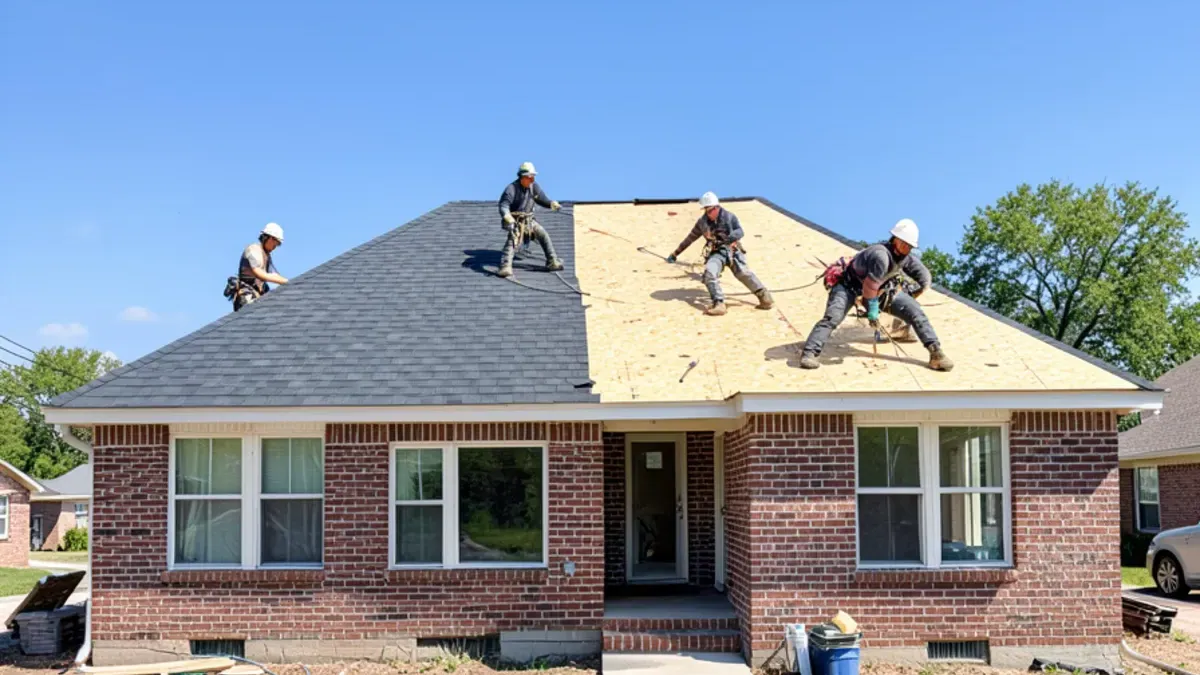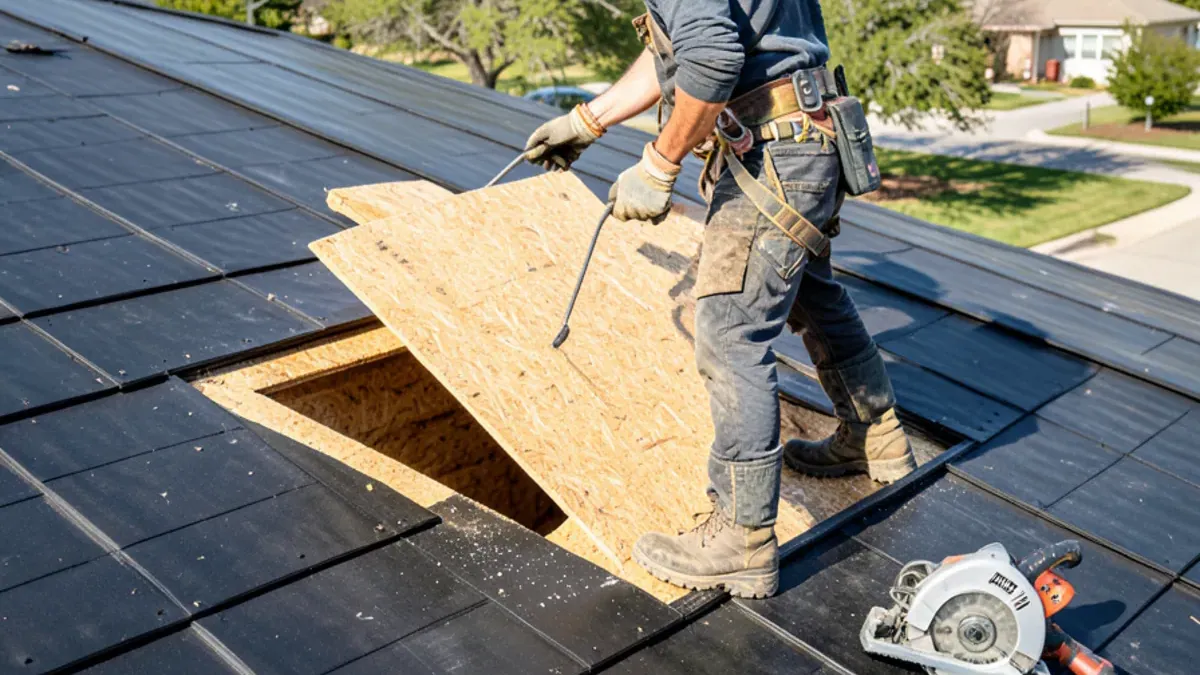
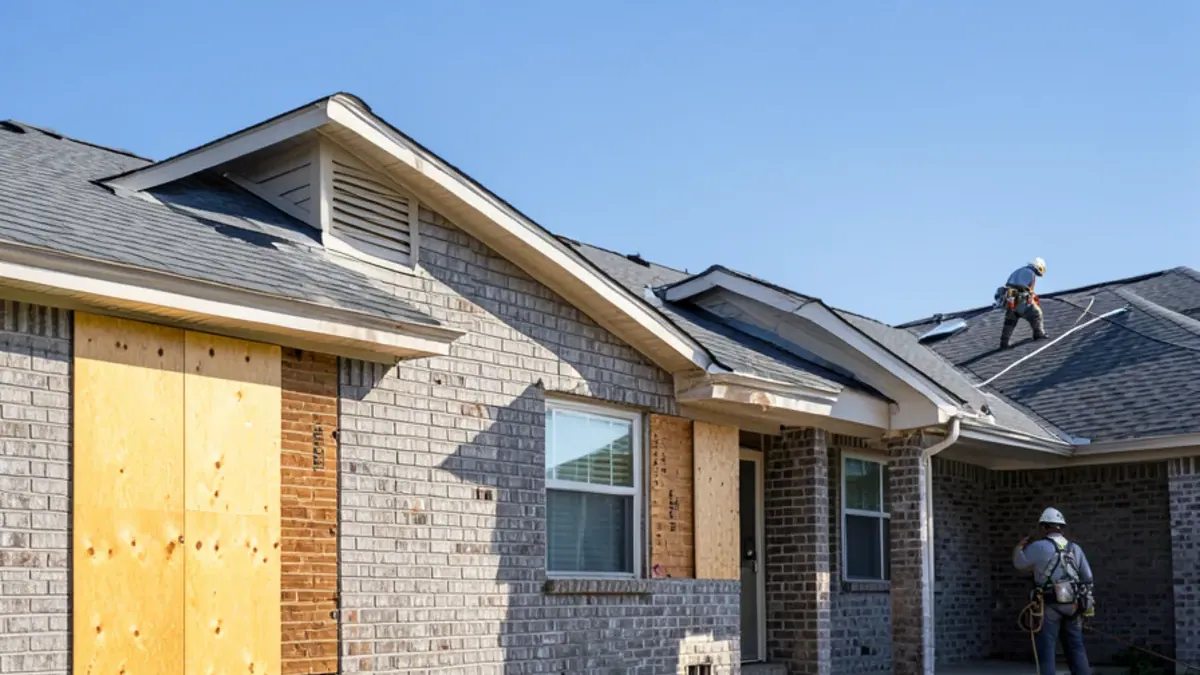
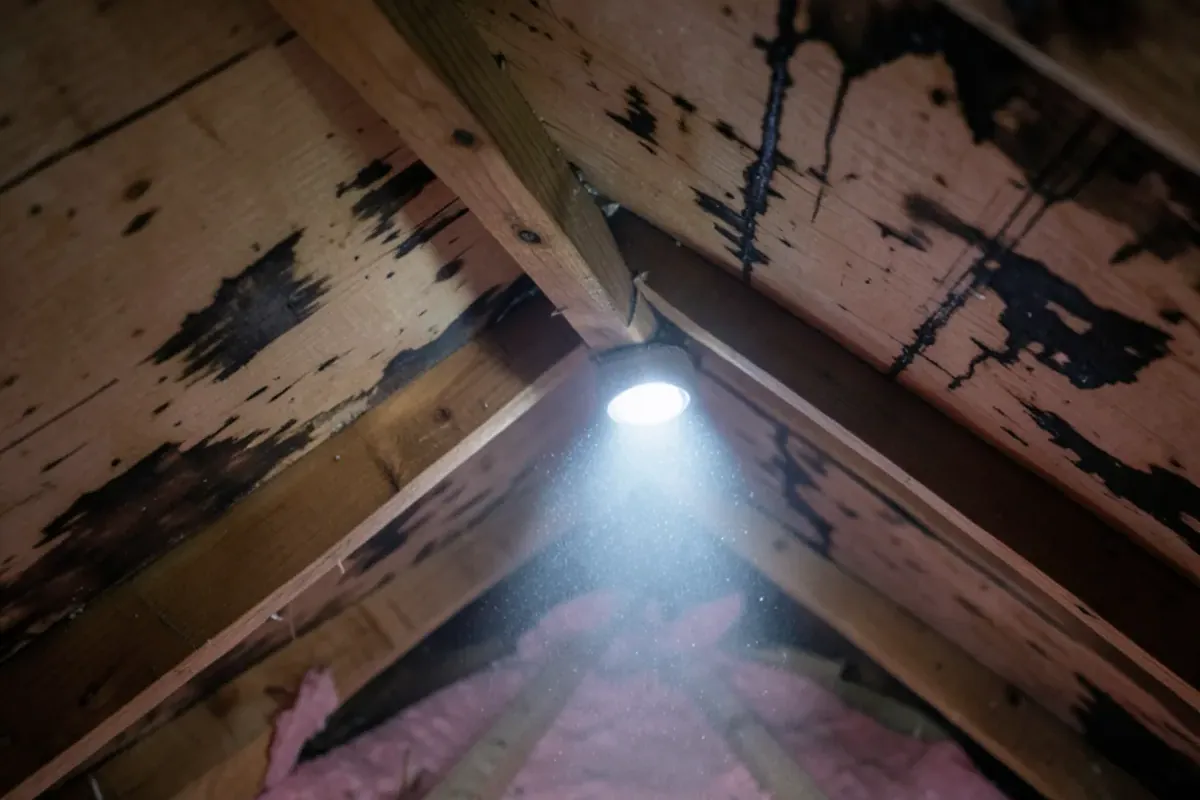
The clearest signs roof decking needs replacing are spongy spots underfoot, a roofline that dips between rafters, dark staining or delamination on the attic side of the boards, and nails that spin instead of biting. Most bad sheets are confirmed only once the old shingles are off, so a fair estimate prices decking per sheet before work starts.
Shingles get the attention, but the plywood or OSB under them is what holds every nail. When that layer softens, the roof can look fine from the curb while fasteners lose their grip and leaks spread sideways. Here is how to read the warning signs from the ground and the attic, and how decking is checked once a roof is opened.
Signs roof decking needs replacing: rotted roof decking from the yard and attic
You do not need to climb a ladder to spot most decking trouble. Start outside, then take a flashlight into the attic on a dry afternoon.
| Where you look | What you see | What it usually means |
|---|---|---|
| Street view of the roof | Shallow dips between rafters, wavy shingle rows | Sheathing has deflected from moisture or is too thin for the span |
| Eaves above gutters | Shingle edge drooping, stained fascia | Water backing up has wet the first row of decking |
| Attic, along nail lines | Dark rings, rusty nail tips | Condensation or a slow leak is soaking the wood |
| Attic, around vents and pipes | Delaminated layers, crumbly edges | A failed boot or flashing has leaked for months |
| Attic, at midday | Pinpoints of daylight | Gaps, rot or missing material at the deck |
One stain does not condemn a roof. A pattern of stains along the same slope, or wood that flakes when you press it with a screwdriver from inside, is worth a professional look.
Soft spots on a roof: what they tell us once we are on top
Please leave the walking to a roofer; soft decking is exactly how people fall through. When we walk a slope, a sound deck feels firm and quiet. A failing section gives slightly, flexes between rafters or makes a dull, hollow sound.
The places we check first:
- low eaves and the bottom of valleys, where water collects
- around chimneys and skylights with old flashing
- under pipe boots whose rubber collars have cracked
- spots where a satellite dish or antenna was once bolted down
- any slope where the shingles look newer than the rest, a sign of an old patch
Want a roofer to look at it?
Free inspection with photos. Se habla español.
- 5.0 on Google (33 reviews)
- Free inspections & estimates
- Se habla español
- Workmanship guaranteed in writing with every contract
Sagging roofline: is it the decking or the framing?
The shape of the sag tells us which part of the house is tired. A shallow scallop between every rafter is a sheathing issue: the panels are thin, damp or missing the edge clips that keep them aligned. A ridge that dips in the middle, or a whole plane that bows, points to the rafters, ridge board or supports, and that is a framing repair before any roofing begins. We tell you which one we see, and when framing is involved we say so plainly rather than hiding it under new shingles.
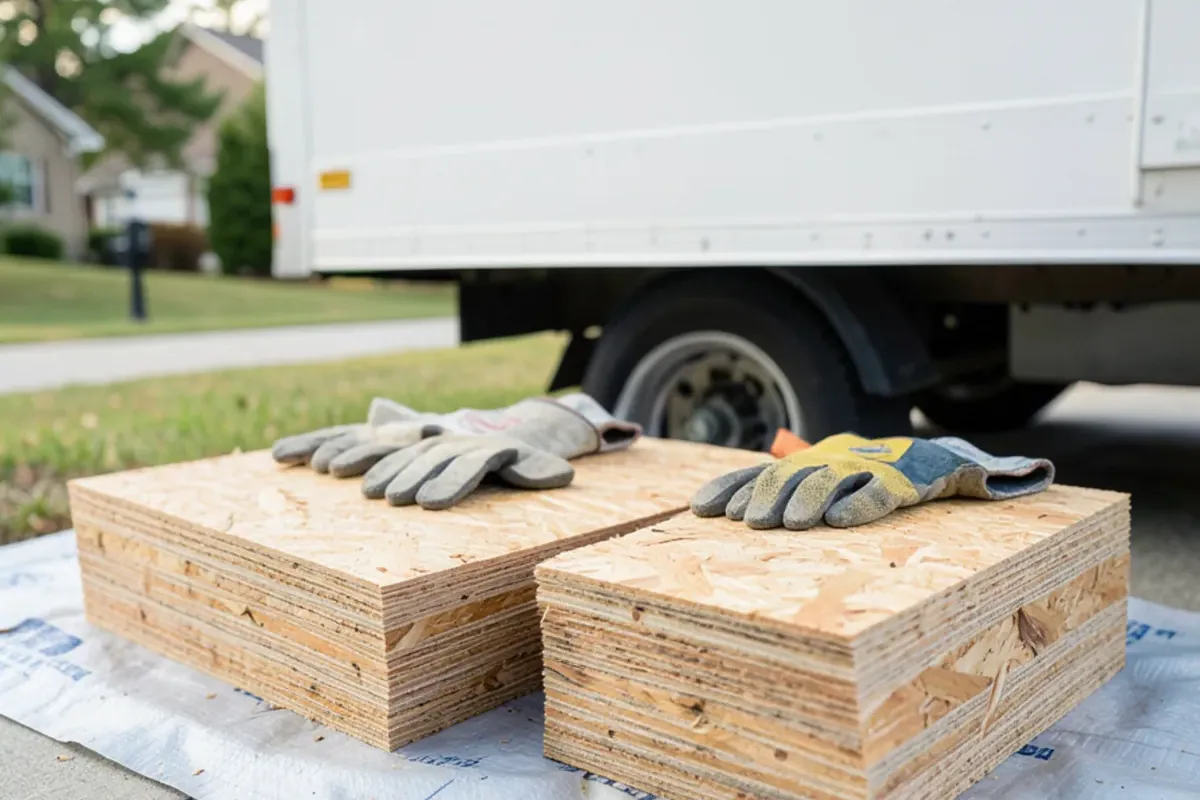
OSB vs. plywood roof decking
Both materials are accepted as roof sheathing when they carry the right span rating and thickness for the rafter spacing. They behave differently when wet.
- OSB is made of pressed wood strands. It is uniform and widely used, but its edges can swell if they stay wet, which telegraphs through shingles as ridged seams.
- Plywood is layered veneer. It tends to dry out more evenly after a leak, though older sheets can delaminate after repeated soaking.
On a re-roof we match the existing thickness so the new sheets sit flush with the old ones, and we fasten them to the rafters on the spacing the code calls for. Shingle manufacturers require solid decking, so the gaps in old plank-style sheathing have to be covered before shingles go on.
How decking is judged and priced during a tear-off
This is where our roof decking replacement work happens, as one stage of a full roof replacement:
- The old shingles and underlayment come off down to bare wood.
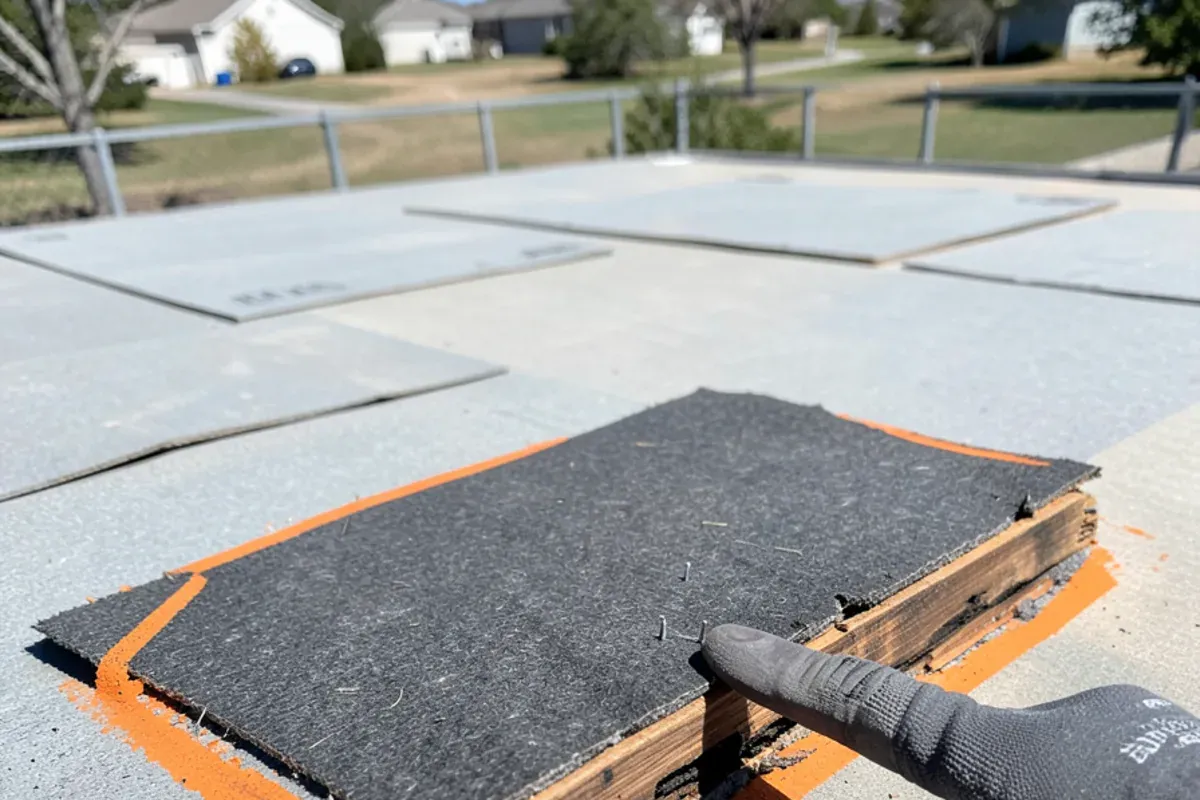
- A crew member walks every slope, pressing and sounding each sheet.
- Soft, delaminated or rotted sheets are marked with paint and photographed.
- You see the photos and the sheet count before anything is cut.
- Bad sheets are cut back to the rafter centers and replaced with new sheathing of matching thickness.
- The deck is swept, then underlayment goes down before the crew leaves.
Because nobody can count bad sheets before tear-off, your estimate should state a per-sheet price in writing. That way a few extra sheets are a known line item instead of a surprise.
What happens if bad decking gets covered up?
A crew in a hurry can roll underlayment over a soft sheet and shingle right across it. The roof looks finished, and for a while it is. The problems arrive later:
- Nails stop holding. Shingle nails driven into punky wood pull out under wind uplift, and a spring gust lifts tabs or whole courses.
- The dip comes back. A sagging sheet keeps sagging, and the new shingles telegraph every wave.
- Leaks travel. Water that reaches wet, crumbling wood spreads sideways before it drips, so the ceiling stain shows up far from the cause.
- Warranty questions. Shingle manufacturers write solid, sound decking into their installation requirements, so a roof laid over rot can complicate a material warranty claim.
Plank decking on older homes
Many mid-century ranch houses, including some in south and central Irving, were built with 1x6 or 1x8 boards instead of panels, sometimes with gaps between them from an original wood shake roof. Those boards can be sound, but gapped plank decking has to be covered with solid sheathing before asphalt shingles go on. When we find it, we show you the gaps in photos and price the overlay as its own line.
What our crews find under old shingles in DFW
The rot we uncover almost always has an ordinary cause. Pipe boots that cracked years ago and leaked a little with every storm. Gutters that overflowed in heavy spring rain and wicked water into the eave sheathing. Attics with too little ventilation, where hot, humid air condensed on the underside of the deck every winter night. Roofs carrying two layers of shingles, which adds weight and traps moisture.
In older parts of southwest Dallas County, including homes we look at in Duncanville, and on the many 1980s houses across Irving, a roof on its second or third set of shingles is where we most often find tired sheathing. For Spanish-speaking homeowners: if you suspect madera del techo podrida, we can explain what we find and show you the photos in Spanish.
If your ceiling has a stain, your roofline has developed a wave or a past repair never quite stopped a drip, call (725) 745-8803 to book a free inspection. We will check the attic side first and tell you whether you are looking at a few sheets or a bigger job.
Questions readers ask
Can a few sheets of roof decking be replaced without a whole new roof?
How do I know the roofer actually replaced the decking on my invoice?
Does homeowners insurance pay to replace roof decking?
How thick should replacement roof decking be?
Sources

Written by the RJ Premium Roofing team, a bilingual roofing contractor based in Irving, TX. We inspect, repair and replace roofs across Dallas–Fort Worth and document storm damage for homeowners’ insurance claims.