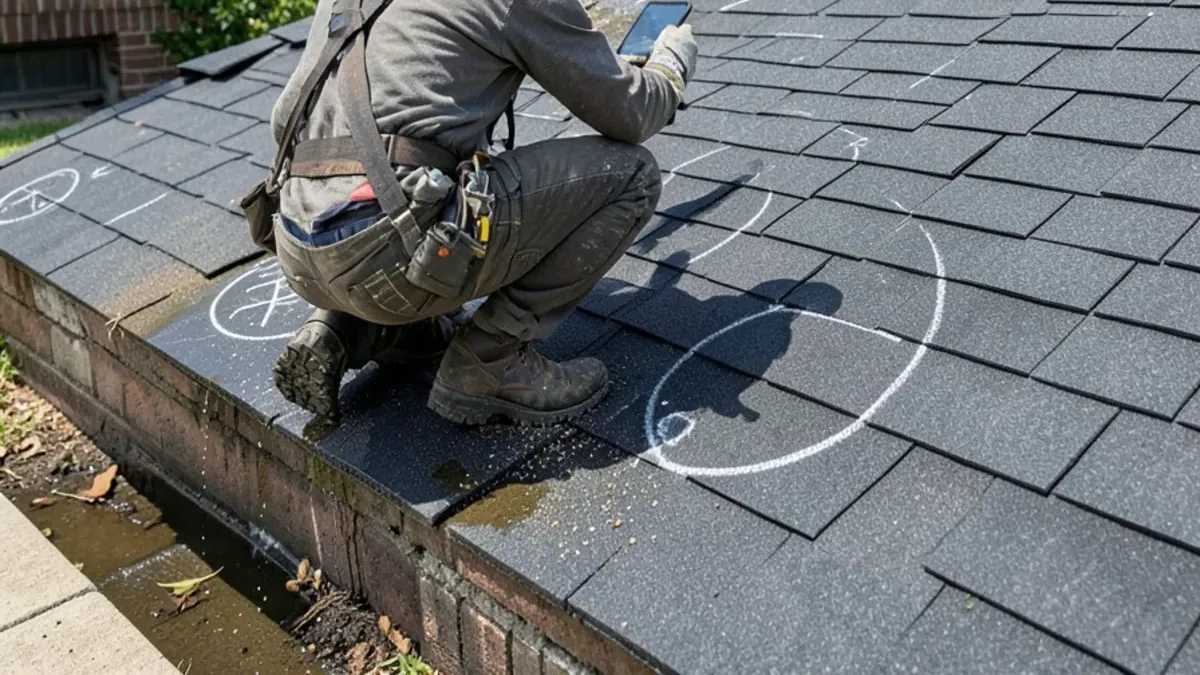
There is no single Texas roof claim deadline that applies to every DFW homeowner. Your policy sets how quickly you must report damage, often counted from the date of loss, and Texas law adds its own time rules for insurers and lawsuits. Read your policy's notice terms now, and ask the Texas Department of Insurance if they are unclear.
After a hailstorm, a lot of homeowners decide to "wait and see." The roof is not leaking, the neighbors have not filed yet, and calling the insurance company feels like a commitment. Waiting is understandable, but your policy is running a clock the whole time. Here is where those time limits come from and how to keep them from catching you out.
Is There One Texas Roof Claim Deadline?
No. For a typical homeowner in Irving or anywhere in Dallas County, the time you have to report a roof claim comes from your own policy, not from one statewide rule. Policies differ in how they word it. Many require "prompt" notice of a loss, some spell out a specific number of days, and some measure the window from the date of loss.
Texas law does set firm one-year filing rules in particular places, such as the coastal windstorm pool and certain policies in the coastal catastrophe area. Those rules are real, but they do not govern a standard homeowners policy on a house in North Texas. Do not assume a deadline you heard about from a friend on the coast, or from a different insurance company, applies to you. If your policy wording is unclear, the Texas Department of Insurance consumer help line at 1-800-252-3439 can walk you through it.
Time Limits Worth Knowing
Several separate clocks can apply to one roof claim. They come from different places:
| Time limit | Where it comes from | What it means for you |
|---|---|---|
| Reporting the damage | Your policy's notice or duties-after-loss terms | Report within the time your policy requires |
| Protecting the property | Your policy | Take reasonable steps to prevent further damage |
| Insurer acknowledges the claim | Texas Insurance Code ch. 542 | Generally within 15 days of notice |
| Insurer accepts or rejects | Texas Insurance Code ch. 542 | Generally within 15 business days of receiving what it requested, with possible extensions |
| Collecting held-back depreciation | Your policy | Finish work and submit the invoice within the stated time |
| Notice before suing over a weather claim | Texas Insurance Code ch. 542A | Written notice at least 61 days before a lawsuit |
| Filing a lawsuit | Your policy's suit clause and Texas law | Ask an attorney well before it runs |
Some of the insurer's ch. 542 deadlines can be extended after a declared weather catastrophe, so treat the figures above as the general rule.
Want a roofer to look at it?
Free inspection with photos. Se habla español.
- 5.0 on Google (33 reviews)
- Free inspections & estimates
- Se habla español
- Workmanship guaranteed in writing with every contract
How Long Does the Insurer Have, and How Long Do You Have to Sue?
Most homeowners only think about their own reporting window, but the back half of a claim runs on clocks too.
The insurer's payment clock
Once an insurer tells you in writing that it accepts a claim, Texas Insurance Code Chapter 542 generally gives it five business days to pay, and the same chapter provides for interest when a covered claim is paid late. If you are waiting on a decision, write down the date you sent the last item the insurer asked for; the 15-business-day decision window counts from there.
The lawsuit clock
Disputes rarely reach court, but the deadline for suing is the one that cannot be fixed later. Many Texas homeowners policies contain a suit clause that sets the deadline, often two years and one day after the claim dispute legally arises (frequently the date of denial), and Texas law generally does not allow a contract to shorten that period below two years. For weather-related property claims, Chapter 542A adds a pre-suit step: the homeowner sends the insurer a written notice no less than 61 days ahead of any lawsuit. Those 61 days eat into whatever time remains, so an owner heading toward a dispute should talk with an attorney months before the suit clause runs out, not weeks.
Pinning Down the Date of Loss
The date of loss on a roof claim is the date the storm damaged your roof. Insurers ask for it first, and every other time limit tends to hang on it. In a spring with several storms over a few weeks, it can be surprisingly hard to name.
A few sources help:
- Your own photos. Original files carry the date and time they were taken.
- The NOAA Storm Events Database. It lists hail reports by county and date.
- National Weather Service storm reports. Spotter reports note hail size and location.
- Neighbors and local news. Useful for confirming which evening the hail fell.
- Your inspection report. A report dated soon after the storm connects the two.
Our storm damage documentation puts the storm date, the inspection date and photographed damage in one record.
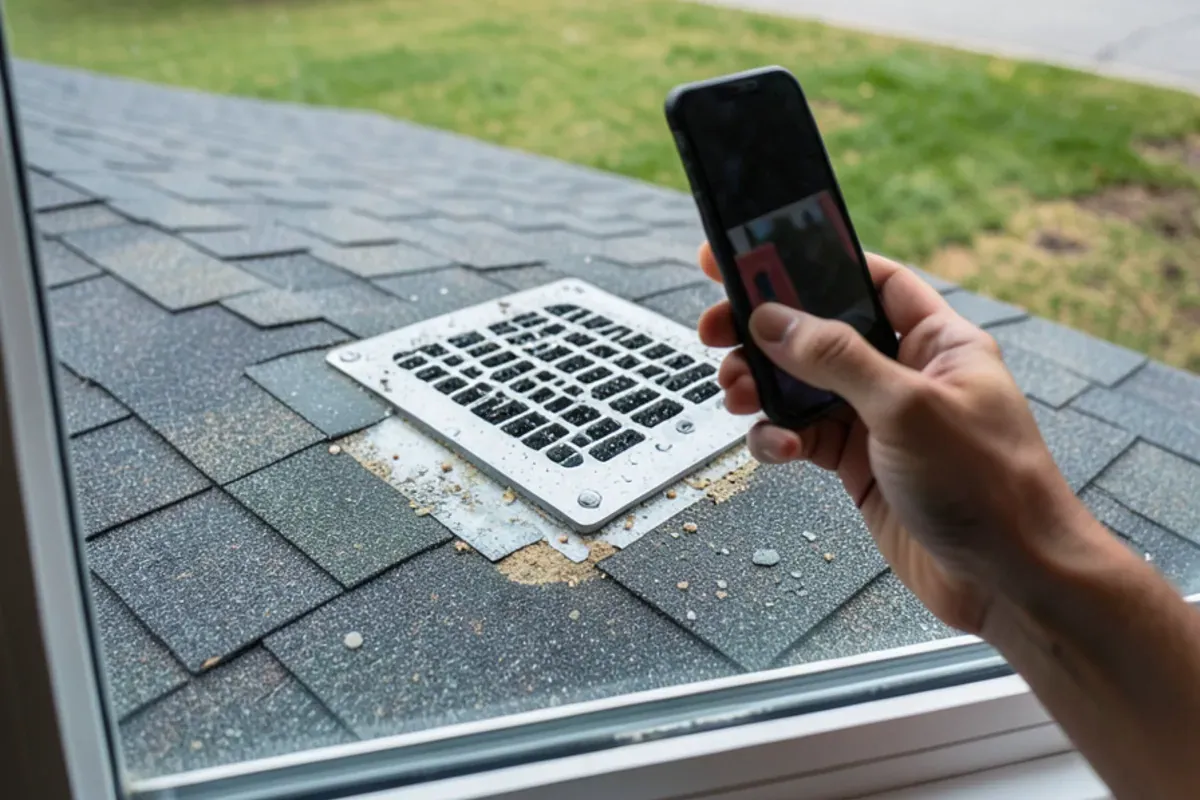
Why a Late Roof Insurance Claim Gets Harder
A late roof insurance claim is not automatically lost, but each month of delay adds obstacles:
- Another storm muddies the record. When a second hailstorm hits, separating the damage from each becomes difficult.
- Damage keeps developing. A cracked shingle can let in water that rots decking; the insurer may treat that later damage as neglect.
- Weathering hides the evidence. Fresh hail marks fade and darken over time, making them harder to identify.
- Policies renew. Deductibles or roof endorsements can change at renewal, which complicates which terms apply.
- Repair calendars fill up. After a big storm, contractors book weeks out, which shortens the time left in your window.
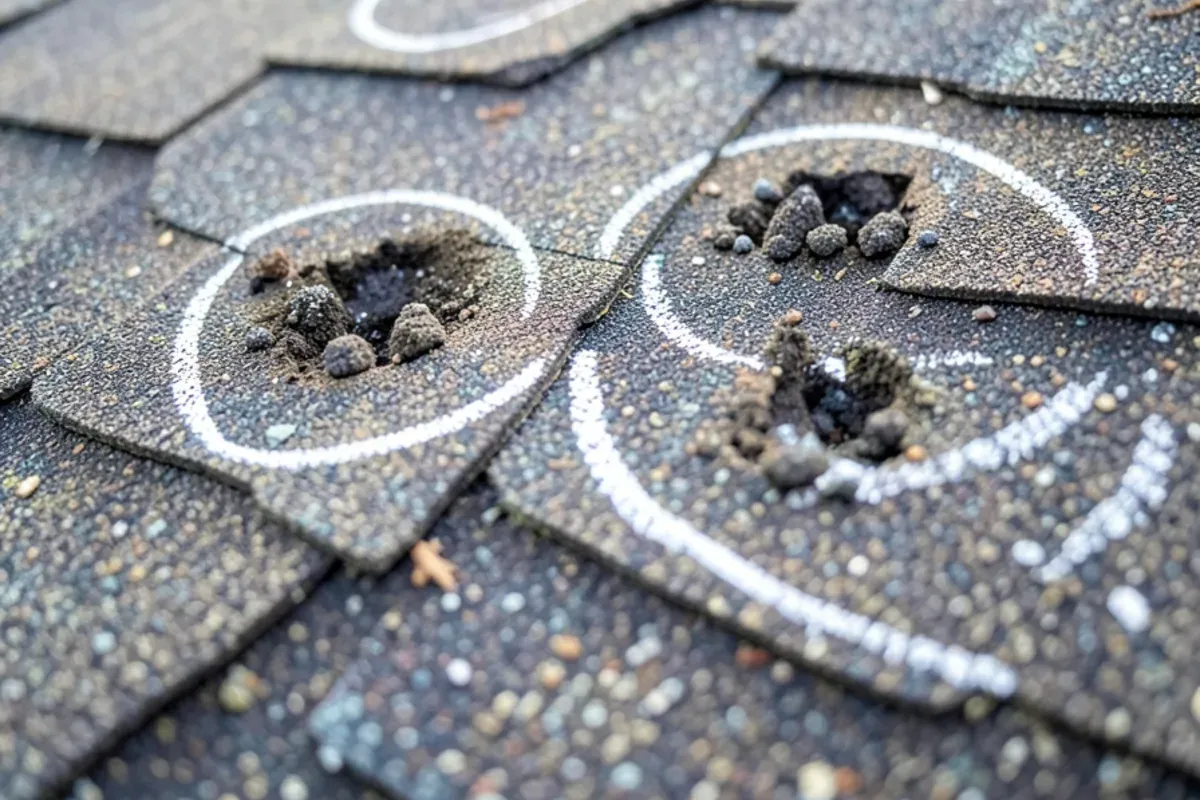
What We Recommend After Every Storm
Our advice is the same whether the hail was small or large: have someone inspect the roof soon after the storm passes, even if you are not sure you will file. An inspection costs you nothing with us, and it fixes the date of loss to a documented set of photos. If there is no meaningful damage, you have lost nothing. If there is, you can decide about a claim with your policy time limits still comfortably ahead of you.
We do not decide deadlines or coverage, and we will not guess at them. We will help you find the relevant pages of your policy if you show it to us, and we point owners to TDI when the wording is unclear.
Here is the trade-off as we see it on Dallas County roofs. Filing immediately, before you know whether there is real damage, can put a claim on your record for nothing. Waiting a season to "see if it leaks" can let a second storm or the summer heat blur the evidence. A free inspection in the first week or two splits the difference: you learn what the storm did while it is still clear, and you decide about the claim with time to spare. Homeowners across Dallas County who call us after a spring hail day usually have that answer within days.
A deadline worksheet for your policy
- Storm date, written down and backed by a photo or storm report
- Notice requirement in the duties-after-loss section (days or "prompt")
- Date you reported the claim and the claim number
- Deadline to finish repairs and claim held-back depreciation
- Suit-clause deadline, if a dispute ever looks likely
Do Not Let the Clock Decide for You
The safest storm claim time limit is the one you never come close to. Find your policy's notice terms today, note storm dates as they happen, and have the roof checked soon after hail. For more on how roof insurance claims work with us, read our overview, or contact a local roofing contractor in Irving, TX for help. Phone (725) 745-8803 and book a no-cost inspection while the storm date is still easy to prove. Si quiere entender el plazo para reclamar el techo en español, se lo explicamos.
Questions readers ask
Is there a one-year deadline for hail claims in Texas?
Can I still file a roof claim if the storm was months ago?
What happens if I miss my policy's reporting deadline?
How long does an insurance company have to pay a roof claim in Texas?
Sources
- Texas Department of Insurance — Consumer help line 1-800-252-3439
- Texas Insurance Code Chapter 542 — Prompt payment of claims
- Texas Insurance Code Chapter 542A — Certain consumer actions related to claims for property damage
- Texas Civil Practice and Remedies Code Section 16.070 — Contractual limitations period
- NOAA NCEI — Storm Events Database

Written by the RJ Premium Roofing team, a bilingual roofing contractor based in Irving, TX. We inspect, repair and replace roofs across Dallas–Fort Worth and document storm damage for homeowners’ insurance claims.