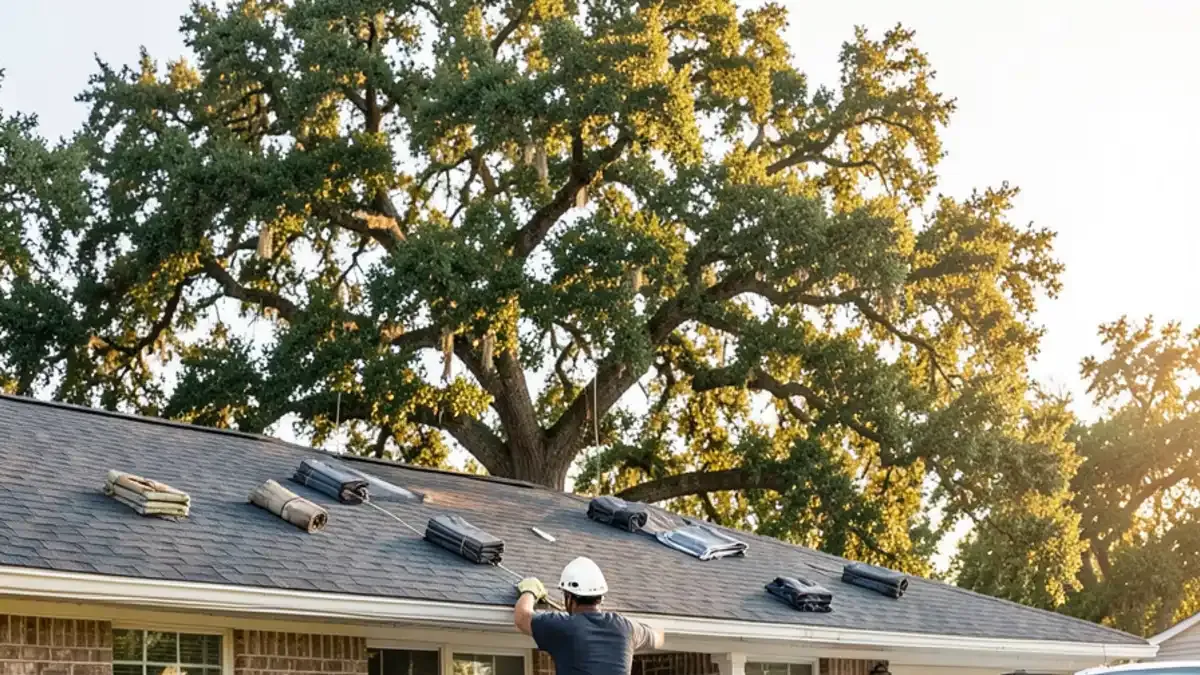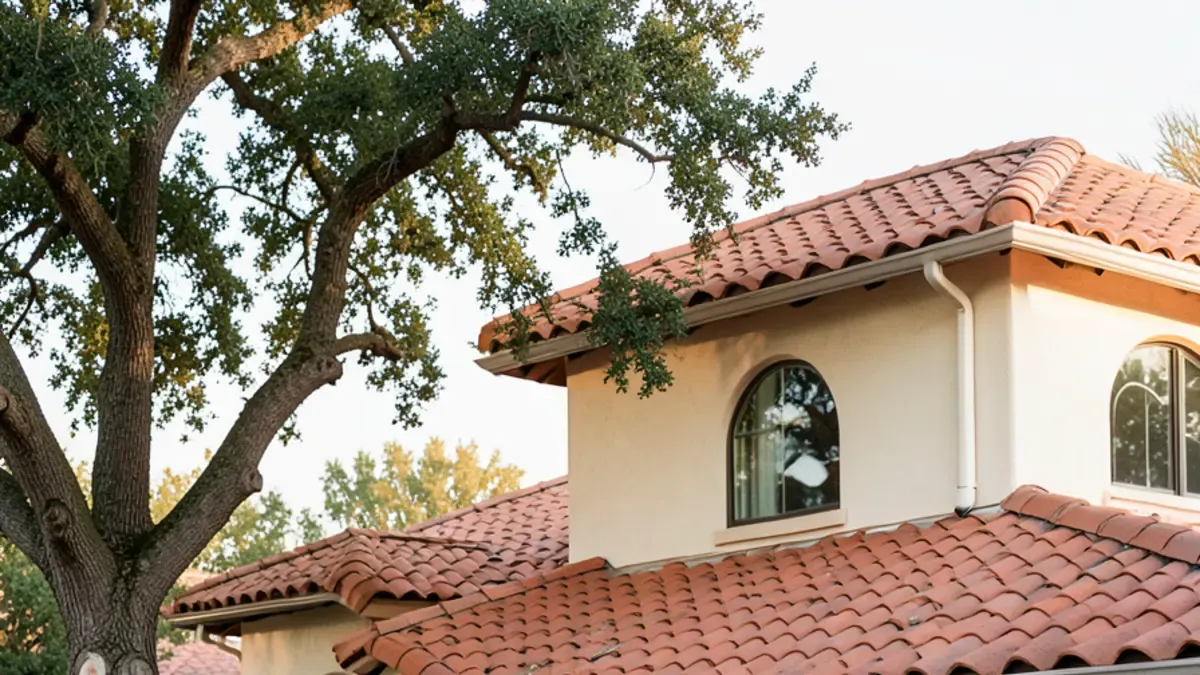
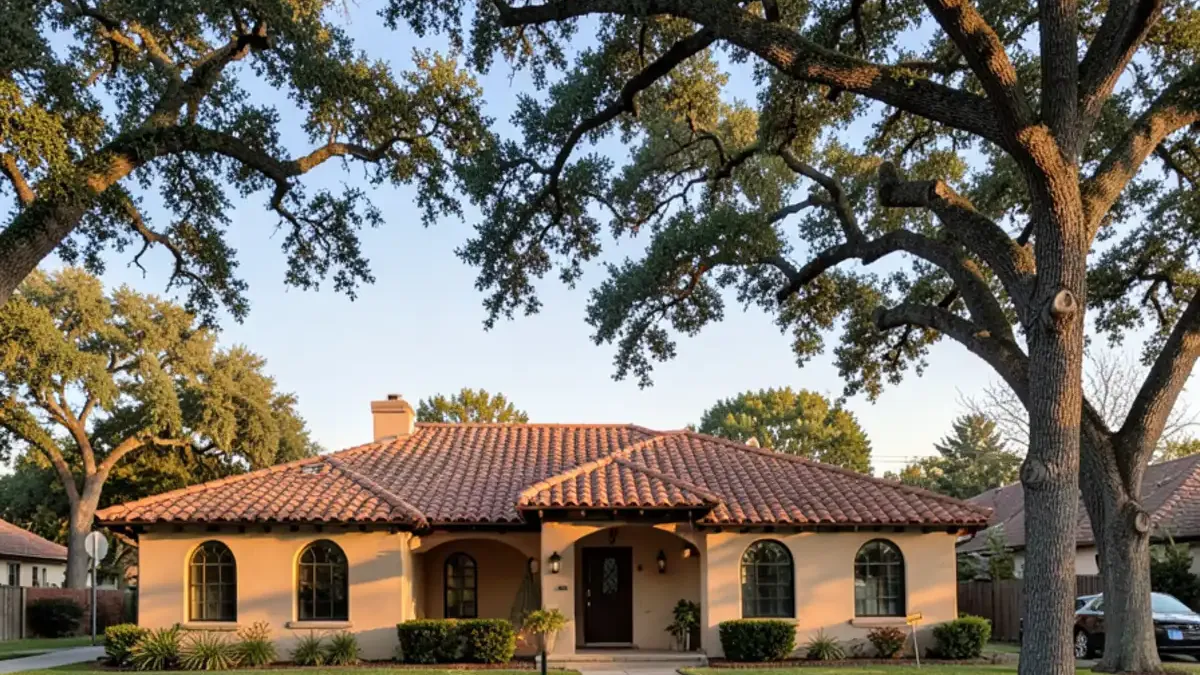
Comparing tile vs asphalt shingles comes down to the house. Clay and concrete tile can last generations, keep attics cooler and suit Spanish and Mediterranean styles, but tile is heavy, costly and can crack in big hail. Asphalt shingles are light, affordable and easy to repair, with a shorter life, and they fit most DFW homes built for them.
A tile roof makes a statement, and on the right house nothing else looks correct. On the wrong house it adds weight, cost and repair headaches. Here is how tile and asphalt shingles compare for North Texas homes, and how to tell which one your house was built for.
Tile vs. asphalt shingles: the core differences
| Factor | Clay or concrete tile | Asphalt shingles |
|---|---|---|
| Weight | Several times heavier per square | Light |
| Service life of the covering | Very long; underlayment ages sooner | Shorter, especially in heat and hail |
| Hail | Individual tiles can crack or break | Bruising and granule loss |
| Heat | Air space under tiles keeps the attic cooler | Absorbs heat, more so in dark colors |
| Repairs | Matching tiles can be hard to find | Simple, widely available |
| Installed cost | Significantly higher | Lower |
| Best fit | Spanish, Mediterranean, some custom homes | Most suburban DFW homes |
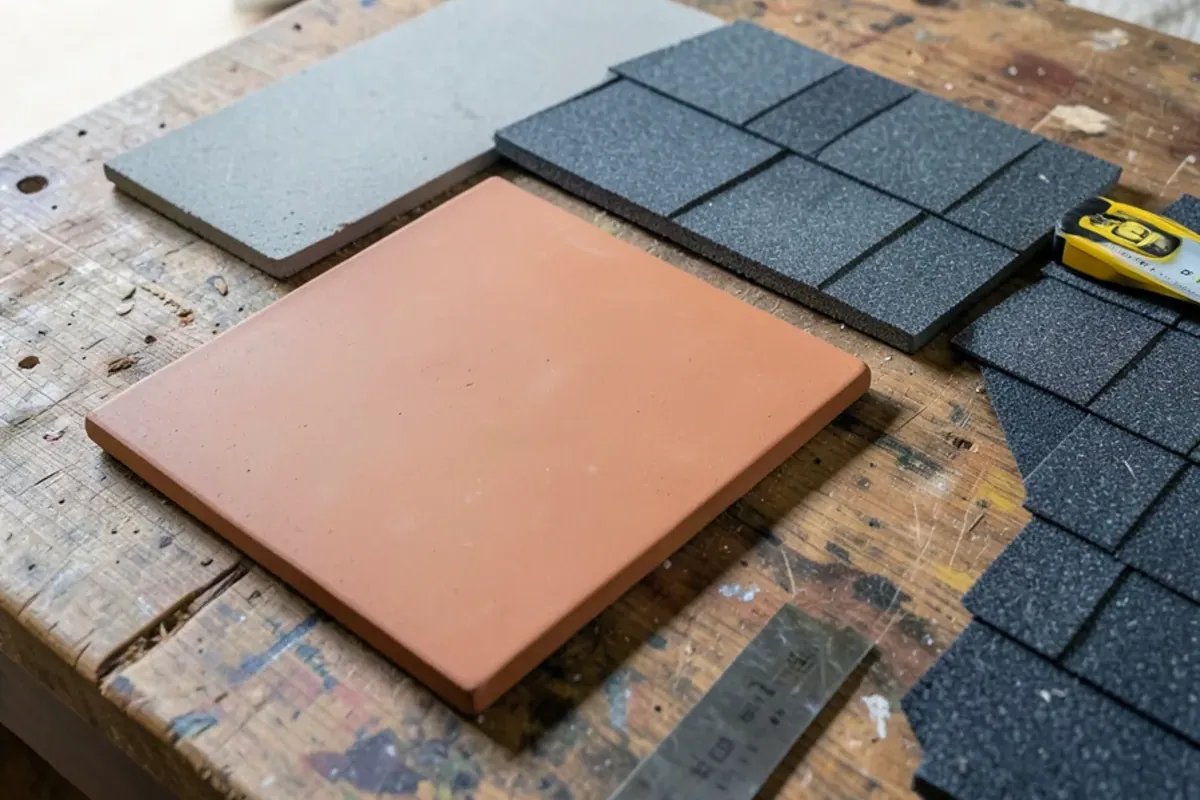
Clay tile roof pros and cons
Pros: Clay is fired earth, so the color runs all the way through and does not fade the way painted surfaces do. Barrel and S-profile clay tiles create airflow beneath them that helps keep heat out of the attic. A well-made clay tile can outlast the house's other systems.
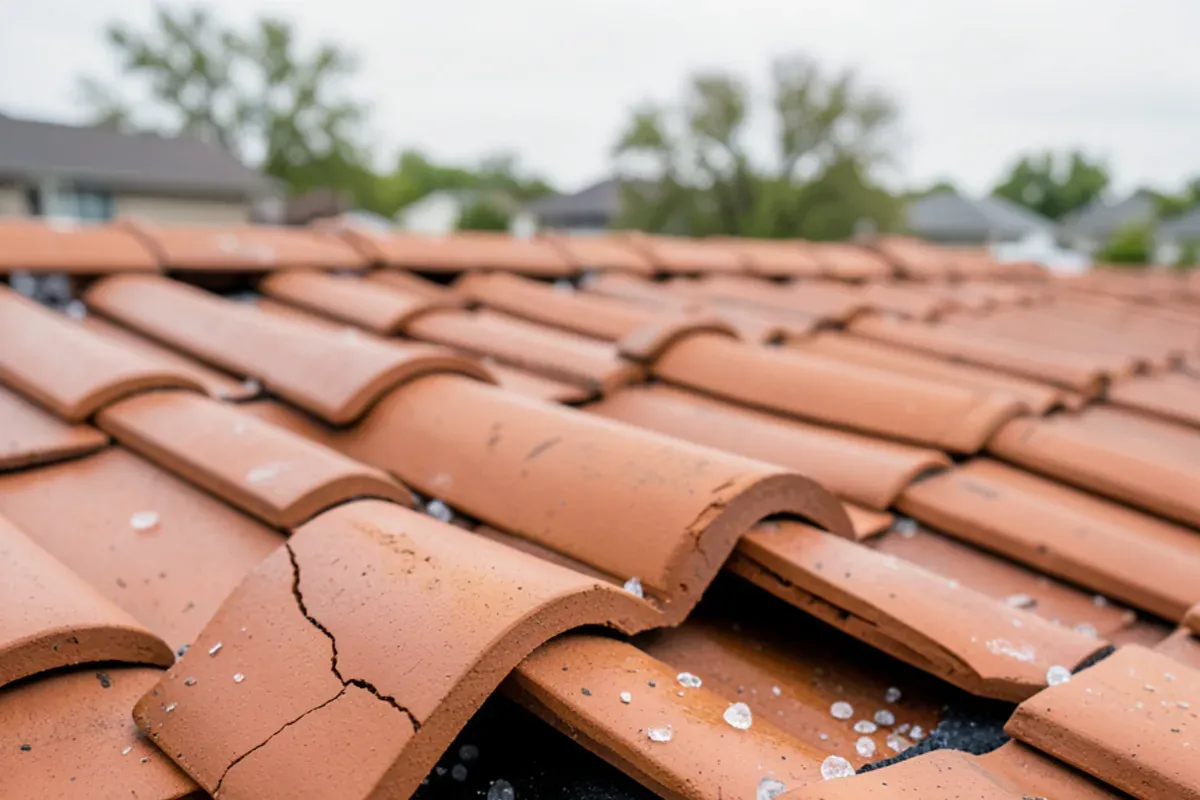
Cons: Clay is brittle. A large hailstone or a misplaced boot can crack it. It is also among the more expensive roof coverings to buy and install, and older profiles can be hard to match when a few tiles need replacing.
Concrete tile roof in Texas: the heavier, more affordable cousin
Concrete tile mimics clay or slate at a lower material price. It is heavier than clay, absorbs more water, and its color is usually applied at the surface, so it can wear and fade over many years. It still offers the cooling airflow and long service life of tile, and it is often the choice when a homeowner wants the look without the cost of clay.
Want a roofer to look at it?
Free inspection with photos. Se habla español.
- 5.0 on Google (33 reviews)
- Free inspections & estimates
- Se habla español
- Workmanship guaranteed in writing with every contract
Tile roof hail damage and what repairs look like
Hail is tile's weak point in DFW. Stones large enough to bruise shingles can crack tiles, and broken pieces expose the underlayment beneath to sun and water. That underlayment is what actually keeps the house dry, so a cracked tile left in place can turn into a leak months later.
Repair options depend on the extent:
- Individual tile replacement when a few are cracked and matching tiles are available.
- Salvage and swap, using sound tiles from a less visible slope to repair the front of the house.
- Re-lay, where tiles are lifted, new underlayment and battens are installed, and sound tiles go back on.
- Full replacement when tiles are discontinued, widely broken or the house is moving to a different material.
The code does not allow shingles or new tile to be laid over existing tile, so any change starts with removal.
Why does the underlayment decide when a tile roof needs work?
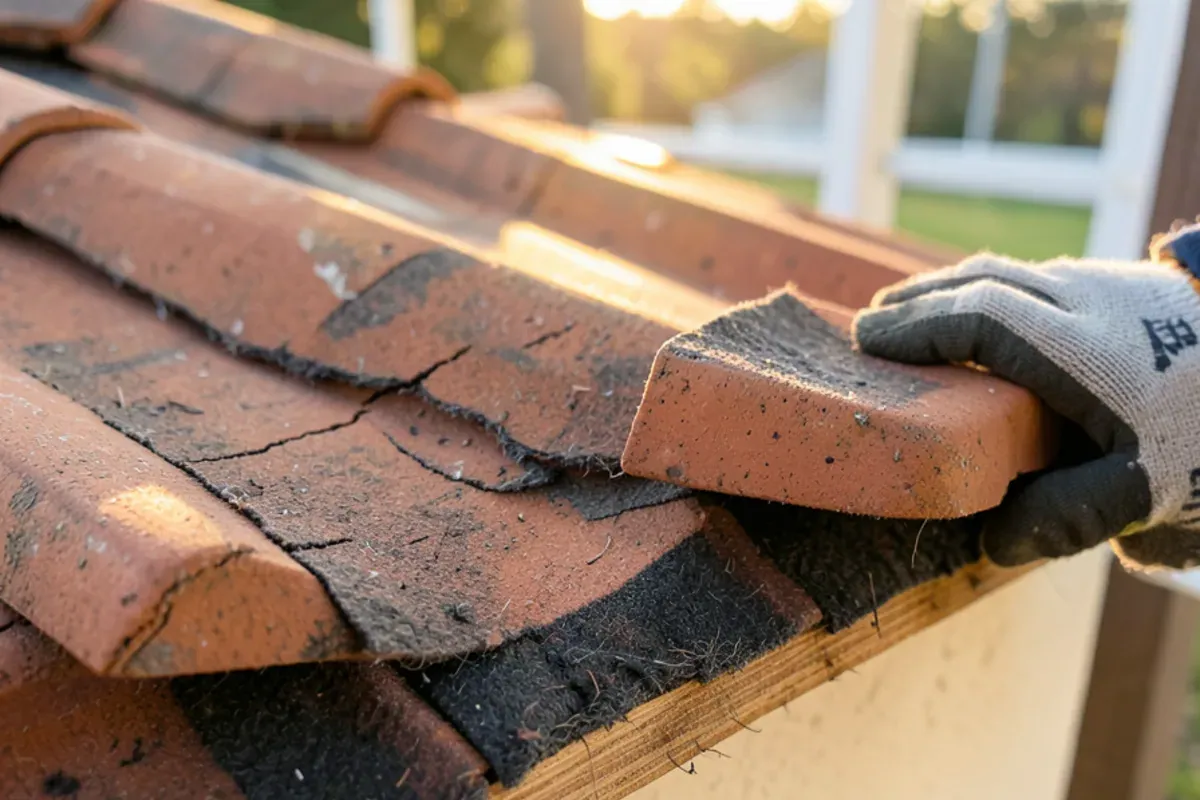
On a tile roof, the tiles shed most of the rain and block the sun, but the layer underneath is what keeps water out of the house. Wind-driven rain, blown debris and the occasional cracked tile all send some water under the tiles, and the underlayment carries it down to the eaves. Industry guidance commonly expects that layer to be replaced at least once during a tile roof's life, often while the tiles themselves are still good.
In North Texas heat, older felt underlayment dries out and cracks, especially near the eaves and in valleys where water runs most. The warning signs are easy to misread:
- leaks or attic stains even though no tiles look broken
- tiles that have slipped or shifted out of line
- cracked mortar along hips and ridges
- dark, brittle felt visible when a tile at the eave is lifted
Any of these points toward a re-lay sooner rather than patching individual tiles.
How do we inspect a tile roof without breaking tiles?
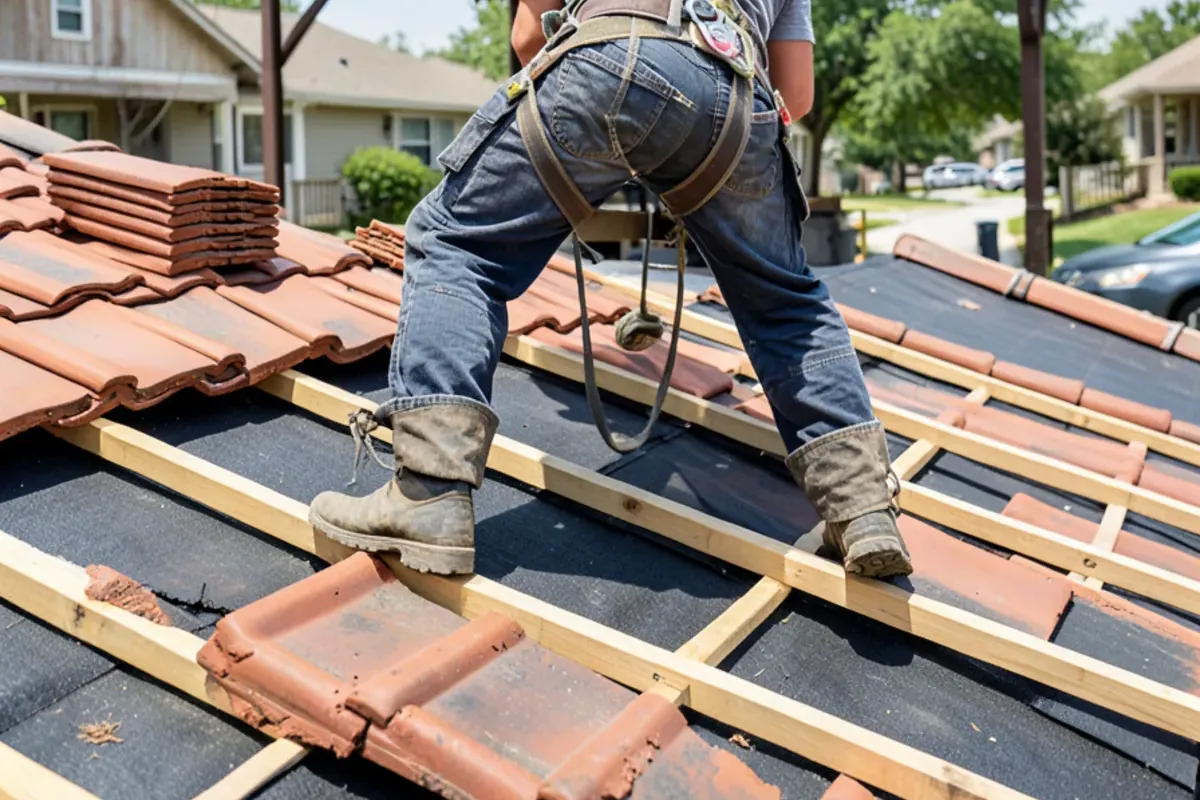
A careless inspection can do more damage than the storm. Our sequence keeps foot traffic to a minimum:
- Start from the ground and the attic. Photos from the yard and a look at the attic deck show where stains, light or broken tiles are before anyone climbs.
- Use ladder positions and zoomed photos along eaves, valleys and hips to cover most of the roof without walking it.
- Walk only where tiles are supported, stepping on the lower part of each tile over the one below, never in the middle of a barrel.
- Lift a few tiles at the eaves to see the underlayment and battens, then reset them.
- Check every valley, wall flashing and ridge for cracked mortar, rusted metal and debris dams.
- Count and photograph broken tiles by slope, so a repair or claim has an exact number.
Tile roof cost and the weight question
We do not have a published local tile price we can stand behind, so we will not quote one here. What is certain is that tile costs significantly more per square than asphalt to buy and install. If your house was built for shingles, switching to tile can add the cost of a structural evaluation and framing reinforcement on top of that. If your house already has tile, keeping tile is usually the right call, because the framing and the architecture were designed for it.
Lighter options that give a tile look
If you like the look of tile but your framing was not built for it, there are middle grounds. Stone-coated steel panels are pressed into tile-like profiles and weigh a fraction of real tile. Some synthetic roofing products also imitate clay or slate. Each has its own trade-offs in hail, heat and price, and HOA guidelines may treat them differently from real tile, so get the product approved before ordering. We can walk through these alternatives with samples during an estimate.
What we see on tile roofs in older Dallas neighborhoods
Older, architecturally varied neighborhoods hold many of the region's tile roofs. In Highland Park, the small town surrounded by Dallas and University Park, Spanish and Mediterranean-style homes with clay roofs sit alongside slate and shingle. The pattern we see on these older roofs is consistent: the tiles are often still sound while the underlayment beneath them is tired, which is exactly when a re-lay makes more sense than new tile.
A re-lay is not a cheap job, and owners should hear the trade-off plainly. Lifting, stacking and resetting every tile takes far longer than shingling the same roof, and some percentage of old tiles break in handling, so we plan for replacements from salvage or spare stock. In return, the owner keeps the original tile, the look of the house and decades of service from a roof covering that would cost much more to buy new.
Across Irving and most of DFW's 1980s suburbs, the opposite is true. Those homes were framed for shingles, and asphalt, often an impact-resistant line, remains the sensible choice. For homeowners comparing teja de barro o asfalto, we explain both options in Spanish as well.
Our tile roofing page describes how we handle tile work, and the homepage covers the rest of what a roofing contractor in Irving, TX like us handles. To find out which material your house was built for and what a repair or replacement involves, call (725) 745-8803; inspections and estimates are free.
Questions readers ask
Can I switch my house from asphalt shingles to tile?
Can roofers walk on a tile roof during an inspection?
Should I keep spare tiles after a tile roof job?
How can I tell whether my roof tile is clay or concrete?
Sources

Written by the RJ Premium Roofing team, a bilingual roofing contractor based in Irving, TX. We inspect, repair and replace roofs across Dallas–Fort Worth and document storm damage for homeowners’ insurance claims.