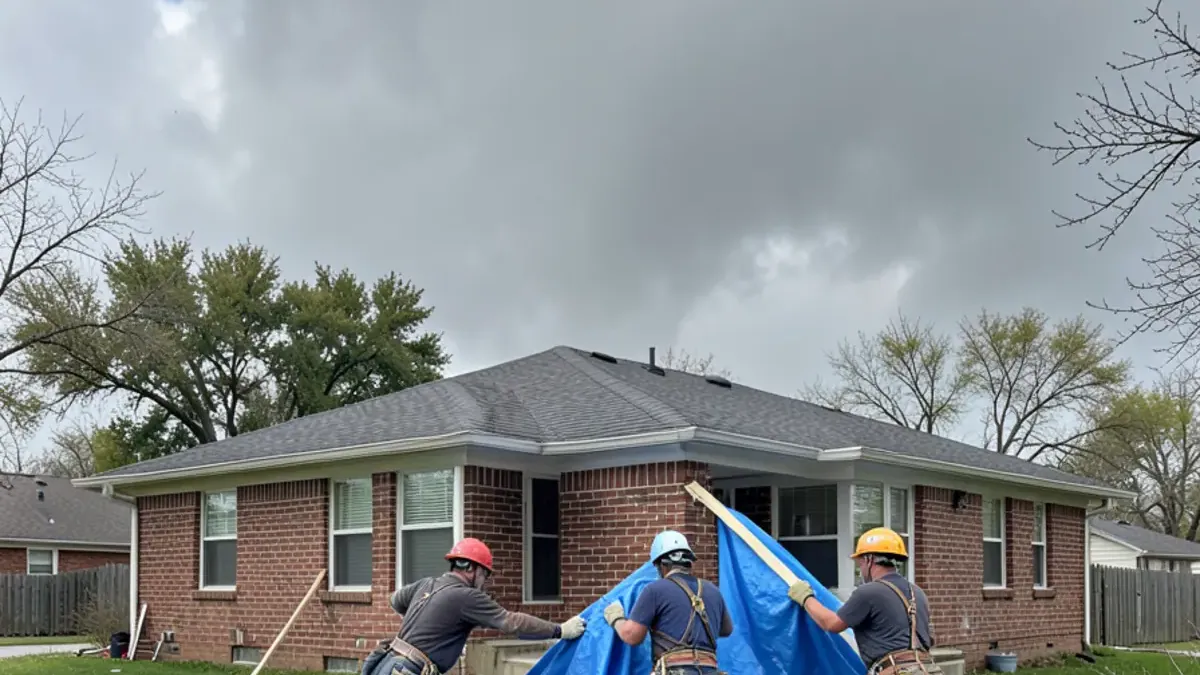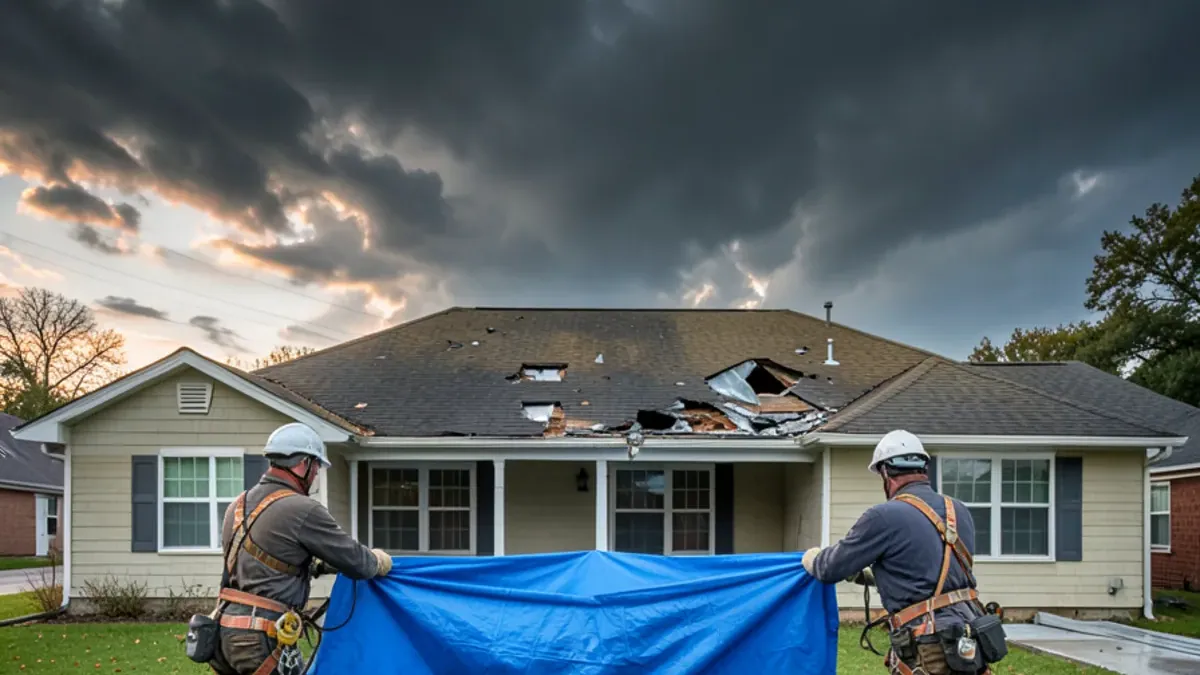
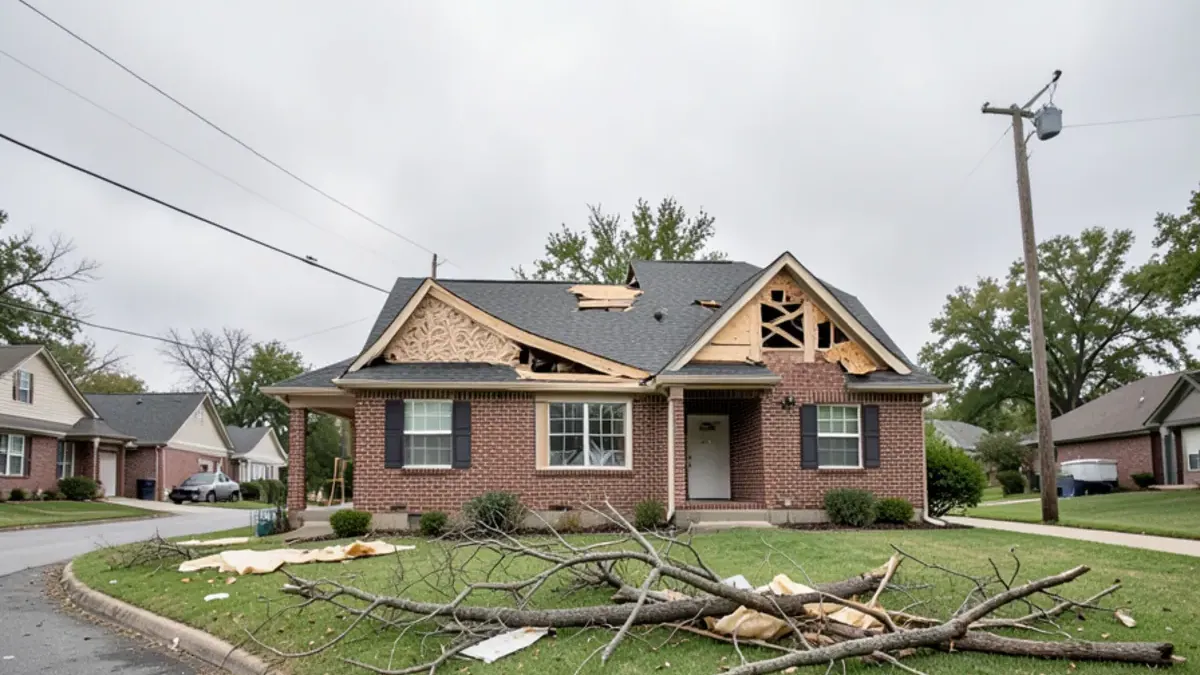
With tornado roof damage, what to do comes in a strict order: people and utilities first, then a look from the ground for structural warning signs, then photos for your claim, then a temporary cover. Nobody should climb onto a roof that a tornado has twisted or soaked, and nothing on this list requires it.
North Texas has a long tornado record: the March 28, 2000 storm through downtown Fort Worth, the April 3, 2012 outbreak that hit Lancaster, Forney and Arlington, the December 26, 2015 EF4 that tore through Garland and Rowlett, and the October 20, 2019 EF3 across North Dallas. In each one, homeowners faced the same first morning. This checklist puts the steps in the order that keeps you safe and protects your claim.
Step One Is People, Not Shingles
Before you look at the roof, account for everyone in the house and check for the hazards that hurt people after the wind has passed:
- Gas. If you smell it, leave the house and call 911 and your gas utility from outside.
- Power lines. Treat every downed line as live, including ones lying in water or tangled in branches on the roof.
- Structure. If walls are cracked, the ceiling is sagging or doors are jammed in their frames, stay out until someone qualified has looked.
- Sharp debris. Nails, glass and torn metal flashing are everywhere. Wear boots and gloves.
And stay off the roof. Tornado-damaged framing may not carry a person's weight, and rain usually follows the storm. Federal labor data are blunt about the risk: in 2023 the Bureau of Labor Statistics logged 134 roofing deaths, and 110 people in roofing contracting died from falls, slips or trips. A torn, wet roof is the setting for exactly that kind of fall.
Roof Damage After a Tornado in Texas: What to Look For From the Ground
Tornado winds do two kinds of damage. Surface damage is missing shingles, torn underlayment and debris punctures. Structural damage means the roof framing itself moved. The second kind changes everything about the repair, the safety plan and the claim.
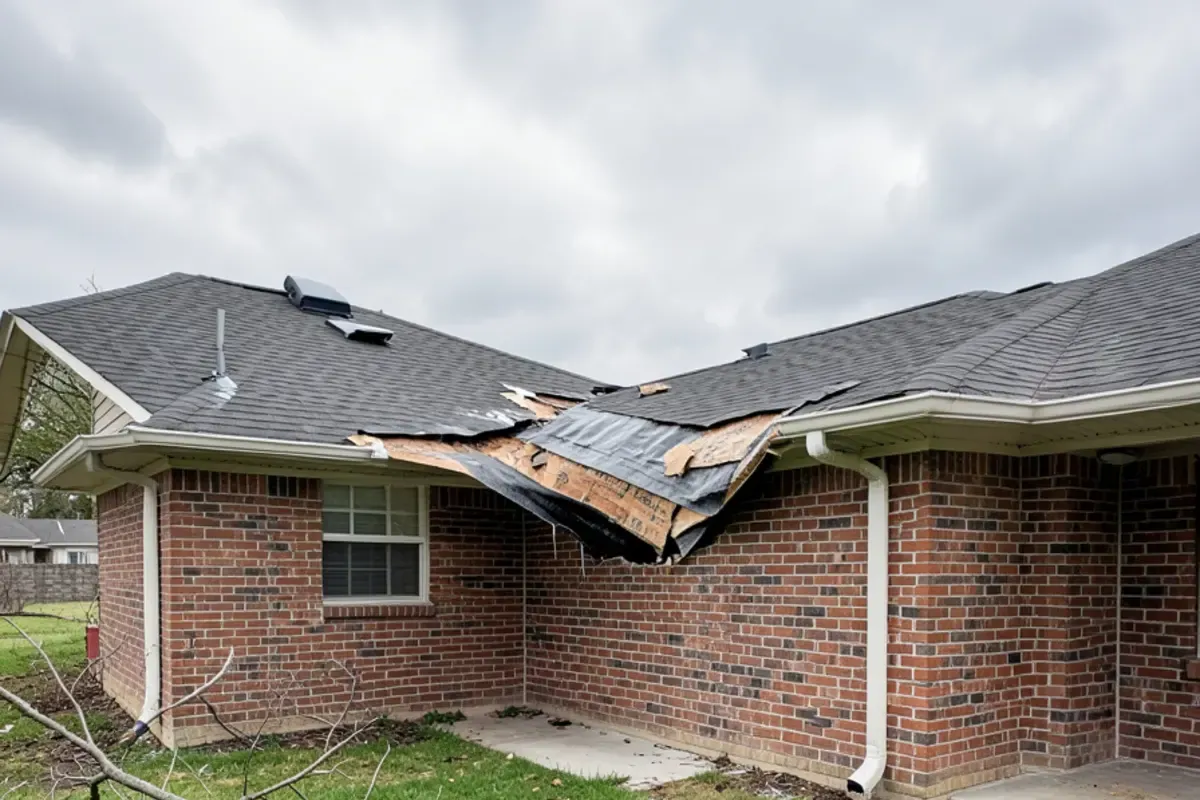
Structural roof damage signs
- The ridgeline dips or waves instead of running straight.
- A section of roof edge has lifted away from the top of the wall.
- A gable end is leaning, cracked or blown in.
- From the attic hatch, you can see daylight, broken rafters or trusses pulled off their connections.
- Brick veneer has cracked or shifted at the corners, or interior doors no longer close.
- Debris such as a fence post or limb is lodged through the decking.
If any of those are present, keep everyone out of the rooms below and tell both your insurer and the roofer when you call. The National Weather Service rates tornadoes on the Enhanced Fujita scale from damage surveys after the storm, which is one more reason to leave the debris pattern as you found it until it has been photographed.
Want a roofer to look at it?
Free inspection with photos. Se habla español.
- 5.0 on Google (33 reviews)
- Free inspections & estimates
- Se habla español
- Workmanship guaranteed in writing with every contract
Tornado Damage Checklist for Your Insurance Claim
Photos taken in the first day or two are often the best evidence you'll ever have. Work through this from the yard and inside the house:
| Document | How to capture it |
|---|---|
| Whole house, all four sides | Wide photos from the street and yard |
| Roof damage | Zoomed photos from the ground; never climb |
| Interior water and ceiling damage | Photos and short videos, room by room |
| Damaged belongings | Photo each item before moving it to the curb |
| Debris on the property | Photos of what landed where, before cleanup |
| Expenses | Receipts for tarps, hotel stays, fans and food |
| Every call | Date, name and claim number in one notebook |
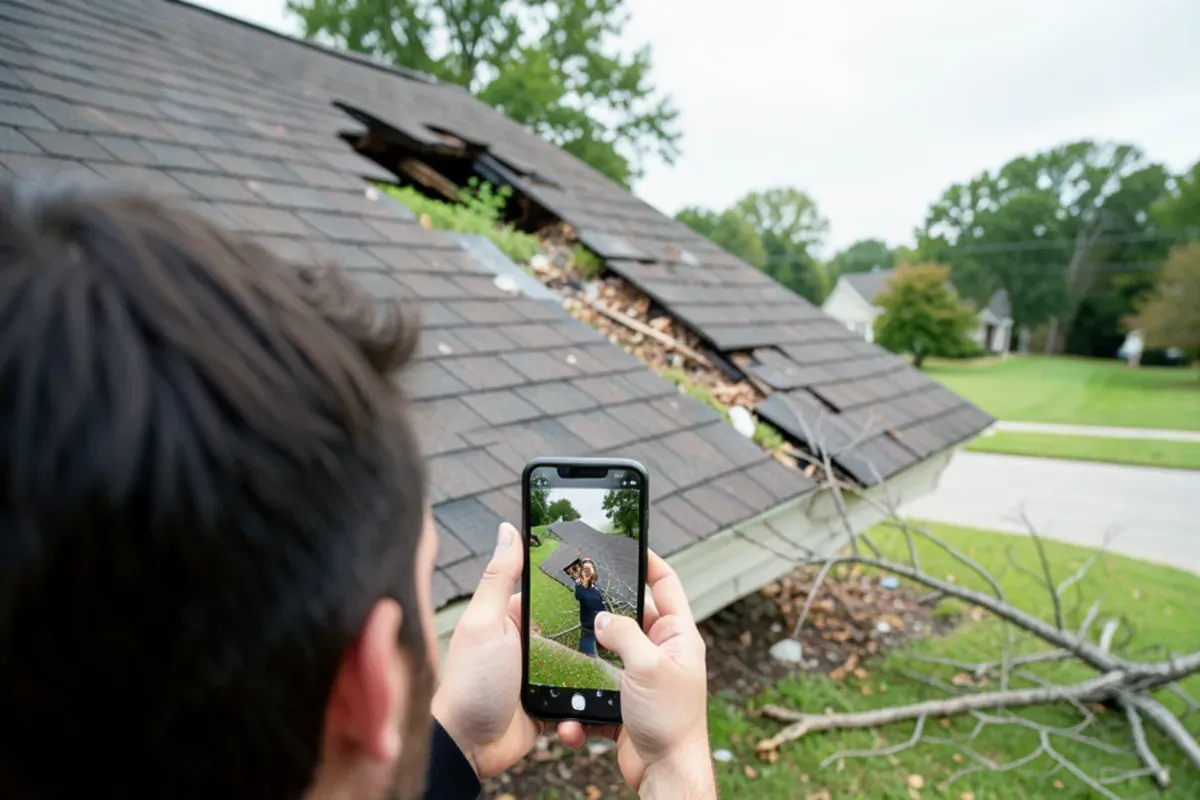
Report the loss to your insurer promptly. For a tornado insurance claim on the roof, we inspect once it is safe, photograph the damage slope by slope, write a damage report, and can attend the adjuster's inspection to walk through what we recorded. Texas law draws clear lines here: only you or a licensed public adjuster may handle negotiations with the insurer, and no contractor may pay or waive your deductible.
Tornado or Straight-Line Wind: Does the Label Matter for Your Roof?
After a big storm, neighbors argue about whether "it was a tornado." The National Weather Service settles that with a damage survey, and the Fort Worth office posts its findings and Enhanced Fujita ratings in the days after an event. For your roof and your claim, the label matters less than people expect.
| EF rating | Estimated 3-second gust | What it typically means for a home roof |
|---|---|---|
| EF0 | 65–85 mph | Shingles peeled, gutters and siding damaged |
| EF1 | 86–110 mph | Large sections of covering torn off, decking exposed |
| EF2 | 111–135 mph | Roof structure torn from well-built homes |
| EF3 | 136–165 mph | Roofs and some walls gone from sturdy homes |
| EF4–EF5 | 166 mph and up | Whole-house destruction |
Most homeowners policies treat a tornado as a windstorm, so the same separate wind/hail deductible that applies to a hailstorm usually applies here too. Check the declarations page rather than assuming. Straight-line winds in a severe thunderstorm can match a weak tornado, which is why an EF0 or EF1 street often looks like the aftermath of a bad downburst.
The wind rating on the shingles themselves gives a useful comparison. Many architectural shingles are tested to ASTM D7158 classes rated for 90, 120 or 150 mph winds, and an EF0 or EF1 gust sits right in that band. Shingles that were already unsealed, brittle or poorly nailed let go well below their rating, which is why one roof on a block loses tabs while its newer neighbor does not.
Who to Call, and in What Order
- 911 for injuries, fire, gas or live wires.
- Your utilities for power and gas shutoff or restoration.
- Your insurance company to open the claim and get a claim number.
- A local roofer for a temporary cover and an inspection report. Our tornado damage roof repair work starts with a tarp or board-up to stop more water getting in.
- Your city's building department if rebuilding requires a permit, which a re-roof or structural repair usually does.
Be careful with crews that appear the same afternoon with contracts in hand. Ask where they are based, get everything in writing, and never sign over your insurance proceeds on the driveway.
What We Look For on Roofs Along a Tornado Path
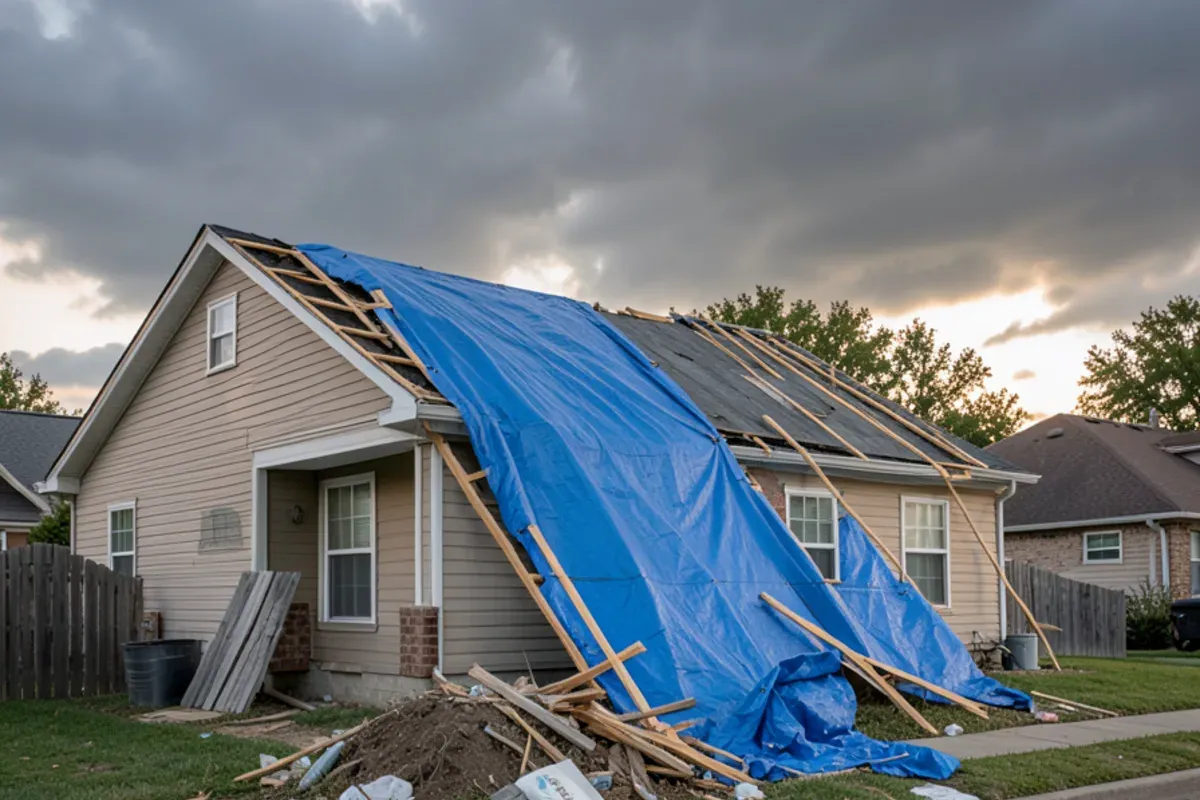
As the owner has put it in our replies to Google reviews, "When a roof suffers storm damage, it is important to act quickly." Acting quickly does not mean acting carelessly, though. Along a tornado's path, one house can lose half its roof while the next looks untouched, and the less dramatic house still deserves a close look. We check roof-to-wall connections, look for shingles that lifted and re-settled without blowing off (they are often unsealed and will leak in the next storm), and inspect ridge caps, vents and flashing that took flying debris.
Inside, we follow water stains back to the decking and note any framing that has cracked or shifted. That record shapes what gets repaired, what needs an engineer's opinion, and what goes into your claim file.
Repair or replacement is the honest question after the tarp is on. If only a few slopes lost shingles and the decking is dry and sound, a repair that matches the existing shingles may be the right call, though older discontinued shingles can be hard to match closely. If the framing moved, decking stayed wet for days, or damage reaches most of the roof, replacement is usually the sounder fix, and in Irving a re-roof needs a city permit before work starts.
Getting From Tarp to Rebuilt Roof
After a tornado, the order is safety, documentation, temporary cover, then permanent repair. Our emergency roof repair team works across Dallas County, including Garland neighborhoods still remembered for the 2015 storm and Dallas itself. Hablamos español si prefiere explicar los daños por tornado en su idioma.
When the area is safe to approach, call (725) 745-8803 and tell us what you're seeing. We'll schedule the free inspection, get the opening covered, and give you photos and a report you can hand straight to your insurer.
Questions readers ask
How do I know if tornado damage to my roof is structural?
Who should I call first after a tornado damages my roof?
Does homeowners insurance cover tornado damage to a roof in Texas?
Sources

Written by the RJ Premium Roofing team, a bilingual roofing contractor based in Irving, TX. We inspect, repair and replace roofs across Dallas–Fort Worth and document storm damage for homeowners’ insurance claims.