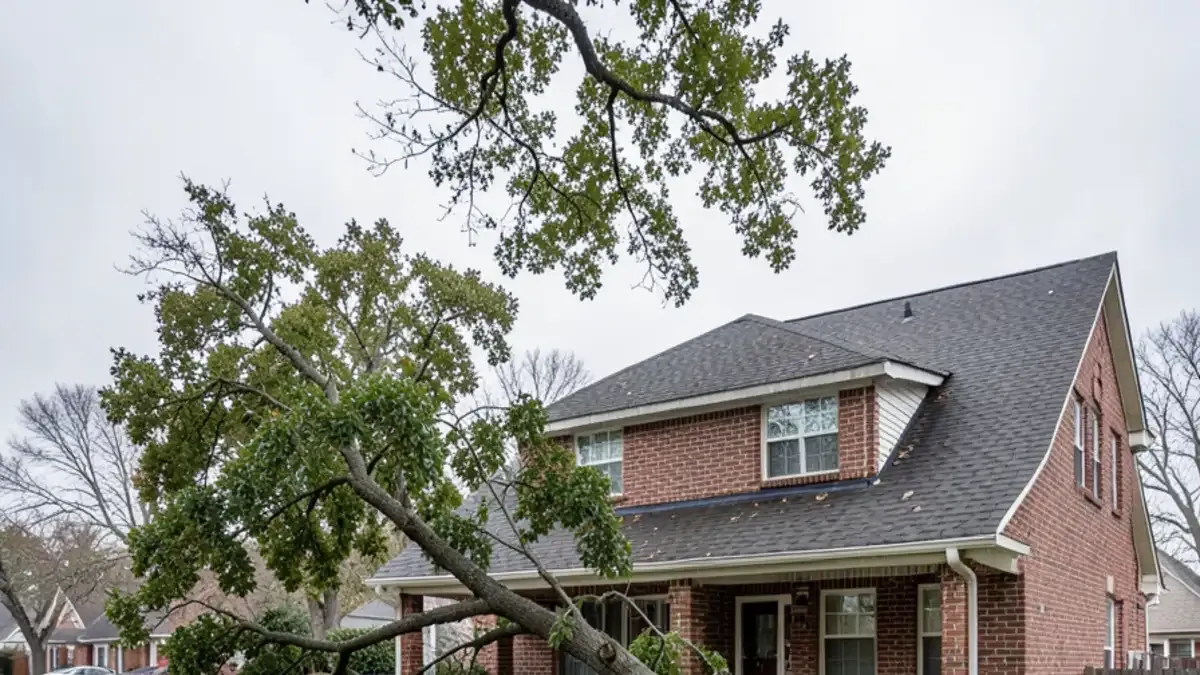
If a tree fell on your roof, what to do first is get everyone out of the rooms beneath it, stay clear of any wires, and call your insurer. A tree service lifts the trunk off, then the roof is covered and rebuilt. In Texas, your own homeowner policy usually covers your house, even for a neighbor's tree.
A tree on the roof looks like the worst-case storm outcome, and the next few hours do matter. But most of what protects your family, your house and your claim happens from the ground, in a specific order.
Get Out From Under It and Stay Off the Roof
Weight is the first problem. A trunk resting on a roof can keep settling as rafters crack, so move everyone out of the rooms beneath it and keep them out. Wires are the second problem. Branches often bring service lines or cable down with them, and a wet limb touching a live line can energize the gutters. If you see any wire in the tree, call 911 and the electric utility and keep your distance.
The third rule is that nobody climbs up, not to cut branches and not to throw a tarp. A wet, debris-covered roof with a loose limb on it is unpredictable footing. In 2023, the Bureau of Labor Statistics tallied 134 deaths in roofing work, and falls, slips or trips accounted for 110 of the fatalities at roofing contractors. Chainsaw work on a slope adds one more hazard to that.
What to Do in the First Few Hours
- Clear the rooms below and close those doors.
- Call 911 or the utility for any wires, gas smell or fire risk.
- Photograph everything before anything moves: the tree on the roof, the base or break point of the tree, interior ceilings, and any water.
- Call your insurer to report the loss and get a claim number.
- Contain interior water with buckets and plastic sheeting.
- Book tree removal with a tree service that has the rigging or crane for the job.
- Line up the roofer to cover the opening as soon as the tree is off.
Tree Removal From the Roof: Who Does What?
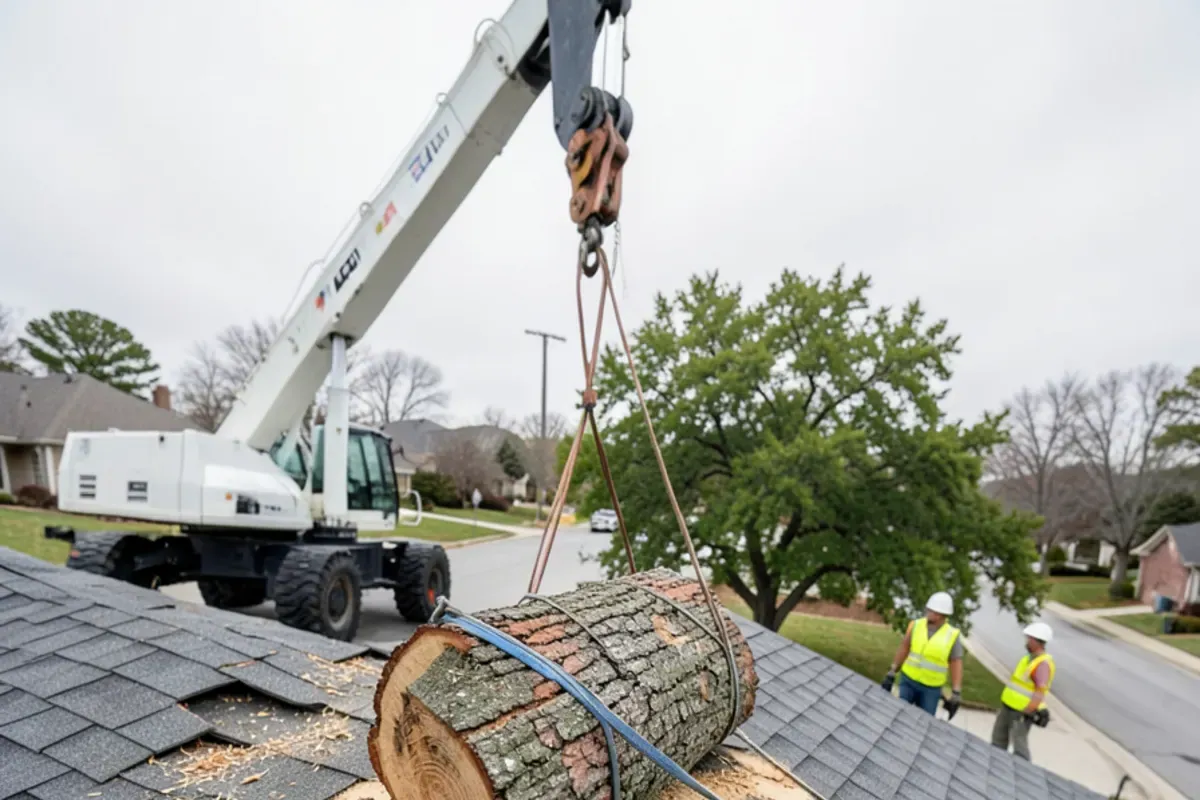
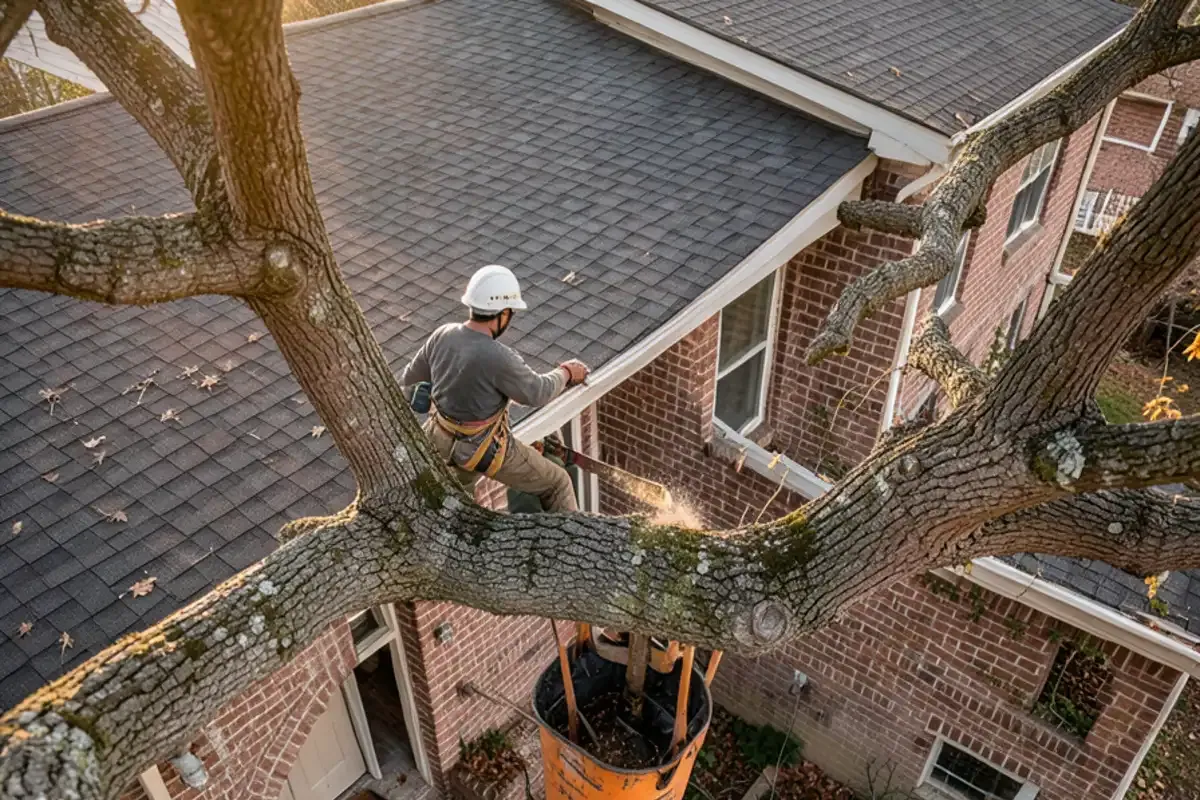
Lifting a tree off a house is tree-service work. The usual method is to cut the canopy away, then lift or lower the trunk in sections so no extra weight drops onto damaged framing. Ask the tree crew to leave any limb that has pierced the roof in place until it can be lifted straight out, since dragging it can tear more decking.
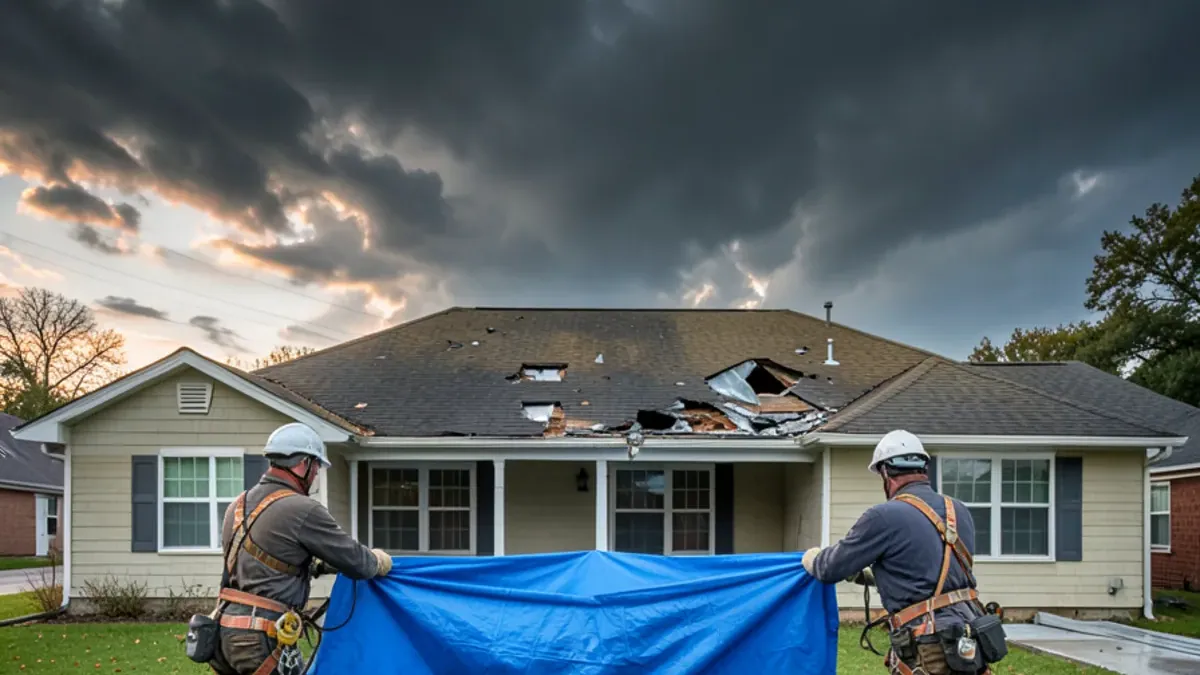
Our part is the roof. Through our fallen tree roof damage service, we cover the opening once the tree is off, inspect the framing from the attic and from above, and plan the rebuild. If the hole has to wait, a board-up and tarp keep the weather out.
Want a roofer to look at it?
Free inspection with photos. Se habla español.
- 5.0 on Google (33 reviews)
- Free inspections & estimates
- Se habla español
- Workmanship guaranteed in writing with every contract
Tree Damage Insurance in Texas: Who Pays for What
This is the question we hear most, especially when the tree came from next door. Policies differ, so read yours and confirm with your agent, but the usual pattern looks like this:
| Situation | Whose policy usually responds |
|---|---|
| Your tree falls on your house in a windstorm | Your homeowner policy |
| Neighbor's healthy tree falls on your house in a storm | Your homeowner policy |
| Neighbor's tree was visibly dead, and they had been told | Your policy first; your insurer may seek repayment from theirs |
| Your tree falls on the neighbor's house | Usually their policy, unless negligence is shown |
| A tree falls in the yard and hits nothing | Often not covered for removal |
Removal costs are often covered when the tree damaged a covered structure, though many policies limit that amount. Your deductible applies, and under Texas Insurance Code Chapter 707, no roofer may pay or waive it for you. The Texas Department of Insurance notes one upside: if your insurer later recovers its payment from a negligent neighbor's carrier, you may get that deductible back.
For the claim, we photograph the damage, write a report covering the framing, decking and roof covering, and can be on site when the adjuster comes. You remain the one dealing with your insurer, or a licensed public adjuster you hire.
What a Fallen Branch Roof Hole Hides
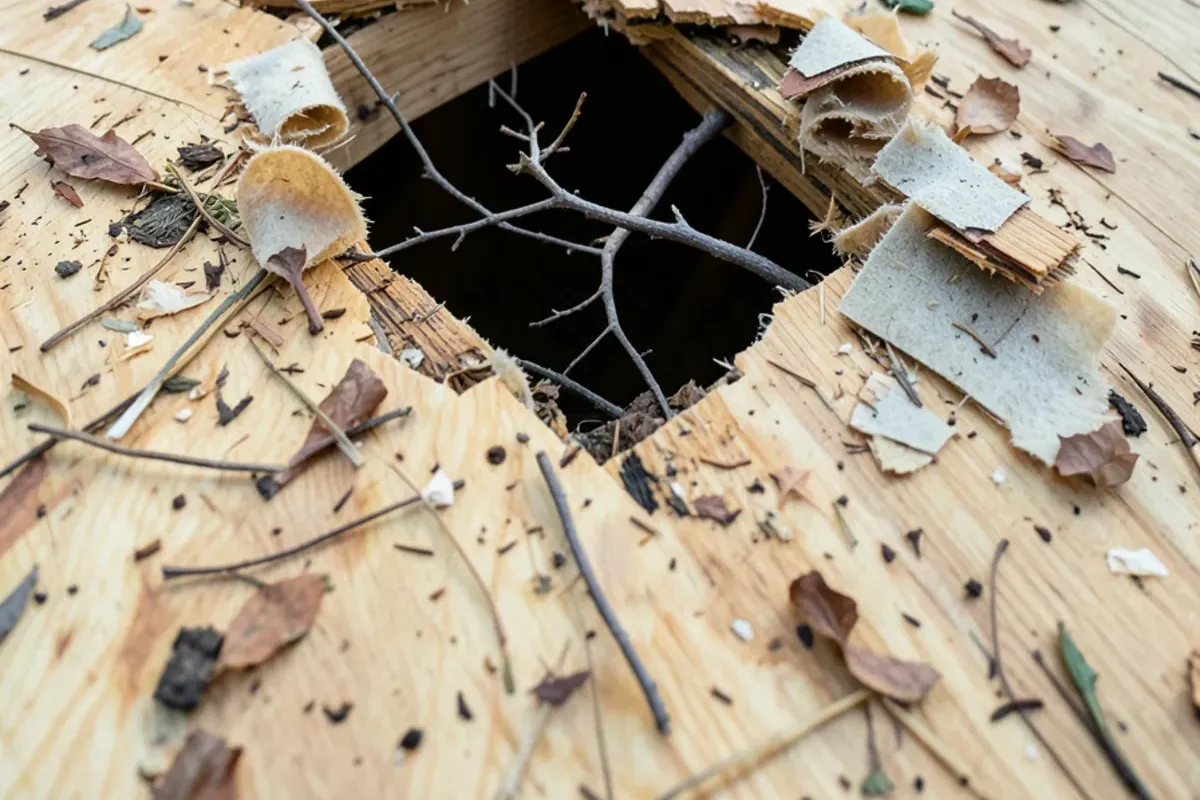
The hole you can see is rarely the whole repair. A falling limb flexes the roof as it lands, and that bend cracks things a few feet away: rafters split along the grain, decking sheets crack at their nail lines, and shingles across the slope pop loose. From the attic we look for fresh splits in the lumber, nails pulled through the decking and any ceiling joists that took the load. Up top, we check the shingles around the impact, since the ones that look fine may have lost their seal.
In older neighborhoods with big canopy trees, such as Highland Park and the older Irving streets close to home for our Irving roofing company, large limbs over the roof are common, and so are older framing details. That's another reason to inspect from inside before deciding what to replace.
One trade-off we raise early: a patch around the impact is faster and keeps the claim smaller, but on a roof past the middle of its life, new shingles beside weathered ones rarely match in color, and the slope around a cracked area may fail sooner. Your insurer decides what it pays for. We tell you what we would do on our own house and put the reasons in writing.
Can You Keep the Next Limb Off Your Roof?
You can't storm-proof a mature oak, but you can lower the odds that a limb ends up in the attic. What we point out on inspections in tree-heavy neighborhoods:
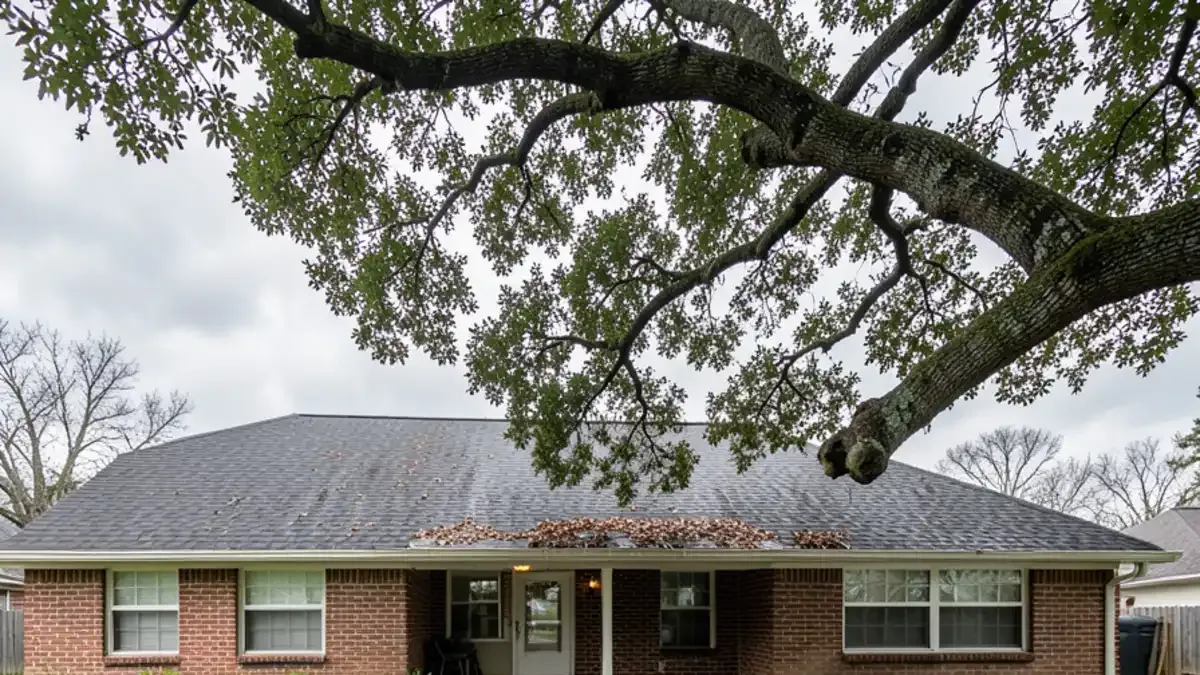
- Limbs over the roof. Branches that hang directly over shingles scrape granules off in wind, drop debris that clogs valleys, and are the ones most likely to land on the house. Keeping a few feet of clearance helps on every count.
- Dead or hollow wood. Bare branches in summer, fungus at the base, cracks where a big limb meets the trunk, or a lean that has grown worse are worth an arborist's opinion before storm season.
- Oak timing. The Texas A&M Forest Service advises avoiding pruning oaks from February through June, when the beetles that spread oak wilt are most active, and painting fresh oak cuts. Plan roof-side trimming of live oaks and red oaks for late summer through winter.
- Neighbor's trees. Texas generally lets property owners trim branches that cross onto their side, as long as the work does not kill or seriously harm the tree. Talk to your neighbor first, and put a concern about a dead tree in writing; that record matters if it later falls.
Trimming is tree-service work, not roofing work, but the roof tells the story: heavy granule wear in a stripe under an overhanging limb is often the first sign a branch has been rubbing.
How the Roof Gets Rebuilt
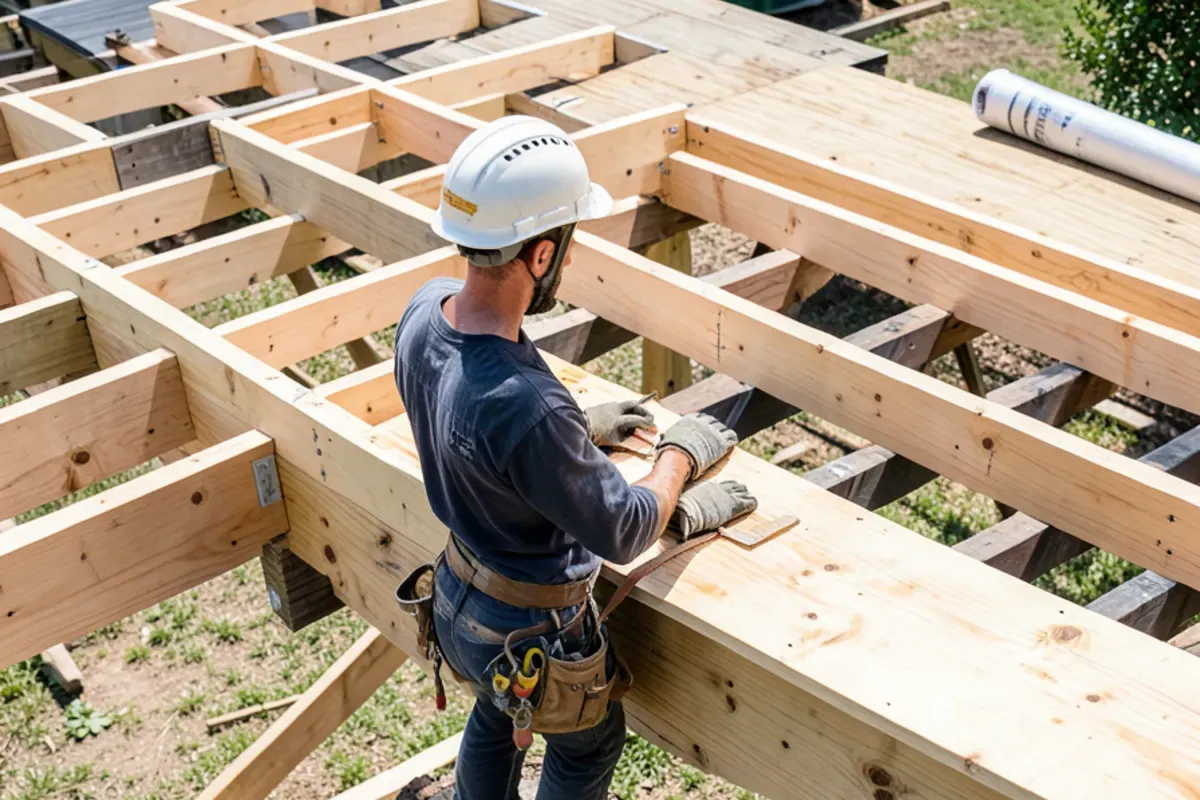
Once the tree is off and the claim is open, the rebuild runs from the bones out:
- Cracked rafters or trusses are repaired, sistered or replaced, with an engineer involved when trusses are damaged.
- Broken decking is cut out and replaced with new sheathing.
- Underlayment, flashing and shingles go back on, matched as closely as possible to the rest of the roof.
- Ceiling drywall and insulation are handled by the right trade after the roof is watertight.
If the matching shingle is discontinued or the damage spans much of the roof, replacing the full slope or roof may be the better result. We'll show you both options in writing.
Next Step
Clear the room, photograph the damage, and call your insurer. Then call us at (725) 745-8803 to set up an inspection at no charge; once the tree is off, our emergency roof repair crew covers the opening and gives you a written plan for the rebuild. ¿Un árbol cayó en su casa? Le atendemos en español.
Questions readers ask
My neighbor's tree fell on my house. Whose insurance pays?
Will insurance pay for tree removal from the roof?
Can I trim my neighbor's tree branches that hang over my roof?
Sources

Written by the RJ Premium Roofing team, a bilingual roofing contractor based in Irving, TX. We inspect, repair and replace roofs across Dallas–Fort Worth and document storm damage for homeowners’ insurance claims.