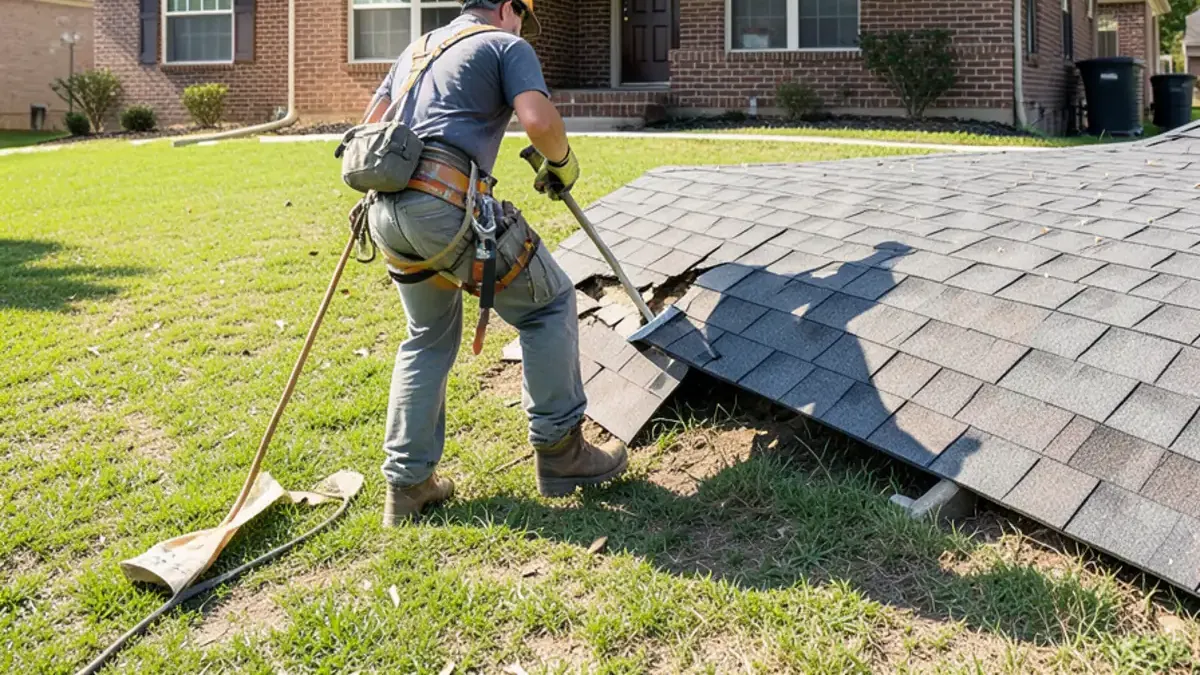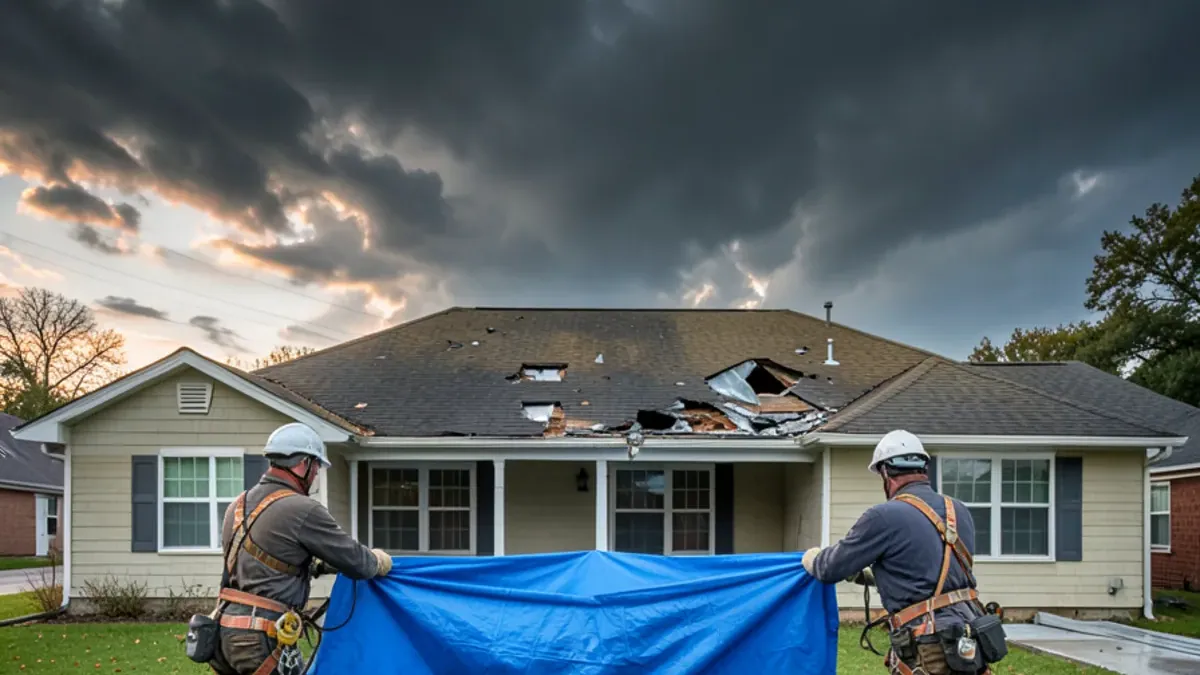
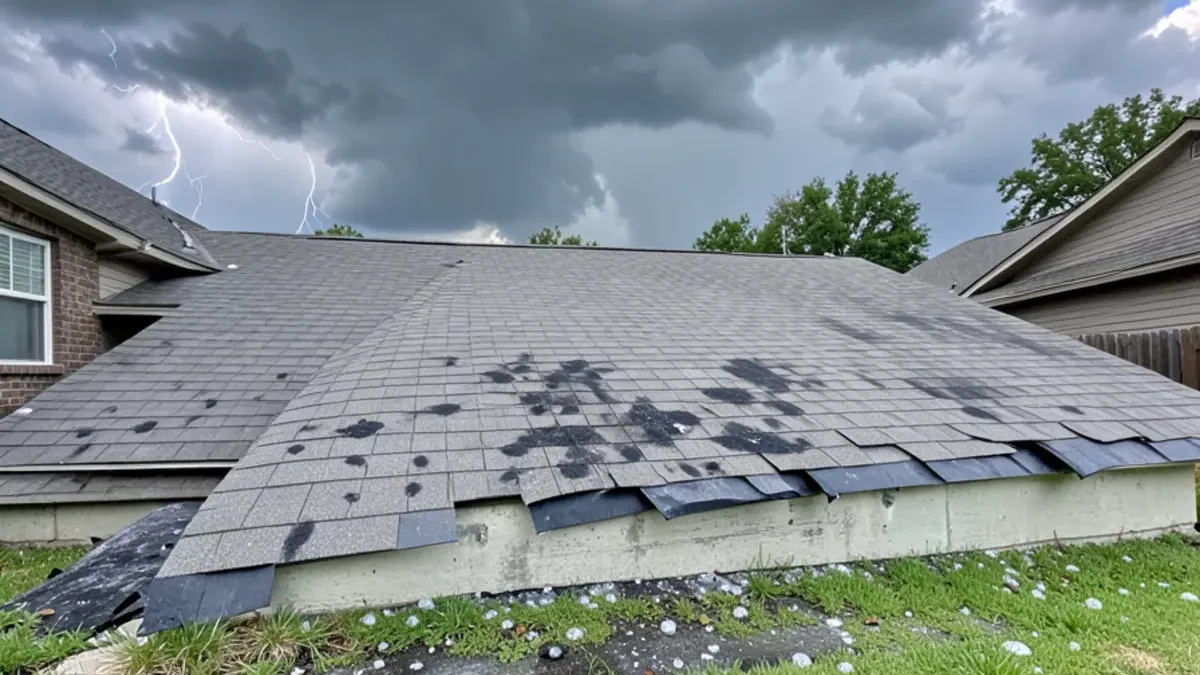
Wind vs. hail damage on a roof leaves different fingerprints. Wind creases, lifts and tears shingles off, mostly along edges and on the side facing the gusts. Hail leaves scattered round bruises, granule loss and dents in soft metal across every exposed slope. Telling them apart matters, because the cause shapes the repair and the claim.
After a severe storm, two neighbors can file claims for the same night and get very different results, because one roof took wind damage, the other took hail, and nobody looked closely at which. Here is how to tell the difference, what you can see from the ground, and why the answer shapes your repair.
Look From the Yard, Never From the Roof
Everything in this guide can be checked with binoculars, a phone zoom or a look at your gutters and vents from ground level. A storm-damaged roof is unpredictable footing: loose granules roll like ball bearings, lifted shingles slide, and wet surfaces stay slick for hours. National data show the cost of a misstep. The BLS reported 134 roofing fatalities in 2023, and 110 roofing-contractor workers died in falls, slips or trips that year. Let a crew with harnesses do the close-up work after the roof dries.
Wind Damage Shingles Signs
Wind works by getting under a shingle and lifting it. The signs follow from that:
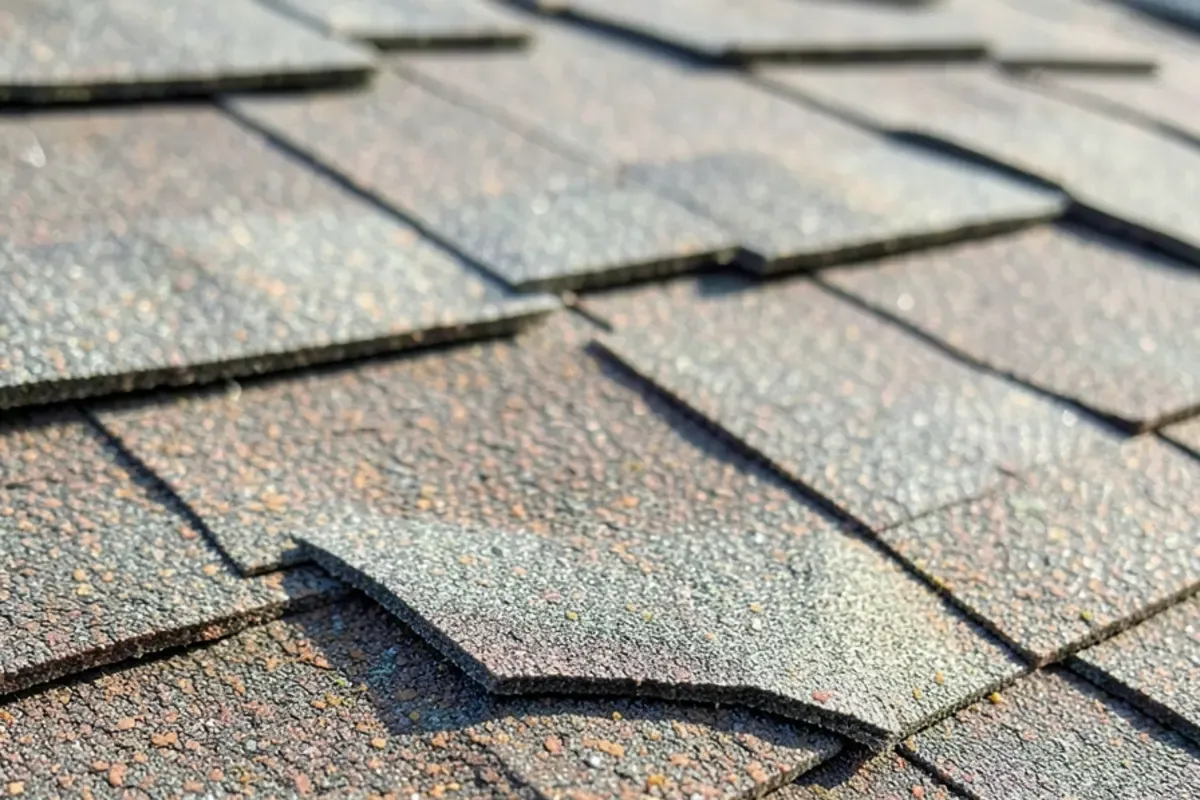
- Creased shingles. A straight crease across the tab, usually just above the nail line, where the shingle folded back and dropped down again.
- Missing shingles from wind. Whole tabs or pieces gone, often along rakes, eaves, ridges and hips, where gusts catch edges first.
- Unsealed courses. Shingles that look fine but lift easily because the seal strip let go. These are the next ones to blow off.
- Directional pattern. Damage concentrated on the slope or corner facing the strongest gusts, with the opposite side mostly untouched.
- Debris scrapes. Scuffs and gouges from flying branches or neighbors' materials.
Hail Damage vs. Wind Damage: The Hail Side
Hail works by impact. Its marks look different:
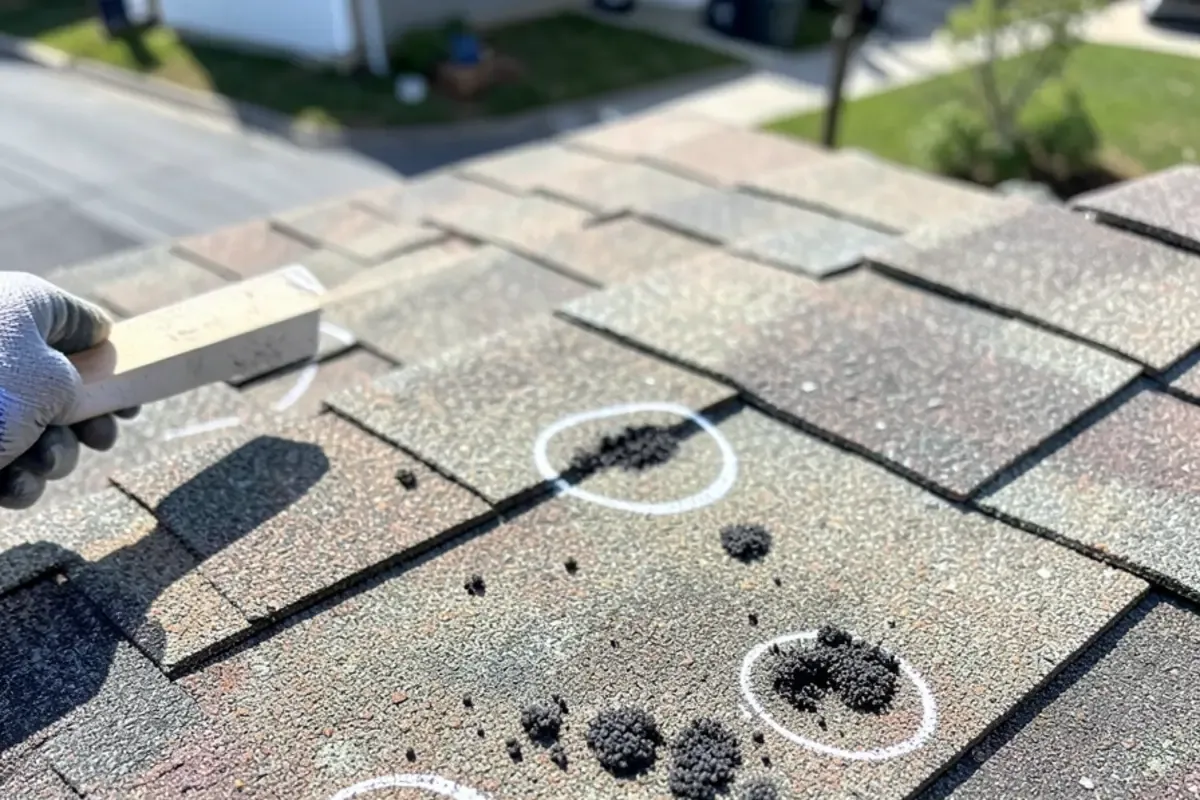
- Bruises and soft spots. Round marks where granules were knocked away, sometimes with a fractured mat underneath that feels soft when pressed.
- Random spread. Hits scattered across the slope rather than lined up along edges.
- Every exposed slope. The slopes facing the storm show more hits, but most sides usually show some.
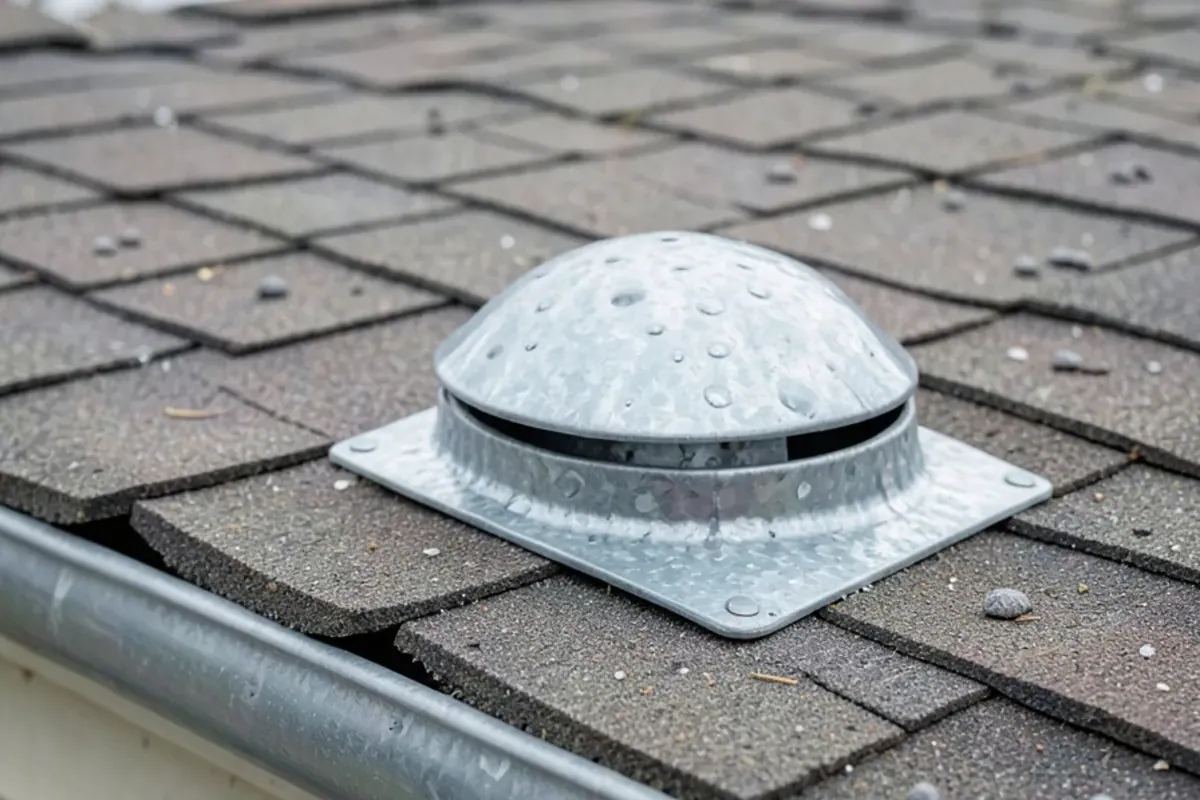
- Soft metal dents. Vents, gutters, downspouts, flashing and AC fins pick up round dents, which help show hail size.
- Granules in gutters and downspout outlets right after the storm.
Want a roofer to look at it?
Free inspection with photos. Se habla español.
- 5.0 on Google (33 reviews)
- Free inspections & estimates
- Se habla español
- Workmanship guaranteed in writing with every contract
How Strong Does Wind Have to Be to Damage Shingles?
There is no single number, because the shingle's condition matters as much as the gust. The National Weather Service treats a thunderstorm as severe once winds reach 58 mph, and sound, well-sealed shingles can start to lose tabs at gusts in that range, especially along edges and ridges. Wind ratings printed on shingle packaging come from lab uplift tests on properly installed, fully sealed new shingles, so a roof can fail below its rating when the seal strips have aged or the nails sit too high.
That cuts both ways for a claim. A crease on a well-sealed shingle after a recorded 70 mph gust is clear wind damage. The same crease on a roof whose seal strips let go years ago, after a modest breeze, raises the question of age and installation. That is why we check whether neighboring shingles are still sealed, and why it helps to confirm the storm's recorded gusts from the National Weather Service or NOAA's Storm Events Database for your area and date.
Storm Clues Around the Yard
The roof is not the only witness. Before anything is cleaned up, walk the property and photograph:
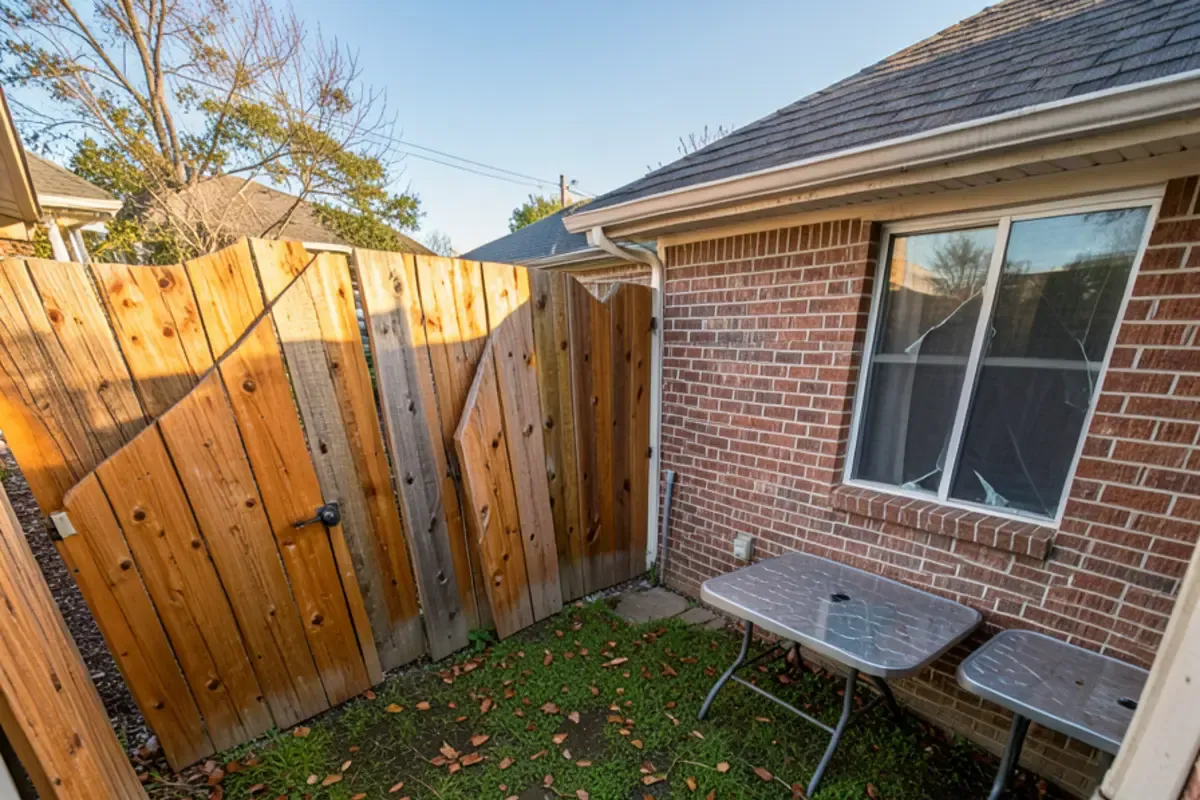
- Fence panels leaning or down, and which direction they fell
- Torn window screens and dented siding on one side of the house
- Dented AC condenser fins, mailbox, grill lid or patio furniture
- Broken limbs and where they landed relative to the house
- Shingle pieces, granules or ridge cap on the lawn and driveway
- Your car's roof and hood, if it was parked outside
Wind clues line up in one direction; hail clues show up on every exposed surface facing the storm. Dated photos of these items help tie the roof damage to the same night.
Side-by-Side: Wind vs. Hail on a Roof
| Clue | Wind | Hail |
|---|---|---|
| Shape of damage | Creases, tears, missing pieces | Round bruises, cracks, granule loss |
| Location | Edges, ridges, corners, windward slope | Scattered across open field of shingles |
| Pattern | Directional, clustered | Random, fairly even per slope |
| Metal parts | Bent or torn flashing, loose vents | Small round dents on vents and gutters |
| Seen from the ground | Often yes, especially missing tabs | Often only on metal and gutters |
| Leaks right away? | Often, where shingles are gone | Sometimes later, as cracked mats age |
Why the Cause Matters for Your Claim
Insurers don't treat every storm loss identically. Some policies carry exclusions for cosmetic hail damage to metal, deductibles can apply per event, and the date of loss determines which storm a claim belongs to. An adjuster decides the cause. Your job, and ours, is to make sure the evidence is complete.
From our replies to Google reviews, the owner has written that "Correctly identifying storm damage to a roof and working with insurance is an essential part of what we do every day." In practice, that means we inspect each slope, chalk and photograph the damage, note wind and hail separately, and write it into a report. We can be on site for the adjuster's inspection to go through the photos. Discussion of what the policy pays stays between you and your insurer, or your licensed public adjuster, and no contractor in Texas may pay or waive your deductible.
What We Notice on Roofs After Mixed Storms
North Texas storms rarely deliver just one thing. The April 3, 2012 outbreak that struck Arlington and other cities brought wind, hail and tornadoes in the same afternoon. On roofs after storms like that, we often see hail bruising across the field of the roof and wind creasing along the windward rake, and the hail is easy to miss because the wind damage is more visible.
We also see older damage mistaken for new. Blistering from heat and age can resemble hail; shingles lifted by years of weak sealing can resemble a single wind event. Telling those apart requires close inspection, which is why our wind damage roof repair visits start with documentation before any repair talk. If the roof is open or leaking, our emergency roof repair crew covers it first. Afterward, we keep the photos organized by slope and date, so if a second storm hits before the work is done, the record shows which damage came from which event.
From Clues to a Plan
Creases and missing tabs point to wind; round bruises and dented metal point to hail; many roofs have both. We serve Arlington and the rest of the Mid-Cities from Irving, where we're the neighborhood roofing contractor for storm work. ¿Daño por viento o granizo? Le explicamos la diferencia en español.
Not sure what you're looking at? Reach us at (725) 745-8803 and we'll set a time for a no-cost inspection, then show you, slope by slope, what the storm left behind.
Questions readers ask
Can one storm cause both wind and hail damage to a roof?
Why does my insurer care whether it was wind or hail?
How soon should wind-blown shingles be fixed?
Does a severe thunderstorm warning prove my roof was damaged?
Sources

Written by the RJ Premium Roofing team, a bilingual roofing contractor based in Irving, TX. We inspect, repair and replace roofs across Dallas–Fort Worth and document storm damage for homeowners’ insurance claims.