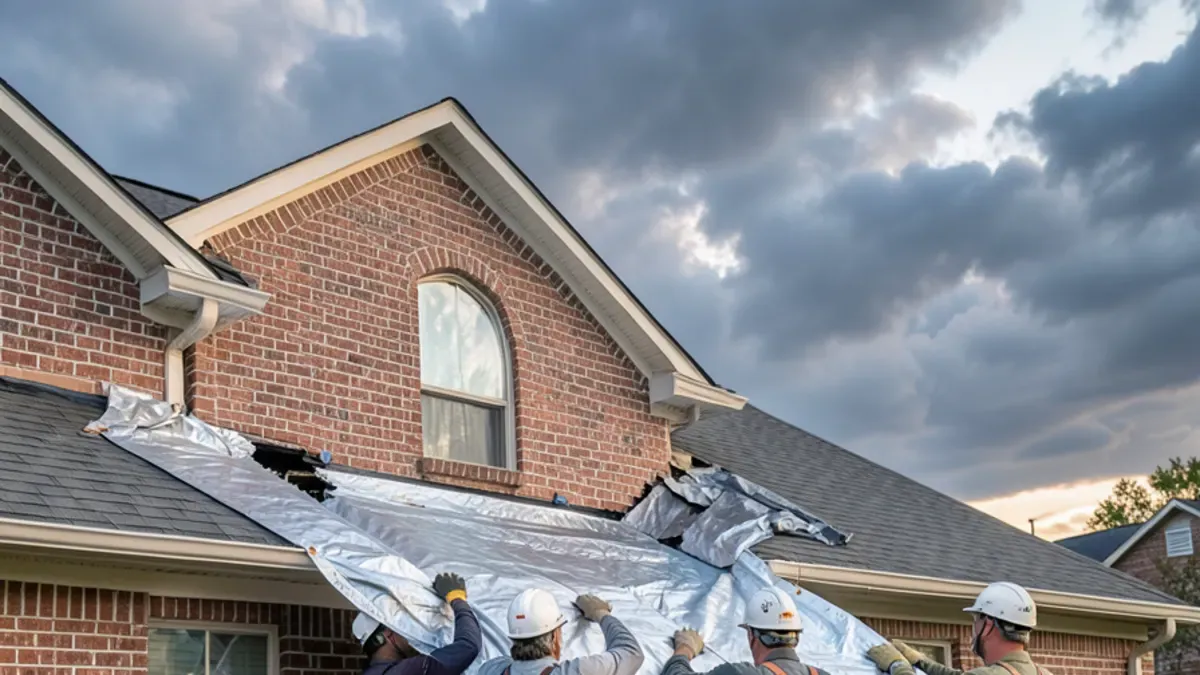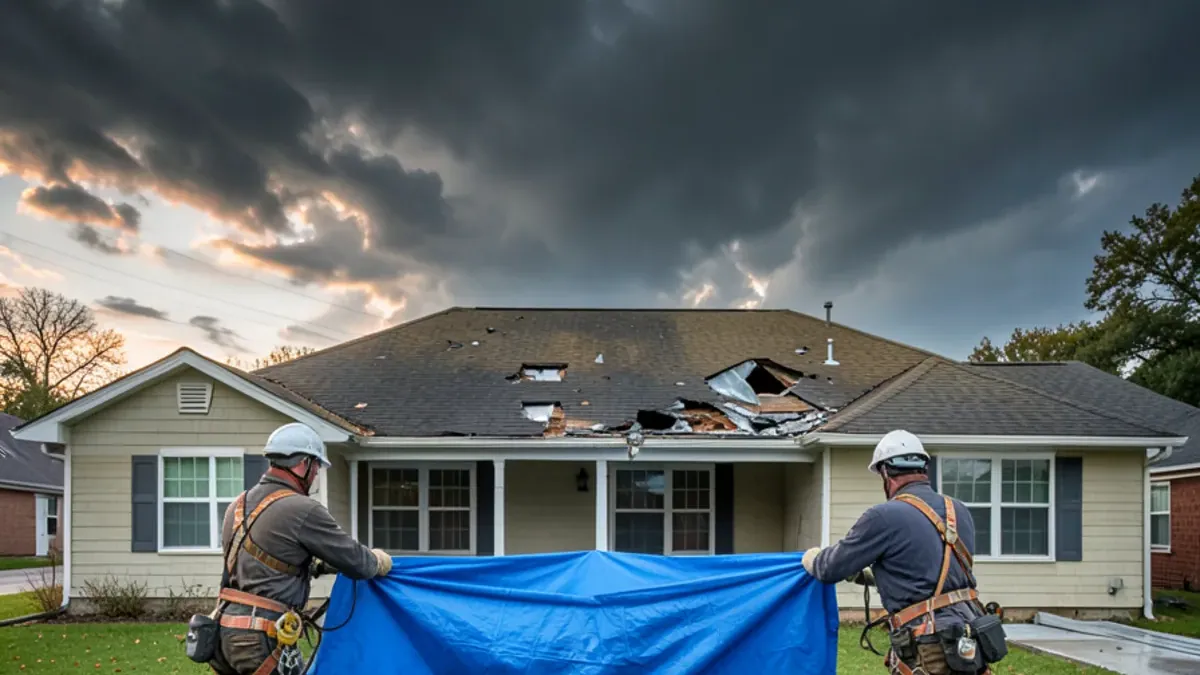
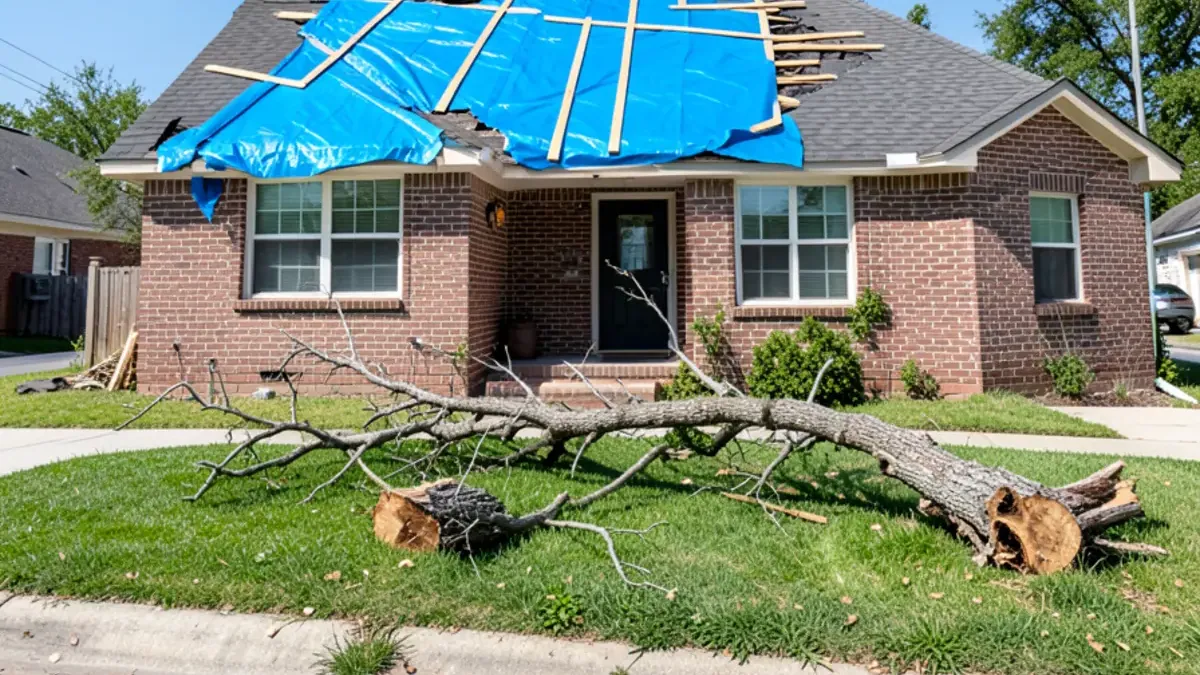
How long can a tarp stay on a roof? Treat a well-fastened emergency tarp as a bridge of a few weeks, and plan the permanent repair before it reaches 90 days. North Texas sun, heat and spring gusts break down poly tarps and loosen fasteners, so the clock starts the day it goes up.
A tarp is the roofing equivalent of a bandage. Done well, it keeps rain off the decking and out of your ceilings while the claim, the materials and the crew schedule come together. Done poorly, or left up too long, it starts letting water in on its own. Here is what decides how long one holds on a Texas roof.
Never Go Up on a Wet Roof to Tarp It
Before anything about tarps, one rule: wait for the roof to dry and the wind to calm, and leave the work to someone with fall protection. The U.S. Bureau of Labor Statistics recorded 134 roofing fatalities nationwide in 2023, and 110 workers in the roofing contracting trade died that year from falls, slips or trips. A slick slope, a flapping tarp and a ladder in soft ground are how those accidents start. If water is coming in, catch it from inside and wait.
How Long Can a Tarp Stay on a Roof Before It Fails?
The honest answer is "weeks, not seasons." We tell homeowners to treat any emergency tarp as a few-week bridge and to have the permanent repair scheduled before the tarp reaches about 90 days. Several things wear it down faster in North Texas than the packaging suggests:
- Sun. Standard poly tarps fade, stiffen and crack under ultraviolet light. Irving's July highs average around 95°F, and the city once hit 112°F in 1980; roof surfaces run far hotter than the air.
- Wind. Spring and early-summer gusts lift any loose edge. Each lift tugs at the fasteners until a grommet tears out.
- Pooling water. A tarp that sags between battens holds rain. That weight stretches the material and can push water back under the edge.
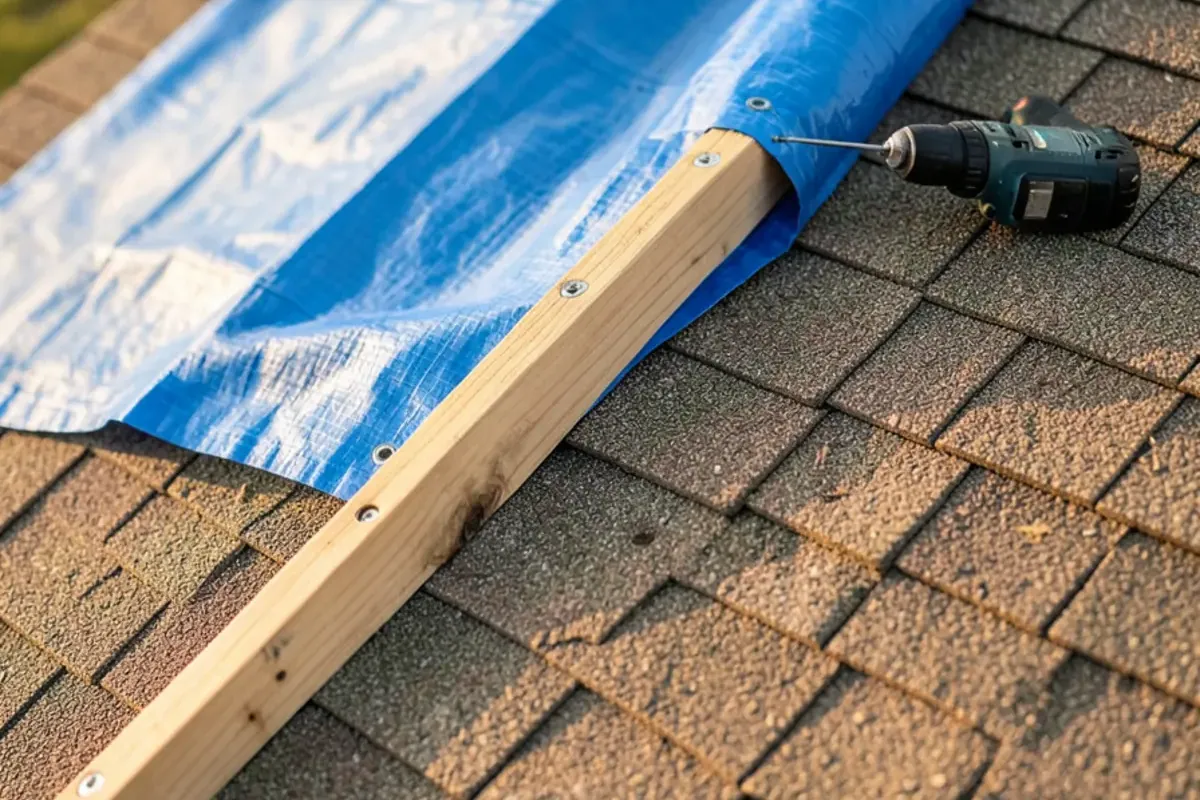
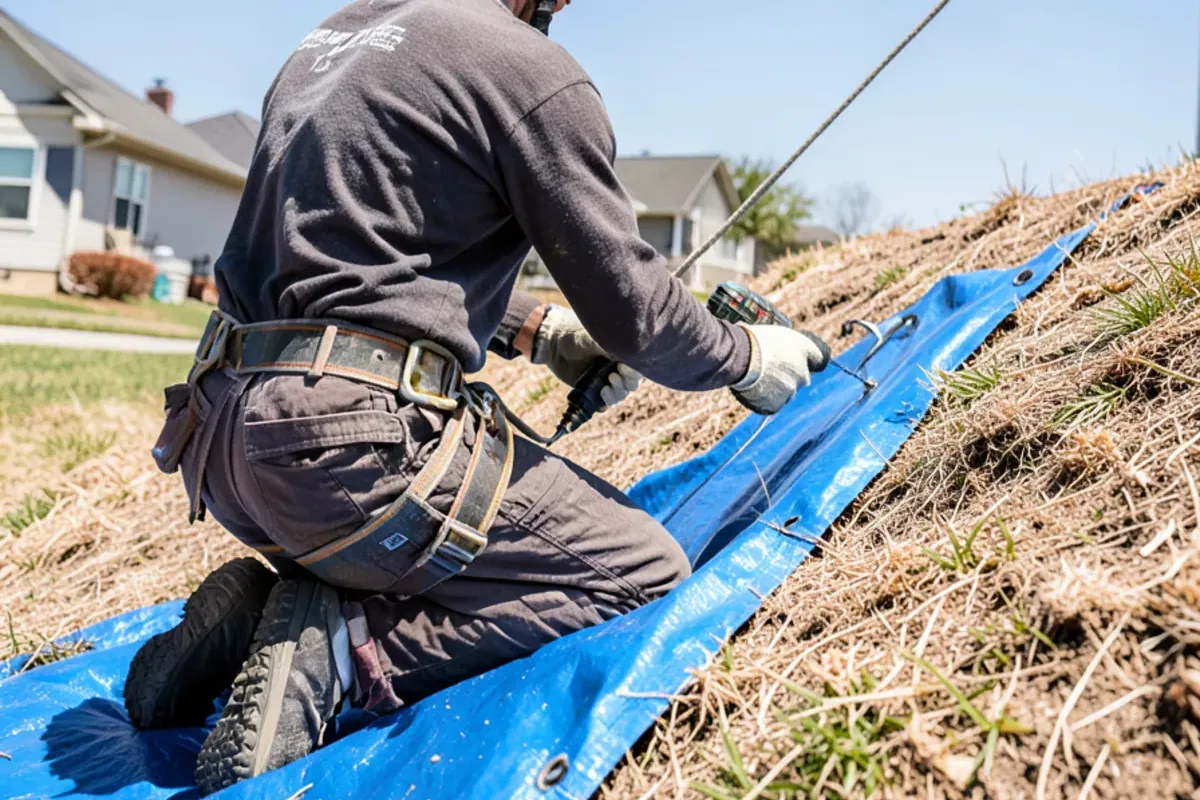
- Fastening method. Nails driven straight through tarp material leak and tear. Bricks and sandbags slide off. Edges wrapped around wood battens and screwed down last much longer.
- Placement. A tarp that stops short of the ridge lets water run under its top edge. Proper placement carries it over the ridge onto the opposite slope.
Roof Tarp Lifespan by Type and Install
| Setup | What to expect in Texas sun | Watch for |
|---|---|---|
| Light-duty blue poly, weighted with bricks | Short; can shift in the first strong gust | Edges lifting, bricks sliding |
| Heavy-duty or UV-treated tarp, nailed through the fabric | Better material, weak attachment | Torn nail holes, leaks at fasteners |
| Heavy-duty tarp, battened edges, carried over the ridge | The longest-lasting temporary option | Sagging pockets, loose batten screws |
| Any tarp past about 90 days | Material breakdown likely | Fading, brittle edges, split folds |
Want a roofer to look at it?
Free inspection with photos. Se habla español.
- 5.0 on Google (33 reviews)
- Free inspections & estimates
- Se habla español
- Workmanship guaranteed in writing with every contract
What Makes Emergency Tarp Cost Go Up or Down?
We won't print a price, because no two tarp jobs are alike, but the factors are predictable:
- Size of the opening and how many slopes are involved.
- Pitch and height. A steep two-story slope takes more setup and safety rigging than a low single-story roof.
- Board-up first. If a limb has broken rafters or decking, the hole may need plywood before the tarp goes over it.
- Debris. Branches or loose shingles have to come off before the tarp can sit flat.
- Timing after a big storm. When a whole area is hit, demand is high and access can be harder.
Our emergency roof tarping service covers the opening, photographs it before and after, and gives you a written description of what was done, which matters for the next section.
Insurance and the Tarp: Keep the Paper Trail
Many policies require you to take reasonable steps to prevent further damage once you know about it, and a tarp is the classic example. Whether your insurer pays for it depends on your policy and on whether the underlying damage is covered. What helps either way: photos of the opening before it was covered, the invoice, and photos of the finished tarp. We document all three. For the claim itself, we photograph and write up the roof damage and can be present when the adjuster inspects, and you or your licensed public adjuster handle the conversation with the insurer.
What Happens When the Adjuster Arrives and the Roof Is Tarped?
A tarp does not hide damage from an adjuster, but it does change how the inspection goes. These points keep the visit smooth:
Before the visit
Pull together the photos of the opening taken before the tarp went on, the tarp invoice, and any interior photos. Those images show the adjuster what the tarp now covers. Leave the tarp in place; taking it off yourself to "get it ready" puts you back on a roof and exposes the decking to the next shower.
On the roof
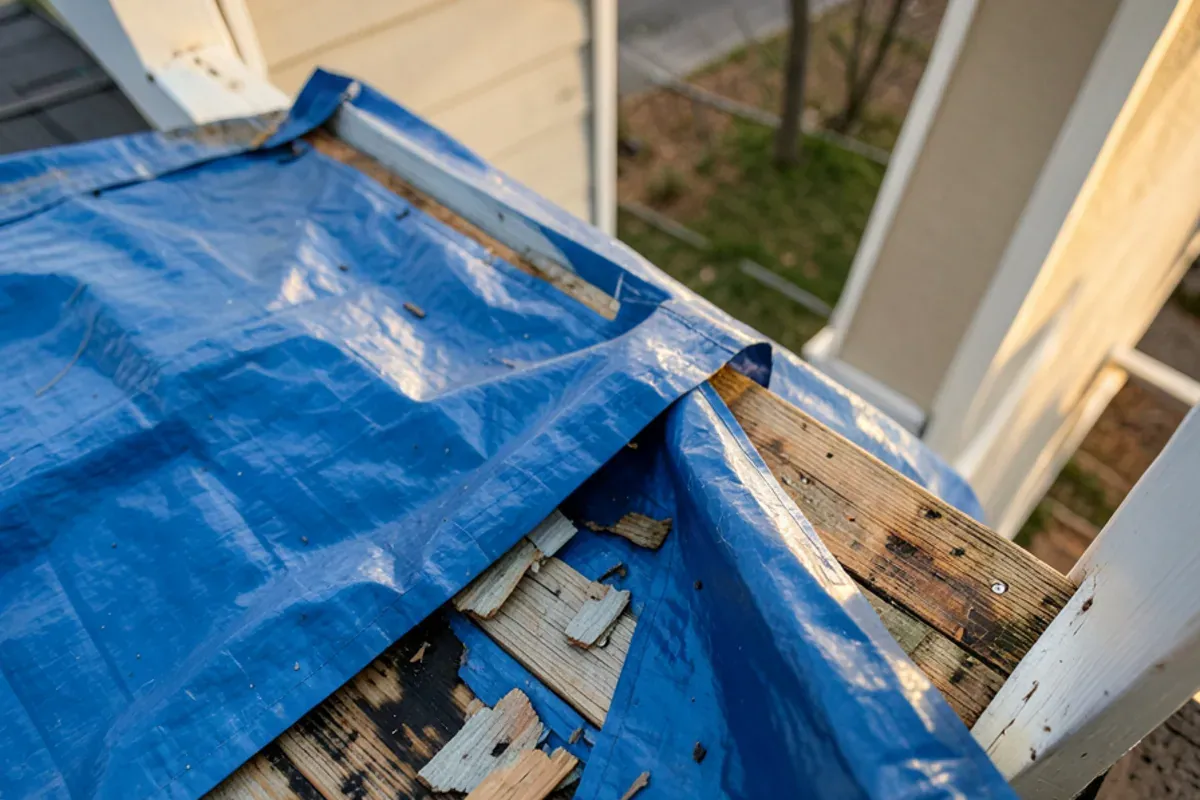
Adjusters often want to see under at least part of the tarp. If we are on the roof during the inspection, we can unscrew a batten, fold back the section they need and fasten it down again before we leave. If the tarp has to come off for a closer look, it should go back on before the crew leaves unless the forecast is clear and the repair is about to start.
After the visit
Ask your insurer in writing when the permanent repair is expected. Many replacement-cost policies hold back part of the payment until the work is finished and set a time limit for completing it, so the tarp's few-week window and your policy's deadline both matter.
What We Check on Tarps Someone Else Installed
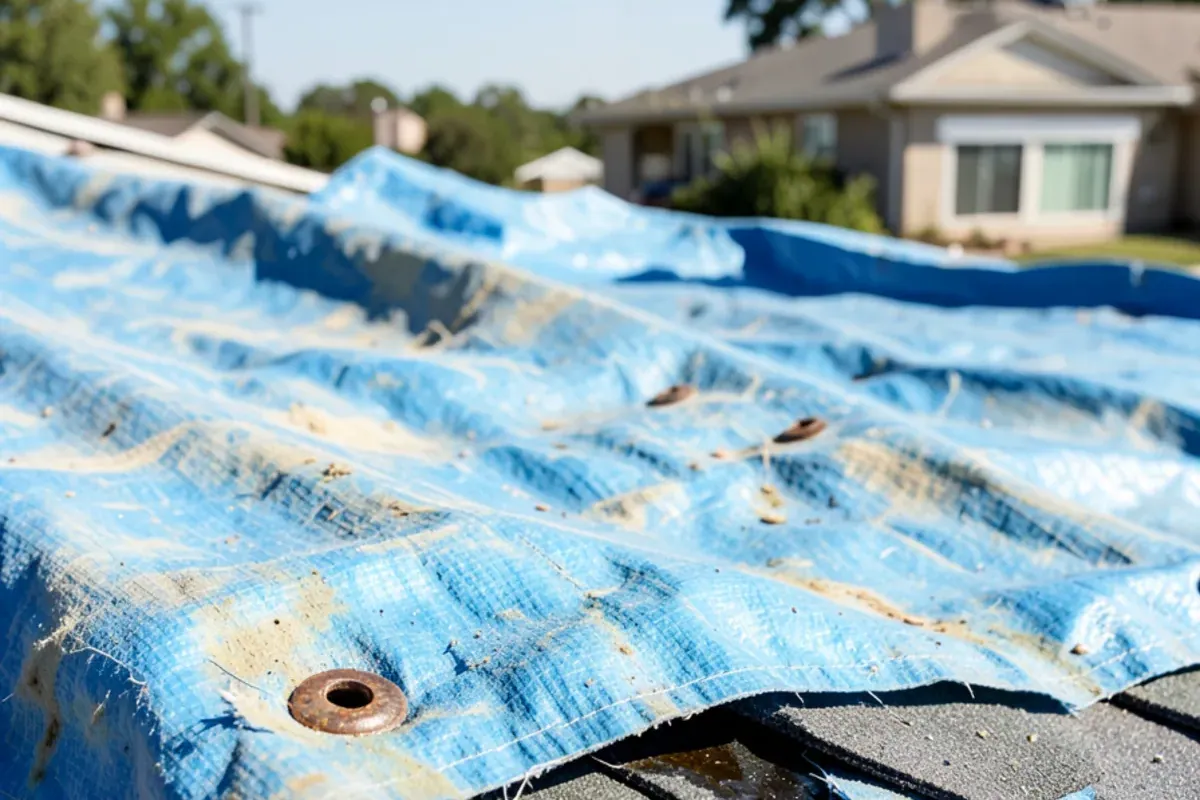
When we're called to a roof that was tarped weeks earlier, often by a relative or a crew that left town, the same problems come up. Water collected in a sagging pocket and soaked through a seam. Nails driven through the middle of the tarp, each one a small leak. The top edge stopped halfway up the slope, so rain ran right under it. Or the tarp is fine, but the decking beneath it has been wet for a month and is starting to soften.
Check yours from the ground once a week and after every storm:
- Edges flat, with no flapping or lifted corners
- No water pooled on top
- No new ceiling stains inside
- Color still even, not chalky or split at folds
- The repair date on the calendar
There is a trade-off we talk through on almost every call. If the damage is small, such as a handful of torn shingles or a split pipe boot, and no claim is coming, a quick permanent repair once the roof is dry often costs about the same as a tarp and removes the problem in one visit. When a claim is pending, the tarp is usually the better move, because it keeps the house dry without erasing what the adjuster needs to see. And when the decking underneath has been wet for weeks, neither option is cheap anymore; that is the case we most want to prevent.
Plan the Real Repair Early
The most useful thing a tarp does is buy time to plan. While it's up, get the roof inspected, file the claim if it's storm damage, and choose the repair or replacement. Our emergency roof repair work starts with that inspection. Irving is home base for our work as an Irving, TX roofing contractor, and we also serve nearby cities such as Grand Prairie, which stretches across Dallas, Tarrant and Ellis counties down to Joe Pool Lake. ¿Necesita una lona para techo? Hablamos español.
If you have a tarp up now, or need one once the weather clears, phone us at (725) 745-8803. We'll look at what's under it and give you a clear plan to take it down for good.
Questions readers ask
Does homeowners insurance pay for an emergency roof tarp?
Do I need a tarp after hail if the roof isn't leaking?
Should I take the tarp off before the insurance adjuster comes out?
Can a roof tarp make it through a full Texas summer?
Sources

Written by the RJ Premium Roofing team, a bilingual roofing contractor based in Irving, TX. We inspect, repair and replace roofs across Dallas–Fort Worth and document storm damage for homeowners’ insurance claims.