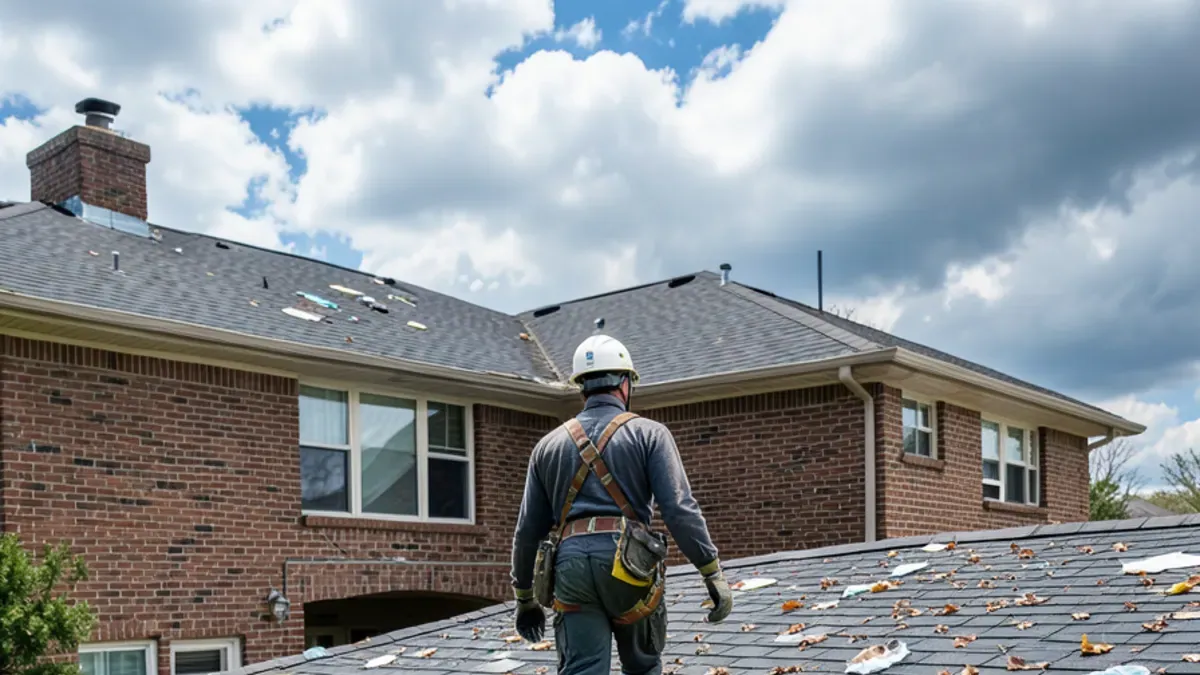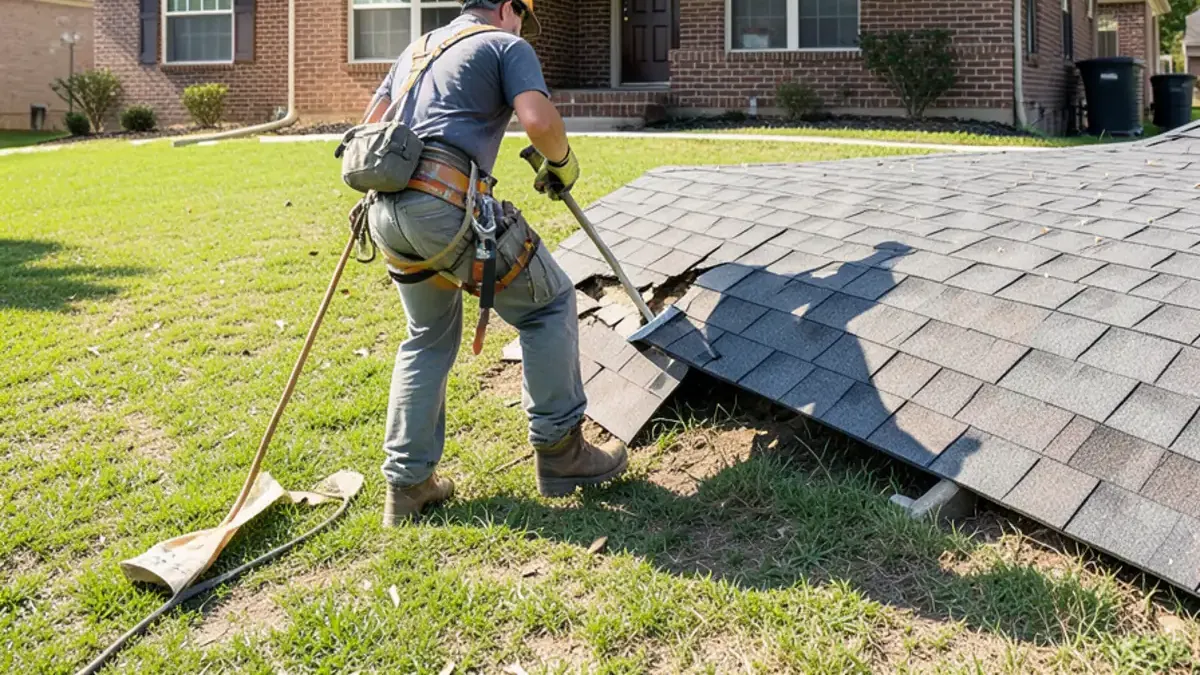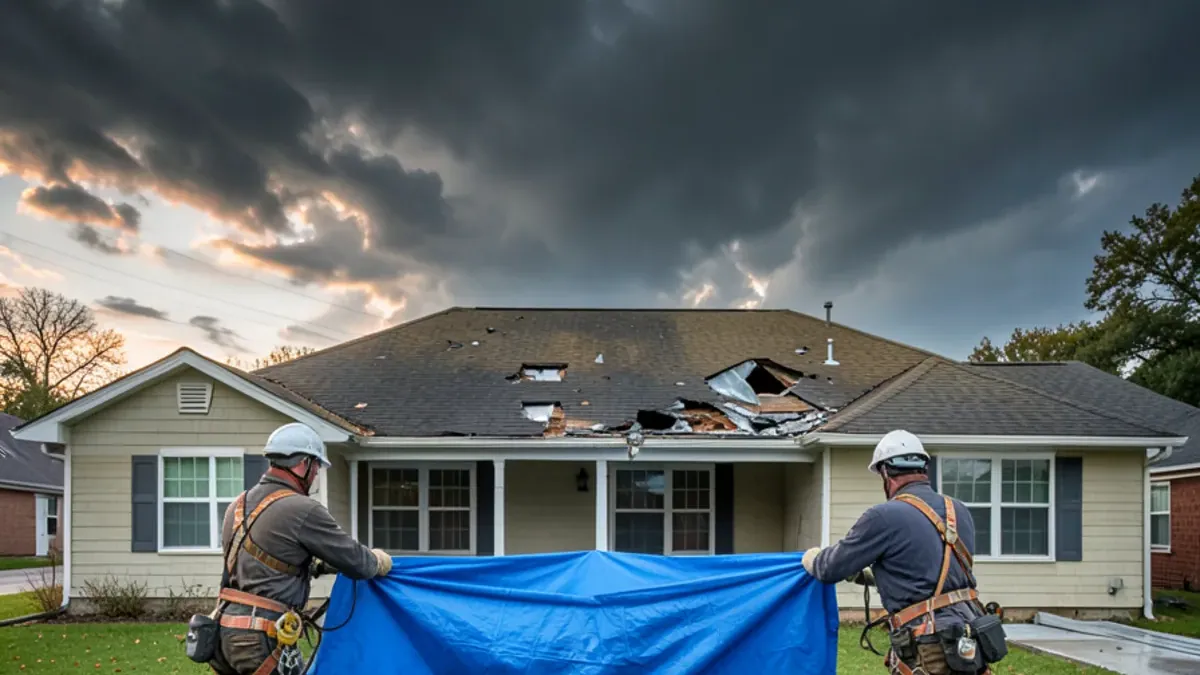
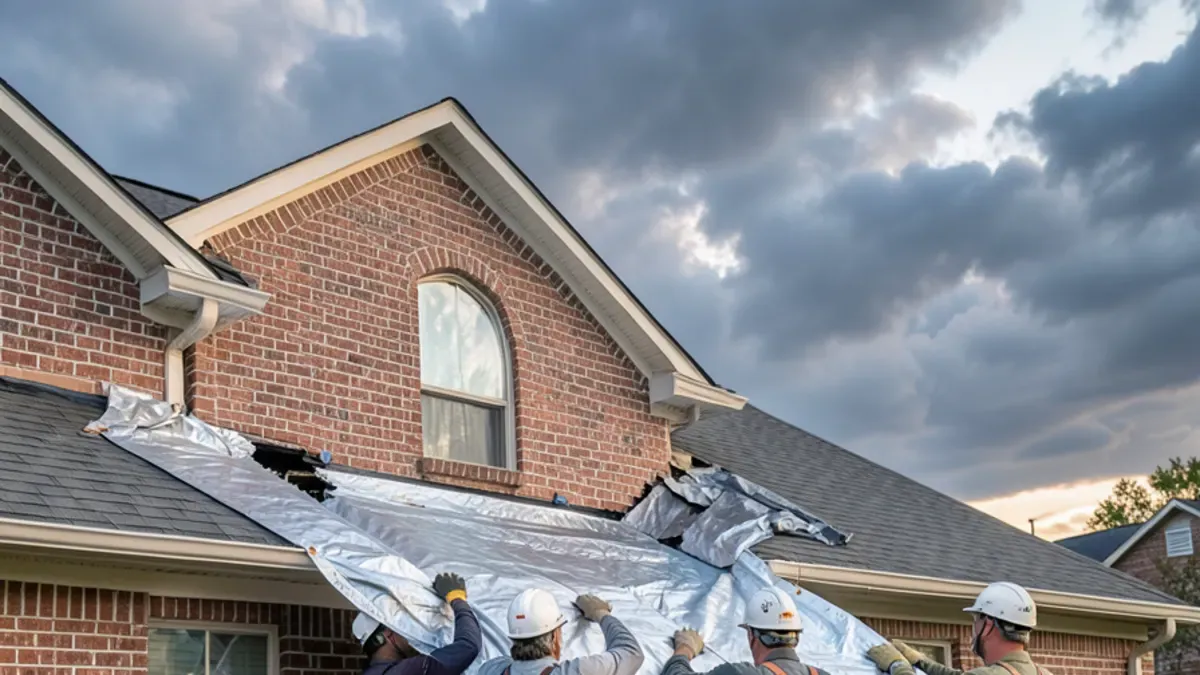
A hole in the roof turns every forecast into a problem. Tarping is the bridge between the storm and the repair, and it is usually the first job on any call to our emergency roof repair team in Irving. Done well, a tarp keeps water out through more rain. Done badly, it becomes a sail. Here is how we do it and what it costs to think about.
How emergency roof tarping in Irving keeps water out
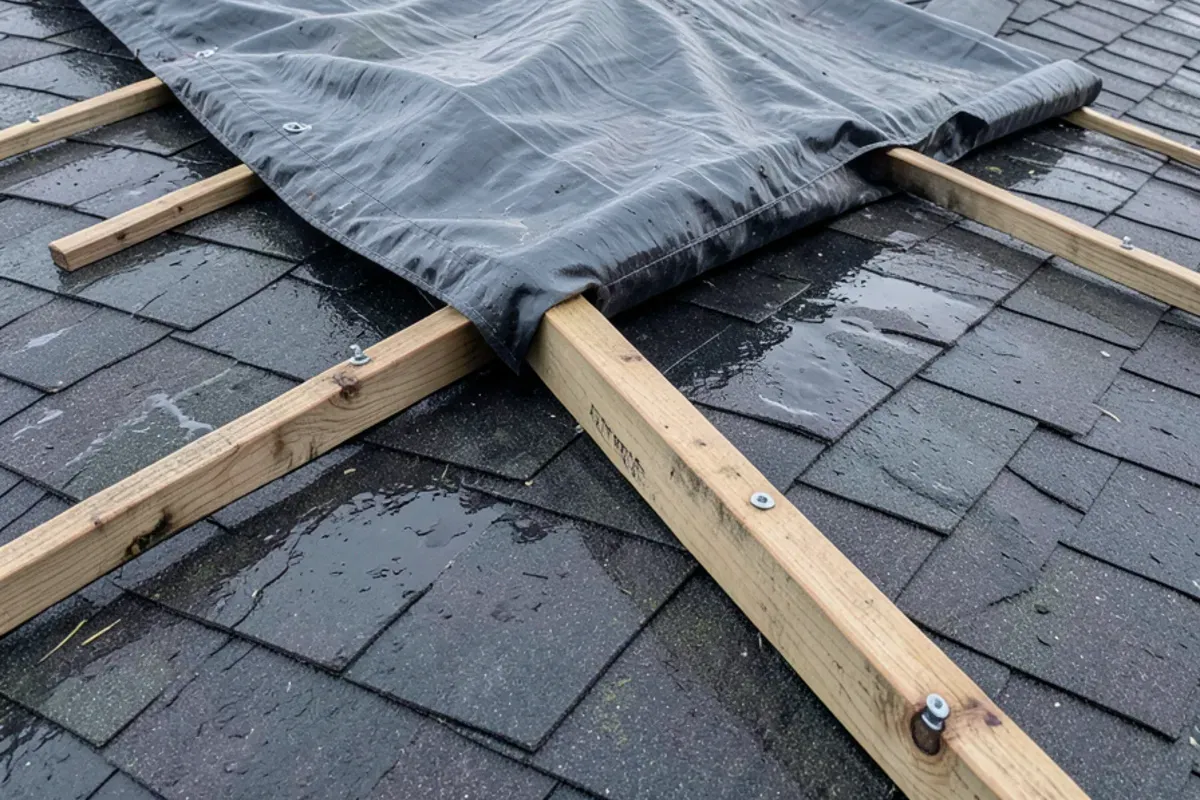
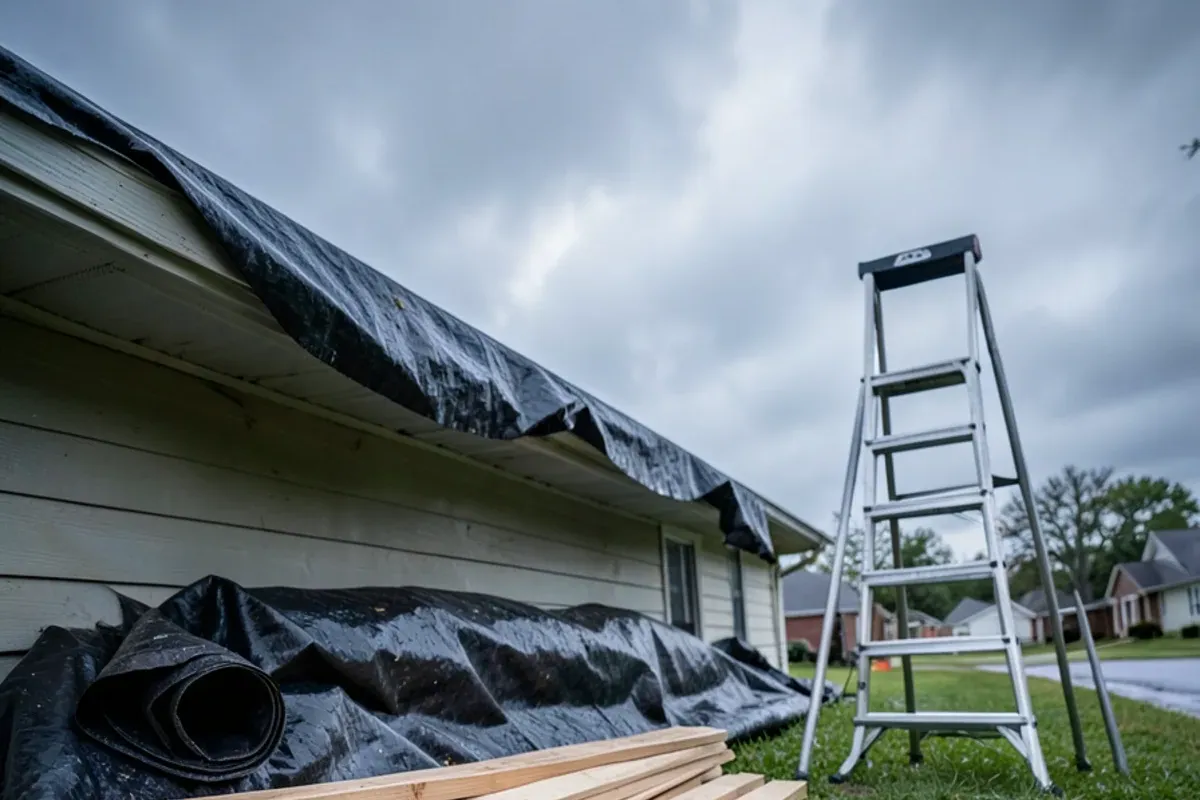
Water runs downhill, so a tarp only works if it starts above the damage and sheds onto shingles below. That is why we carry ours over the ridge rather than laying a square on top of the hole. Edges get rolled around wood battens and screwed down, so wind pulls against the full length of lumber instead of a few grommets. On low-slope sections, we overlap and seal differently so water cannot pond under the plastic.
The tarp covers the opening; it does not fix it. Behind it may be broken decking, torn underlayment or wet insulation, and those need the permanent repair described on our storm damage roof repair page. Where shingles were lifted rather than punched through, our wind damage roof repair page explains the fix.
When does a roof need an emergency tarp?
A tarp is the right call when water has a direct path inside and more rain is on the way. From the ground or inside, look for:
- daylight or dripping water in the attic after a storm
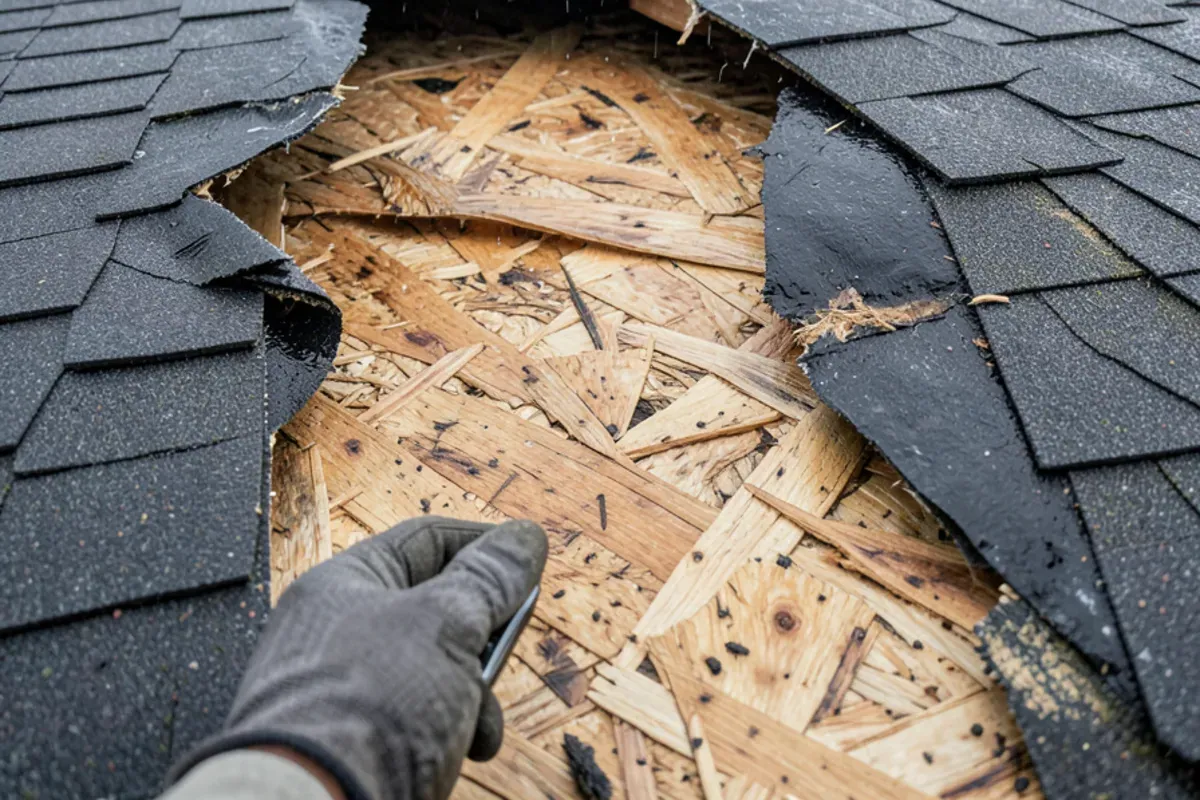
- missing shingles that leave black felt or bare plywood showing
- a hole punched by a limb, debris or large hail
- a ridge cap or roof vent torn away, leaving an open slot
- a new ceiling stain that grows while it rains
In Irving the usual culprits are spring lines of thunderstorms that bring wind and hail together, mature trees over 1980s houses, and occasionally a winter event like Winter Storm Uri in February 2021. A few lifted shingles with no opening may only need resealing, so photograph what you see and call before buying a tarp yourself. Climbing a wet roof to spread a store-bought tarp is how many storm injuries happen. A tarp also makes sense when the opening is too wide for a quick patch and the permanent repair has to wait on an adjuster or on materials.
What our roof tarp service includes
Every tarp job aims at one outcome: no new water inside until the permanent repair, and nothing done that makes the insurance picture less clear. So the work is documented from start to finish, fastened to hold through more storms, and sized for the actual damage rather than the nearest stock tarp. It typically includes:
- Before photos of the damaged area, taken from the roof and the ground.
- A heavy-duty tarp sized to reach over the ridge and past the damage on every side.
- Wood battens along the edges, fastened so the tarp cannot lift in gusts.
- Removal of loose debris that would tear the plastic, where it is safe to do so.
- A check from inside or the attic, where we can reach, to confirm water has stopped.
- After photos, a short written note of what we covered and a free estimate for the permanent repair, explained in English or Spanish.
How we tarp a roof after a storm
- Assess from the ground. We look for sagging, hanging limbs, downed lines and loose debris before anyone climbs.
- Set up safely. Ladder secured, harnesses tied off, and no climbing during lightning or high wind.
- Document. Photos of the damage exactly as the storm left it.
- Clear and measure. Loose material is removed and the tarp is cut to reach past the damage and over the ridge.
- Fasten. Battens are rolled into the tarp edges and screwed down in line with the roof framing where possible.
- Verify and hand off. We check the edges, the ridge wrap and the inside for drips, then give you the photos and our notes and schedule the full inspection.
Questions about emergency roof tarping? Talk to us.
Call for a free inspection and a written estimate. Hablamos español.
- 5.0 on Google (33 reviews)
- Free inspections & estimates
- Se habla español
- Workmanship guaranteed in writing with every contract
What does a roof tarp cost?
We do not post a flat tarping price, because the job changes with the roof. The factors that matter:
- Size of the damaged area and how far the tarp must run to reach the ridge.
- Pitch and height, which affect the safety setup and time on the roof.
- Debris removal before tarping; a limb still on the roof may need a tree service first.
- Roof type, since tile and metal call for different fastening than shingles.
- Return visits if a long insurance timeline means the tarp needs checking or replacing.
On a covered claim, emergency mitigation like this is commonly reimbursed, so keep the invoice. Your free estimate for the permanent repair is separate.
Timing is the hidden cost. Published tarp guides generally give a standard tarp about one to three months of useful life, and a tarp left up through a long claim may need re-fastening or replacing, which adds visits. Moving quickly on the adjuster's inspection usually keeps tarping to a single trip.
Is a tarp a temporary roof repair or a real fix?
It is temporary, by design. A tarp holds water out while you wait for the adjuster, while materials are ordered, or while the weather settles. It does not restore the shingle seal, the underlayment or any broken decking, and it ages quickly under North Texas sun. Irving's yearly rainfall runs somewhere in the mid-30s of inches, and May usually brings the most of it, so a spring tarp sees real testing.
Sometimes a small section can be patched with shingles and sealant instead of tarped, when the damage is limited and the weather allows. We will tell you which makes more sense on your roof.
Why homeowners call us to poner lona en el techo
- Our Google Business Profile lists urgent temporary repairs to stop leaks as part of what we do, and fast response is how customers describe us.
- We photograph before we cover, a habit from documenting storm claims.
- Families can talk with us in Spanish or English, so nobody is left guessing.
- Reviewers say crews cleaned up afterward, and 33 of them have left a 5.0 average on Google (November 2026).
- The permanent repair that follows carries our workmanship guarantee in writing, with the terms in your contract and the materials covered by their maker.
- If hail or wind opened the roof, our photos and damage report support your claim, and we can meet the adjuster on the roof.
Tarping across Irving, Coppell and Grand Prairie
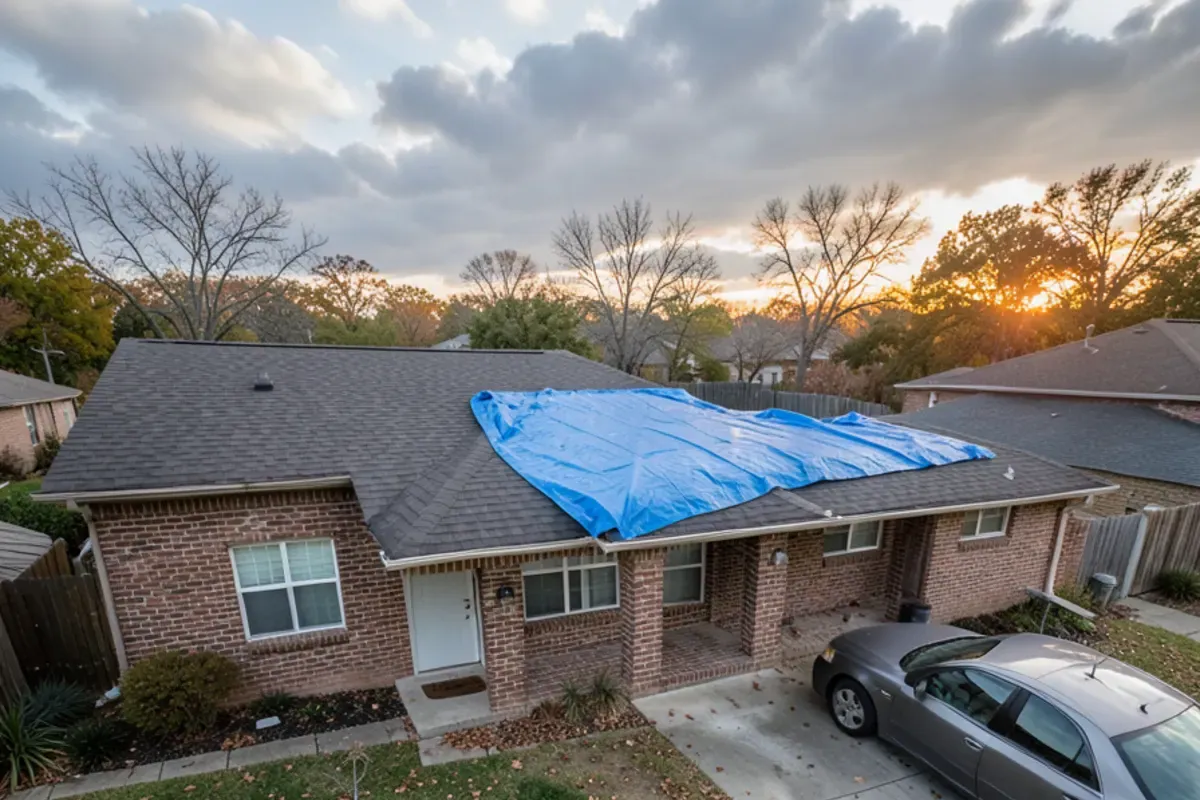
We tarp roofs from our base in Irving 75062, where our roofing contractor services in Irving, TX begin, and across nearby cities including Coppell, Grand Prairie and Arlington. Call (725) 745-8803 and tell us where the water is coming in.
Tarps, permits and Texas contractor rules
A note on rules: there is no Texas state roofing license, and TDLR does not issue one. Cities handle contractor registration and permits, and a permanent repair after tarping may need a permit depending on its size. Irving's residential roofing handout draws the line at 100 square feet: repairs that size or smaller are permit-exempt, and every re-roof needs one; the Inspections Department, (972) 721-2371, answers questions about a specific address.
Insurance rules matter here too. Texas Insurance Code Chapter 707 means no contractor can fold your deductible into a tarp invoice or waive it, and Chapter 4102 bars a roofer from negotiating the claim. We bill the tarp at what it costs, document the damage, and leave the claim decisions with you and your insurer.