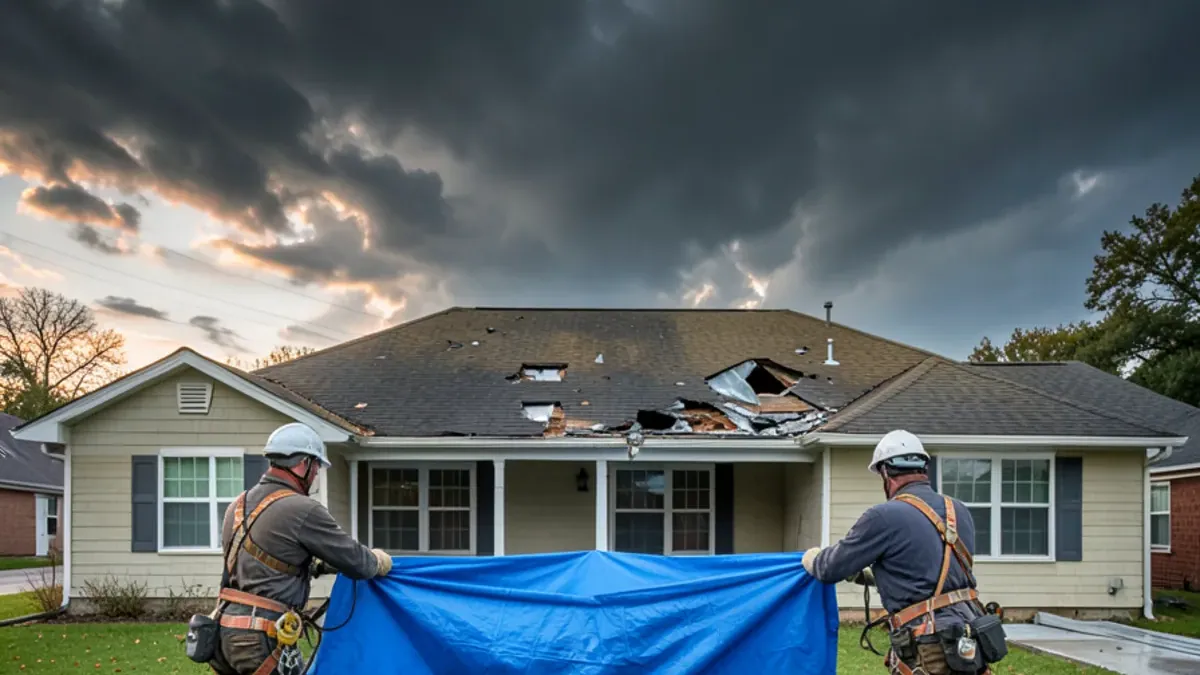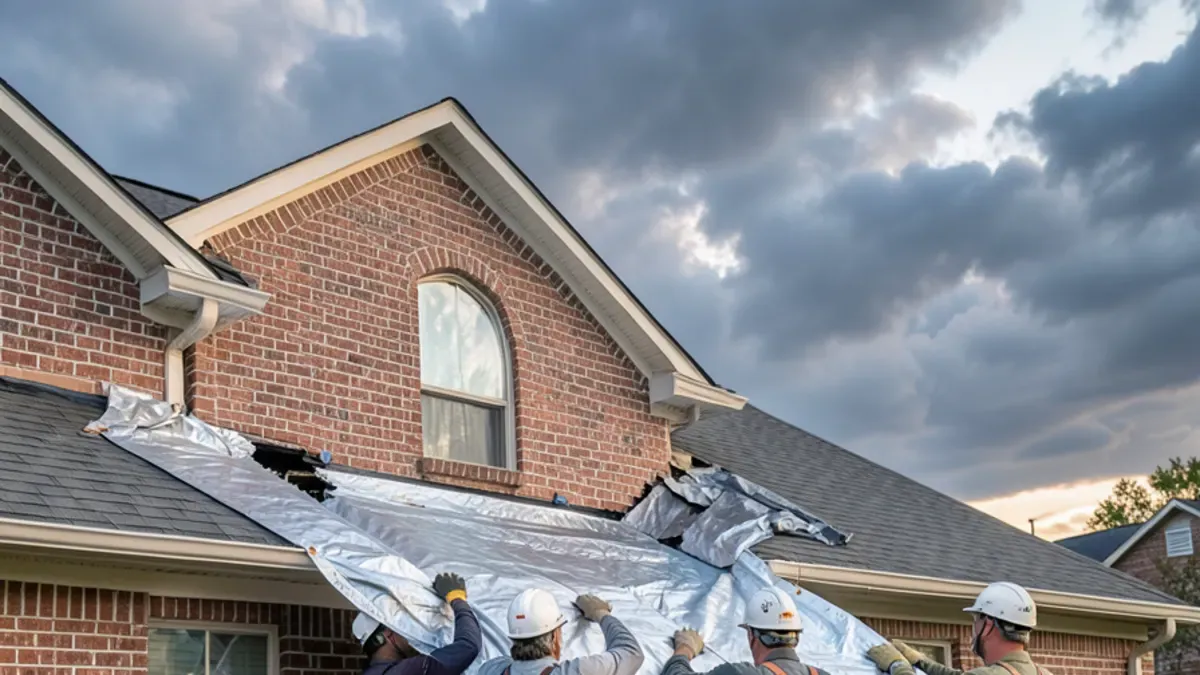
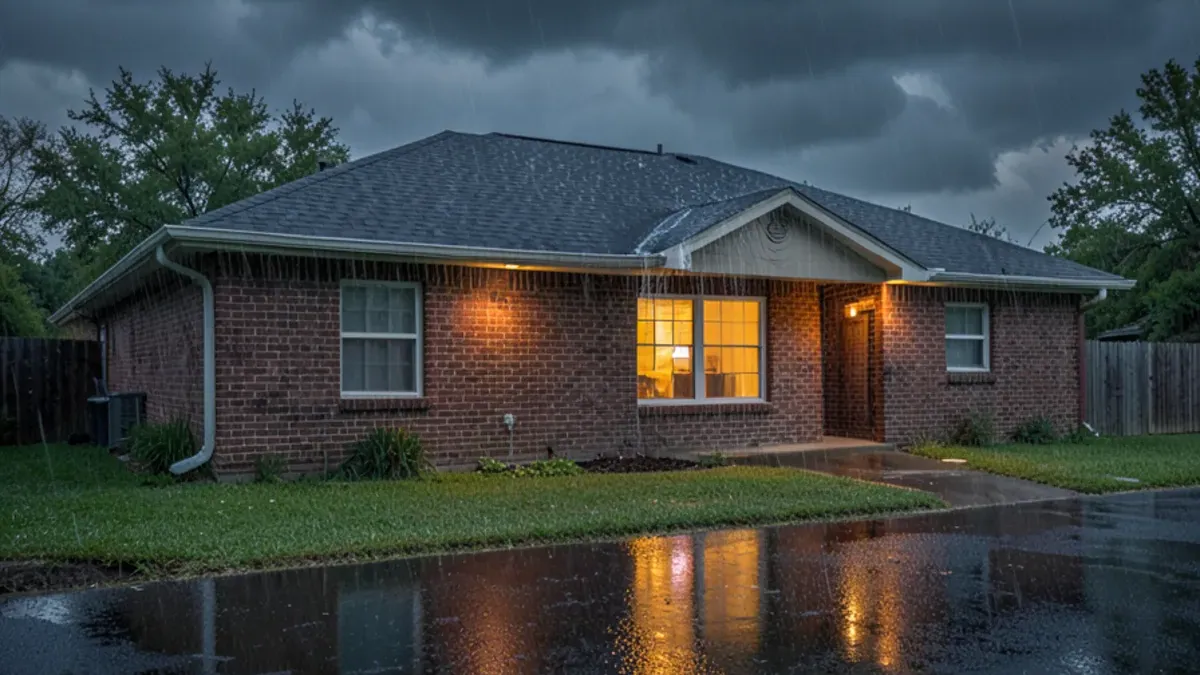
If your roof is leaking during a storm, what to do first is simple: stay off the roof, cut power to any wet area, catch and drain the water, and photograph everything. The permanent fix waits until the weather clears; a tarp or temporary patch bridges the gap until the roof can be repaired properly.
Water dripping through the ceiling in the middle of a thunderstorm feels like it needs a heroic fix. It doesn't. The useful work during the storm is small, indoor and protective. The roof work comes later, when the shingles are dry and the wind has dropped.
Safety Comes Before the Leak
Start with electricity. If water is running near a light fixture, ceiling fan or outlet, switch off that circuit at the breaker panel, but only if you can reach the panel without standing in water. If part of the ceiling is bulging downward, keep people and pets out of that room, because soaked drywall can drop without warning.
Then make one firm decision: nobody goes on the roof. Wet shingles, lightning and gusts are a bad mix even for professionals. The U.S. Bureau of Labor Statistics counted 134 roofing fatalities in 2023, and falls, slips or trips killed 110 people working for roofing contractors that year. Those were mostly trained workers wearing gear. A homeowner on a wet ladder at night has far worse odds, and nothing up there is worth that risk.
What to Do, Step by Step, While It's Still Raining
- Cut power to the wet area at the breaker, if the panel is dry and reachable.
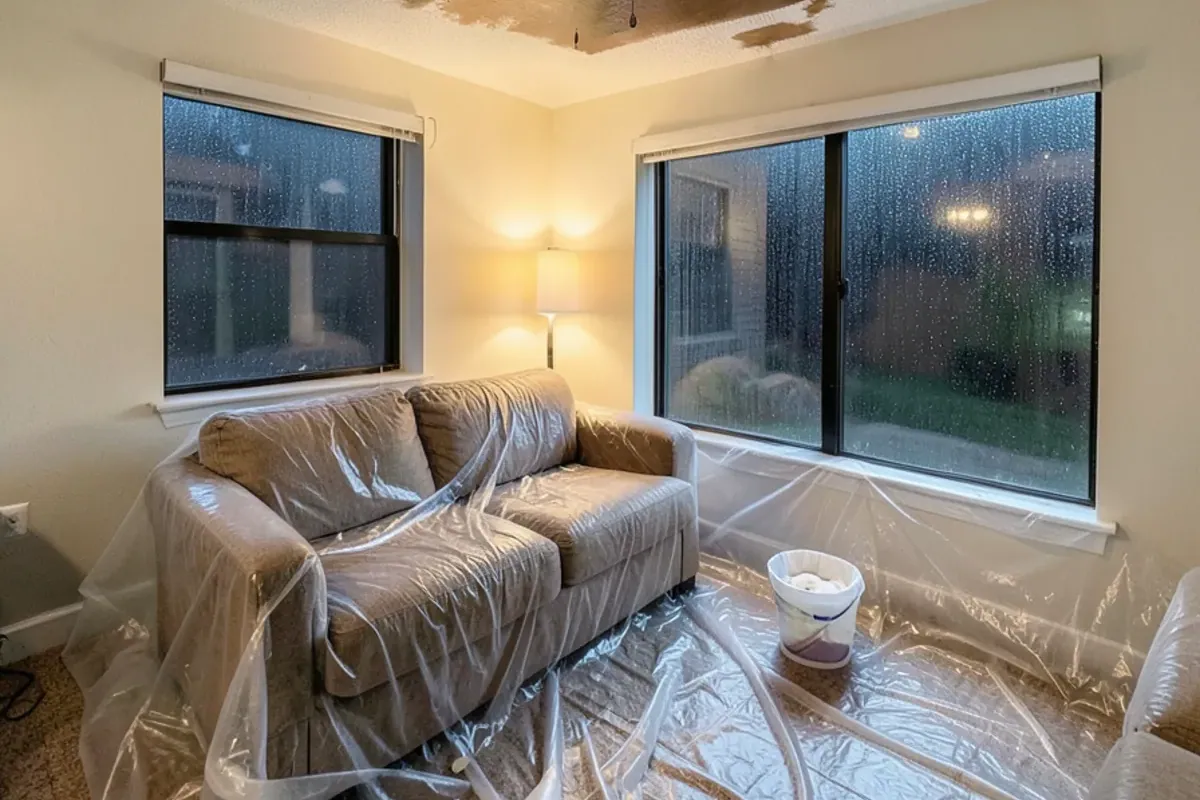
- Move what matters. Pull furniture, electronics, rugs and paperwork away from the drip. Cover anything heavy with plastic sheeting or a spare shower curtain.
- Catch the water. Buckets, storage totes and trash cans all work. A towel in the bottom stops splashing.
- Drain a bulging ceiling. If water is pooling above the drywall, set a bucket underneath and poke a small hole at the lowest point with a screwdriver. A controlled drain beats a collapse.
- Look in the attic only if it's safe. Use a flashlight and step only on joists or a floored walkway. A bin or a scrap of plywood under the drip keeps water off the insulation.
- Photograph and film everything. Ceiling, dripping water, damaged belongings, and the time on your phone.
- Write down the pattern. When did it start, which way was the wind blowing, how hard was it raining? Whoever traces the leak will use those notes.
How to Stop a Roof Leak Temporarily Without Climbing
Plenty of advice online about how to stop a roof leak temporarily assumes you'll go up with a tube of roofing cement or a tarp in the rain. Skip that advice. Sealant does not bond to wet shingles, and a loose tarp in gusting wind turns into a sail. Indoors, your job is to catch, divert and contain. Here is the short version of a ceiling leak during a storm:
| Do this | Avoid this |
|---|---|
| Catch and drain the water inside | Climbing onto a wet or windy roof |
| Shut off power to wet circuits | Using electrical tools near standing water |
| Photograph damage before you clean up | Throwing out damaged items before your insurer says it's fine |
| Run fans and a dehumidifier once power is safe | Smearing roofing cement on wet shingles from a ladder |
| Report the damage to your insurer | Signing with a door-to-door crew the same evening |
Atendemos en español: si tiene una gotera en el techo durante una tormenta, podemos explicarle cada paso en su idioma.
Want a roofer to look at it?
Free inspection with photos. Se habla español.
- 5.0 on Google (33 reviews)
- Free inspections & estimates
- Se habla español
- Workmanship guaranteed in writing with every contract
Is It the Roof, or Is the Water Coming From Somewhere Else?
Not every storm drip starts at the shingles. Before anyone cuts into drywall or books a roof repair, it helps to rule out the other paths water takes into a North Texas house during hard, wind-driven rain:
- Windows and doors. A stain that starts at the top corner of a window frame, or water on the sill, usually points to failed window flashing or caulk, not the roof.
- Gutters backing up. Clogged gutters can overflow behind the fascia and soak the soffit, which looks like a roof leak from inside a closet or garage.
- Vents taking wind-driven rain. Strong gusts can push rain sideways through ridge vents or soffit vents. That kind of leak often shows up only when the storm comes from one direction.
- The air conditioner. Attic units in DFW homes drain condensate through a line and a pan. A clogged line overflows on hot, humid days whether it rains or not, so a "leak" that appears the day after a storm may be the AC.
- Plumbing. A drip under a bathroom with no rain pattern at all is likely a pipe.
Your notes from step seven above help here. A leak that tracks the rain, starts and stops with it, and gets worse with wind from one side is almost always the roof or its flashing.
When Should You Call for a Tarp or Emergency Repair?
Call once the lightning has moved off and the wind has calmed, and say what you are seeing. These signs point to emergency roof repair rather than a scheduled visit:
- Shingles are missing and you can see bare decking or underlayment from the yard.
- A limb has punched through the roof.
- Water is coming in at more than one room.
- The dripping continues long after the rain stops, which usually means soaked insulation or decking.
In those cases, emergency roof tarping keeps the next round of rain out while the permanent repair is planned. If the drip is small and stops when the rain stops, it can usually wait for a standard roof leak repair visit, where we trace the water to its source instead of guessing. Irving is our home turf as a roofing contractor in Irving, TX; we give fast response there and in neighboring cities, including homeowners searching for an emergency roof leak fix in Dallas. We will not promise an arrival time we can't control after a widespread storm, but we will tell you honestly where you are in line.
Does Your Insurer Care What You Do During the Leak?
Yes. Most homeowner policies expect you to take reasonable steps to protect the house from further damage once you know about it. Catching water, moving belongings and getting a temporary cover installed are exactly those steps. Keep receipts for buckets, fans, dehumidifiers, tarps and any emergency service, and photograph the damage before cleanup.
When the claim moves forward, we inspect the roof, photograph what we find, write a damage report, and can be up there with the adjuster during the inspection to show each spot we photographed. The claim itself stays between you and your insurance company. One more Texas rule worth knowing: under Insurance Code Chapter 707, no contractor may pay, waive or absorb your deductible.
What We Usually Find When We Trace a Storm Leak
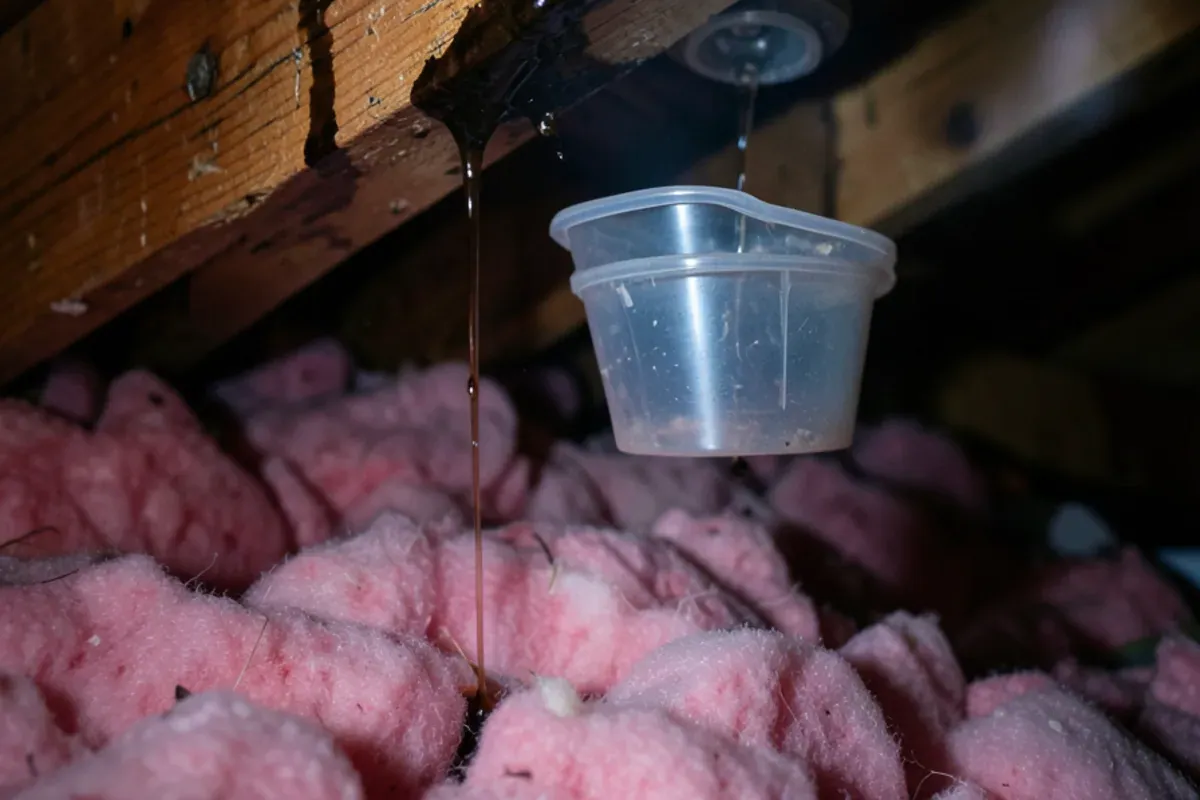
Water rarely comes through the ceiling right under the hole. It lands on the decking, runs along a rafter or the top of the drywall, and drips at the first low point it finds, sometimes several feet away. That is why we start in the attic, follow the stain uphill, and only then go up top to confirm.
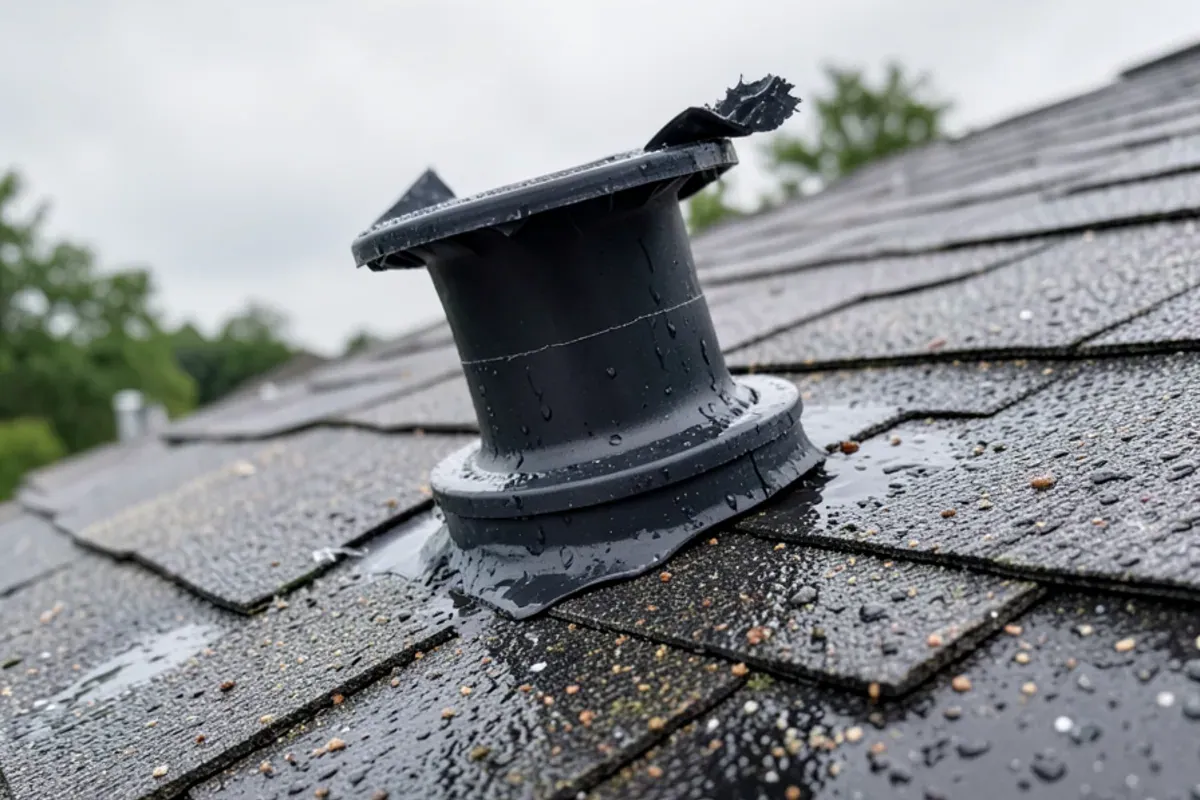
On storm leaks around Dallas–Fort Worth, the entry point is usually one of a short list: a rubber pipe boot cracked by years of sun, shingles lifted along a rake edge or ridge by gusts, step flashing where a lower roof meets a second-story wall, a valley packed with leaves, or a vent cap cracked by hail. Those are small repairs when caught early. They become decking and drywall repairs when they leak through two or three storm seasons.
Drying the House Out After the Storm Passes
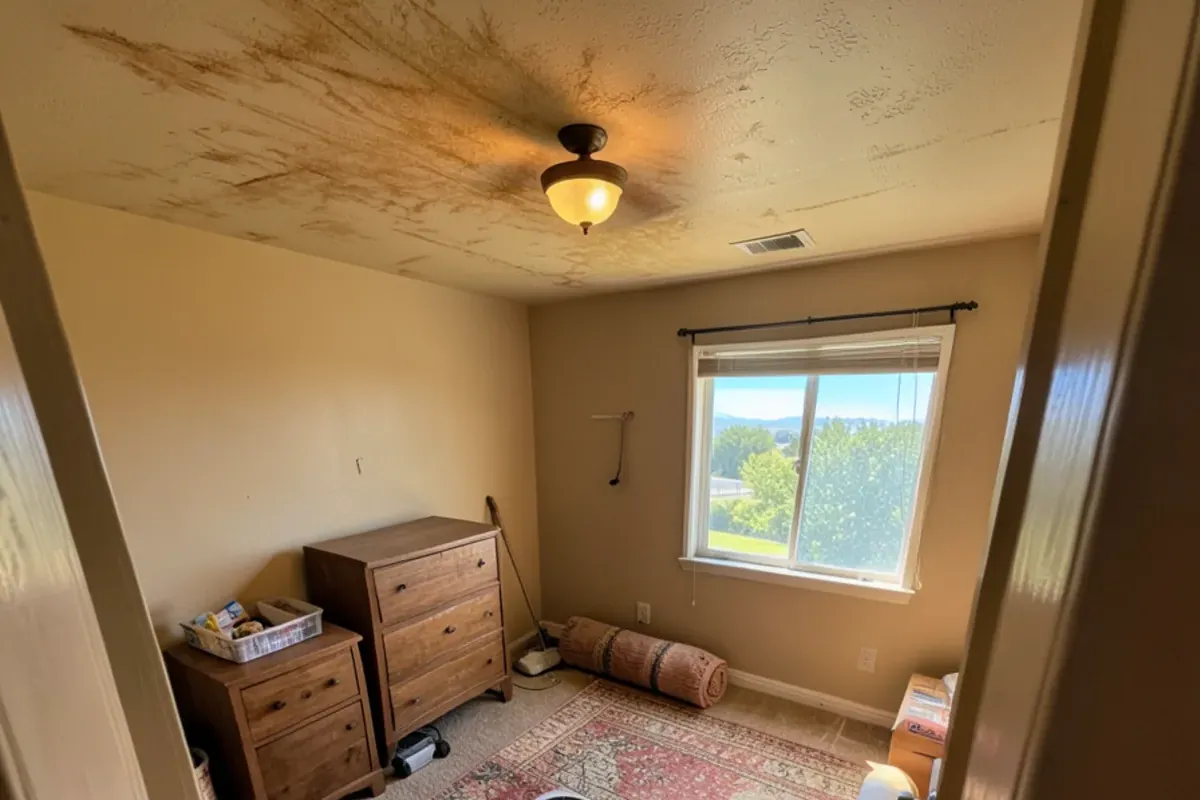
Once the rain stops and power is safe, the clock that matters is moisture. The U.S. Environmental Protection Agency advises drying water-damaged materials within 24 to 48 hours to help prevent mold growth. In practice that means running fans and a dehumidifier in the affected room, pulling back wet rugs, and lifting soaked insulation off the ceiling drywall in the attic if you can reach it safely from the joists.
A small, brief drip onto a ceiling that dries quickly may leave only a stain that needs primer and paint. Drywall that sagged, stays soft or smells musty after two days usually has to be cut out and replaced, and wet blown-in insulation tends to matt down and lose its value. Photograph each of those steps too; drying equipment and drywall work are part of the same loss your insurer will look at.
Get Dry, Then Get It Fixed
Contain the water, keep everyone off the roof, document what happened, and let the weather clear before anyone climbs. When it's dry and safe, call RJ Premium Roofing at (725) 745-8803 for a free roof inspection; we'll find where the water came in, cover it if needed, and explain the repair in English or Spanish before any work starts.
Questions readers ask
Should I climb up and tarp my own roof while it's still raining?
Can a roof leak wait until the storm passes, or do I need help tonight?
Will homeowners insurance pay for a roof leak that started in a storm?
How long can wet drywall and insulation sit before mold becomes a problem?
Sources

Written by the RJ Premium Roofing team, a bilingual roofing contractor based in Irving, TX. We inspect, repair and replace roofs across Dallas–Fort Worth and document storm damage for homeowners’ insurance claims.