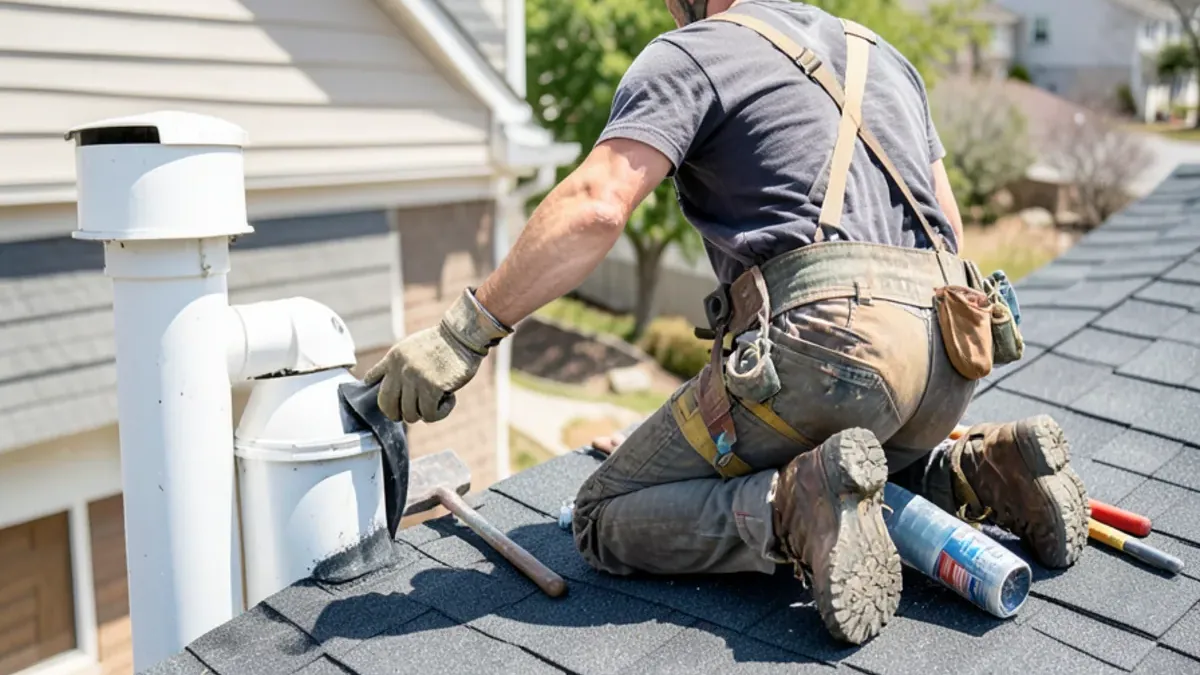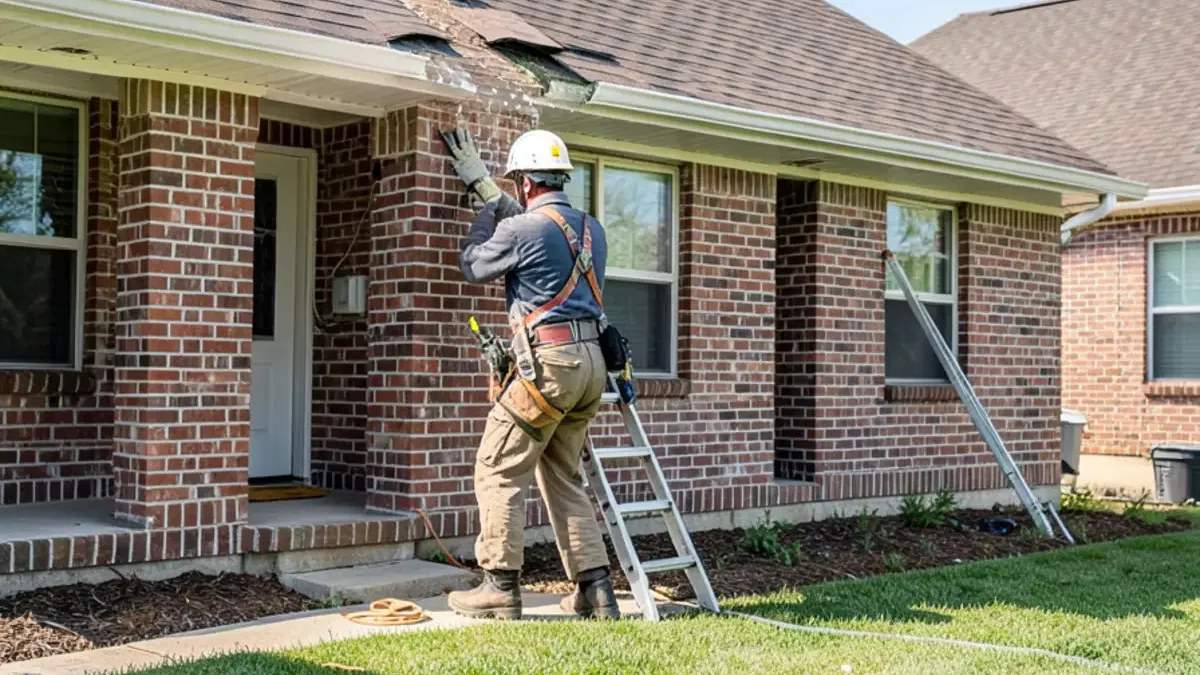
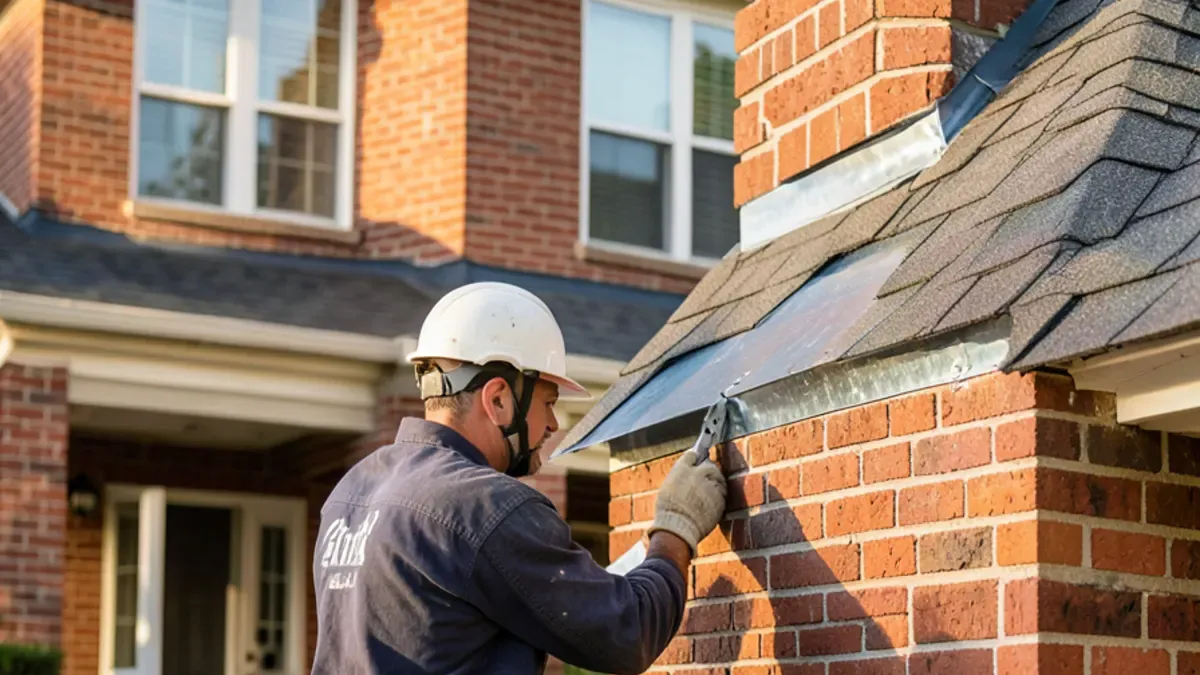
Flashing is the least visible part of a roof and the one most often behind a stubborn leak. It is also one of the roof repair jobs most likely to have been patched badly before we arrive, usually with caulk spread over metal that should have been replaced. Here is where flashing fails, how we rebuild it, and what to expect.
Where flashing fails on Irving houses
Every place the roof surface is interrupted needs flashing. These are the joints that fail most often:
- Chimneys. Brick chimneys on older ranch and two-story homes need step flashing on the sides, a front apron, counter flashing set into the mortar, and a cricket or saddle behind wider chimneys to split the water.
- Sidewalls. Where a roof runs alongside a second-story wall, a dormer or a garage addition, step flashing has to be woven into each shingle course and lapped under the siding or wall covering.
- Headwalls. Where a slope dies into a wall above it, a continuous apron flashing turns up the wall.
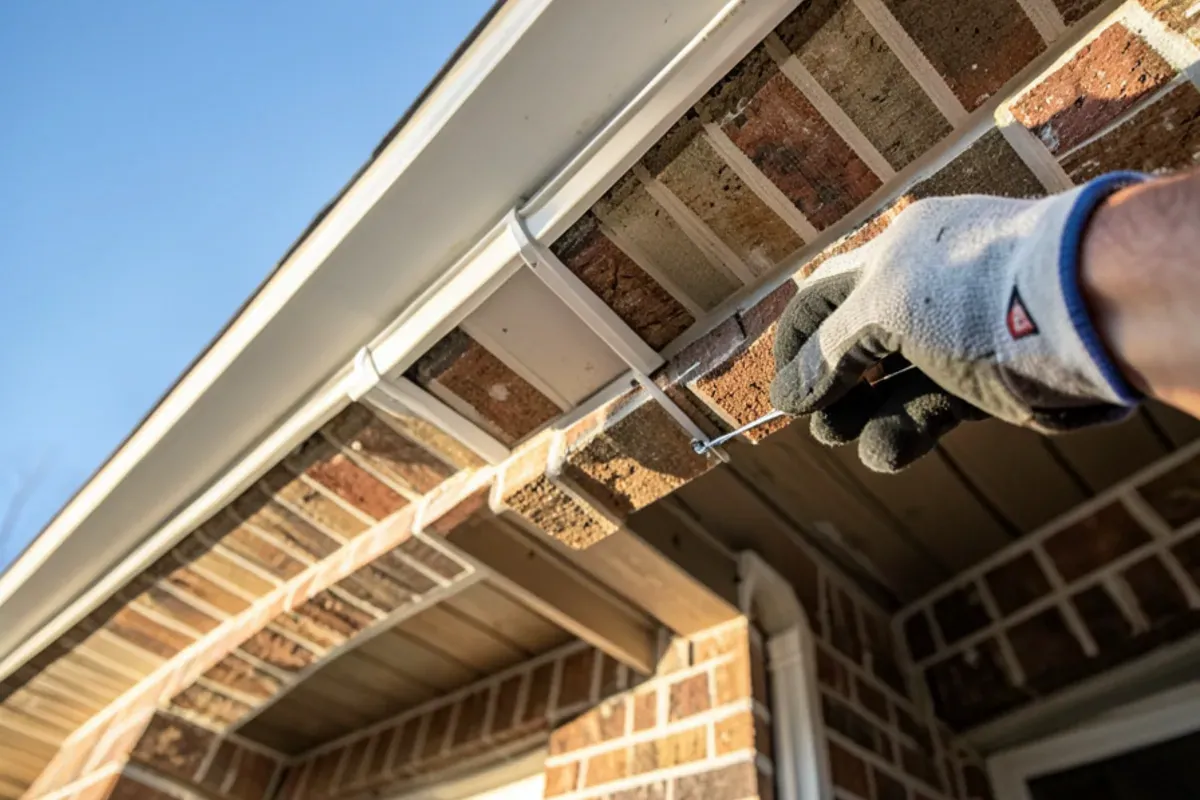
- Roof edges. Drip edge at the eaves and rakes guides water off the deck and past the fascia.
North Texas is hard on all of it. Irving hit an all-time high of 112°F in 1980, and summer after summer of heat makes metal expand and contract while exposed sealant dries out and cracks. Then a hard freeze like Winter Storm Uri in February 2021 works water into any gap and opens it further.
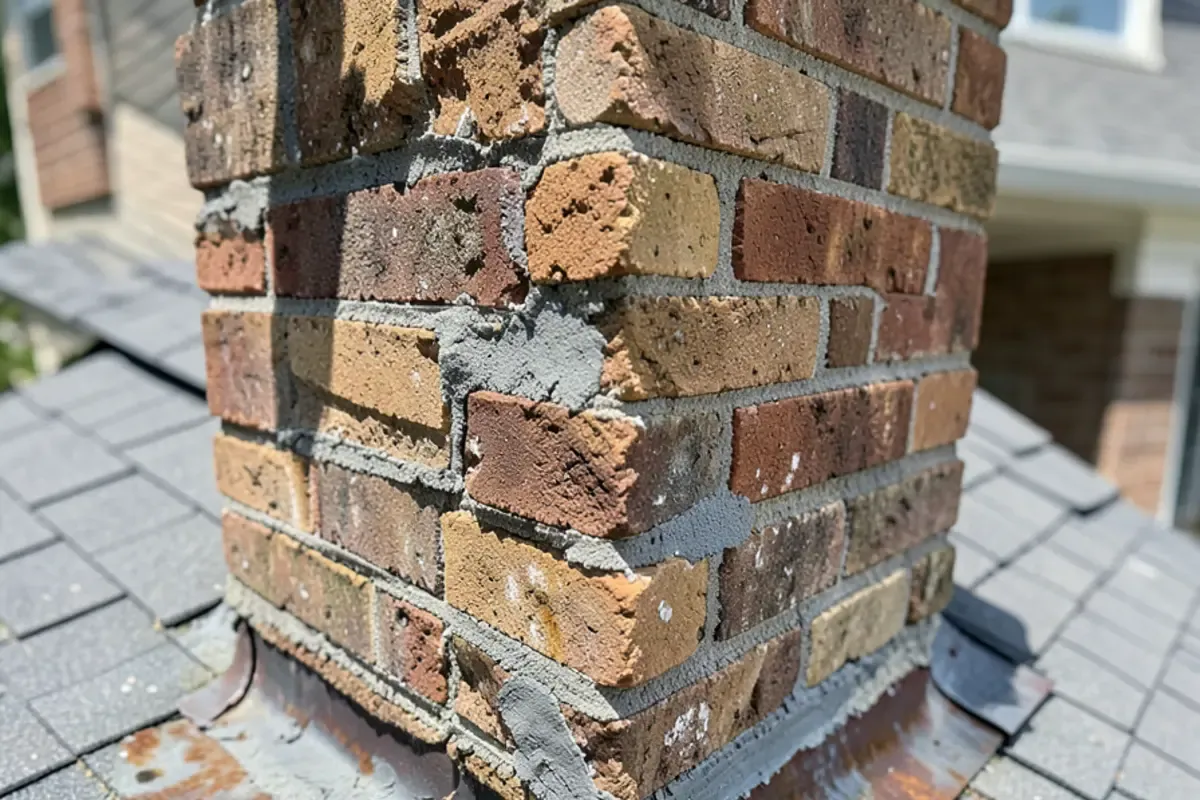
Chimney flashing repair: why does caulk alone keep failing?
Caulk is a flexible seal; flashing is a shingled system of metal where each piece sheds water onto the one below. When a contractor seals a gap rather than rebuilding the joint, the leak stops until the sealant cracks, and then it returns, often worse because water has been soaking the decking in the meantime.
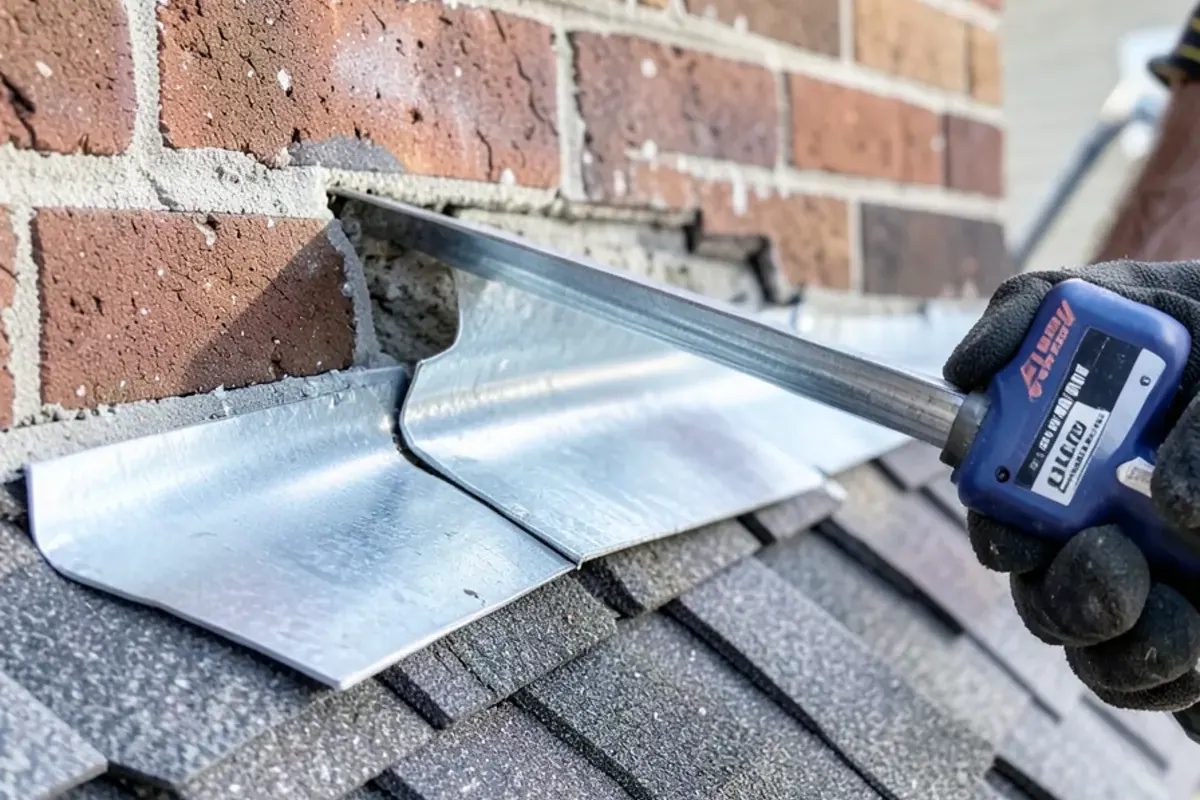
A proper chimney repair removes the shingles along each side, replaces the step flashing one piece per course, installs new counter flashing into a cut mortar joint so it overlaps the step flashing from above, and finishes with a front apron and, where needed, a rear cricket. Sealant is used only where the counter flashing meets the mortar line.
How we rebuild step flashing and counter flashing
- Find the failure. We inspect the joint from the roof and the attic, photograph the damage and check for soft decking along the wall or chimney.
- Write it up. You get a free written estimate that names each flashing piece we will replace.
- Open the joint and underlay. We remove the shingles, old flashing and any rotten decking along the wall or chimney, then run new self-adhered underlayment a few inches up the face so the joint has a second line of defense.
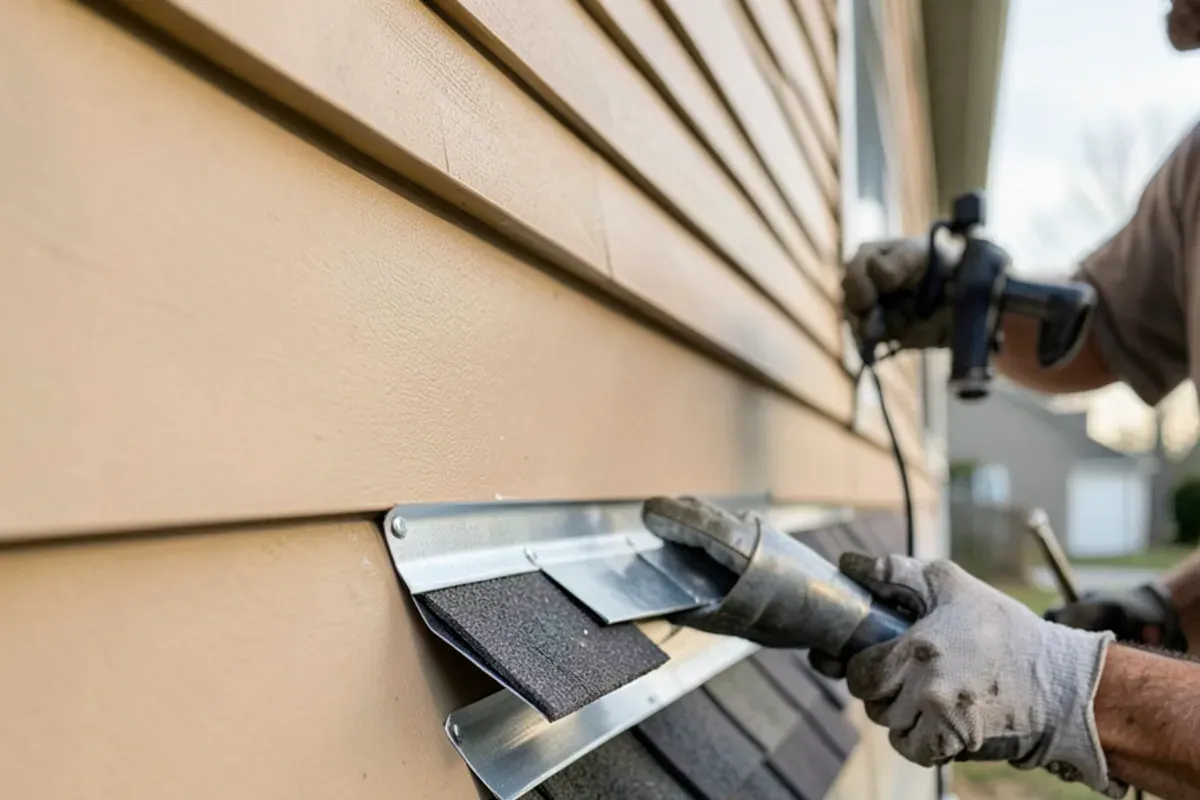
- Install step flashing. One piece per shingle course, each lapped over the one below and tucked under the wall covering or counter flashing.
- Set counter flashing. On brick, we cut a mortar joint, set the counter flashing into it and seal the top edge.
- Re-shingle and clean up. New shingles go back in the strip we opened, we remove the old metal and debris, and you get photos of each stage.
Questions about roof flashing repair? Talk to us.
Call for a free inspection and a written estimate. Hablamos español.
- 5.0 on Google (33 reviews)
- Free inspections & estimates
- Se habla español
- Workmanship guaranteed in writing with every contract
What a flashing repair includes
A flashing repair is priced and built joint by joint. We do not quote "flashing work" as a lump; the estimate names the chimney, the sidewall or the eave run, and each line below shows up where it applies:
- Removal of failed step, counter, apron or wall flashing and the shingles along that joint
- New step flashing woven into the shingle courses, finished with a kickout at the bottom of each roof-to-wall run
- New counter flashing cut into mortar joints on brick chimneys and walls
- Drip edge replacement along any bent, rusted or missing eave and rake sections
- Replacement of rotted decking found at the joint
- Matched shingles in the opened strip, cleanup, and before-and-after photos
The kickout is the piece most often missing on Irving houses where a lower roof dies into a brick or siding wall. Without it, water running down the step flashing pours behind the wall covering at the eave instead of into the gutter. What we do not do is masonry: if mortar joints or chimney bricks are failing above the roofline, we tell you so you can call a mason before we flash.
Wall flashing leak or something else? Signs to check
Water on an inside wall during wind-driven rain, a ceiling stain right beside a chimney, or rot along a second-story wall above a lower roof all point to flashing. So do rust streaks running down brick, metal pulled away from a wall, or thick layers of patched caulk. A dark streak on the siding or brick just below where a roof edge meets a wall usually means the kickout is missing. Some leaks at walls come from the siding, windows or masonry above rather than the roof; when that is the case we tell you, because new flashing would not fix it.
What does roof flashing repair cost?
It depends on how long the joint is, how tall and wide the chimney is, how steep the roof is, whether brick needs to be cut for counter flashing, and how much decking has rotted from past leaks. A short sidewall is a modest job; a large chimney with a cricket is a substantial one. Because we open only a strip of roof, these repairs usually fall well under 100 square feet, the size below which the City of Irving's handout says no permit is needed. Every estimate is free and itemized by the flashing pieces involved.
Two things push a flashing job up most often. The first is hidden rot: years of caulk-only repairs let water soak the decking and sometimes the wall sheathing beside the joint, and we cannot see the full extent until the strip is open, so the estimate explains how added decking would be priced. The second is matching: the opened strip needs shingles that blend with the rest of the slope, and an older or discontinued color takes longer to source.
Why RJ Premium Roofing for flashing work
- We rebuild joints with metal rather than covering them with sealant, and the photos show you each layer.
- Inspections and written estimates are free.
- After hail or high wind, we photograph bent counter flashing and torn step pieces and write them into a damage report for your insurer.
- Reviewers mention a professional crew that explained each step and left the site clean.
- When we last counted, in November 2026, Google showed a 5.0 average on 33 reviews.
- Atendemos en español: reparación de tapajuntas con explicación clara de cada paso.
The flashing repairs we do carry our workmanship guarantee, with written terms that come with your contract, and the new metal and shingles are covered by their manufacturers' warranties.
Flashing repair across Dallas, the Park Cities and Irving
Home base is Irving, described on our roofing contractor in Irving, TX page, and we travel throughout the Dallas area. Older brick homes in University Park and Highland Park have many chimneys and wall joints of the kind described above, and we take flashing calls across Dallas too. Related repairs: pipe boot and roof vent repair for leaks at plumbing stacks, and roof valley repair where two slopes meet.
Codes, permits and contractor registration for flashing
On regulation: Texas sets no statewide license for roofers, and TDLR's list of regulated trades leaves roofing out. Cities set their own registration and permit rules, so check with the building department in the city where your home sits; in Irving that is the Inspections Department, (972) 721-2371. The International Residential Code, which Irving adopted in its 2024 edition effective May 1, 2026 (city Ordinance 2026-11253, as listed on eCode360), requires flashing wherever a roof meets a wall, chimney or other vertical surface, so a sealant-only fix does not meet the intent of the code. Confirm the edition for your permit with the city.